
-By LeN Special Investigations Desk
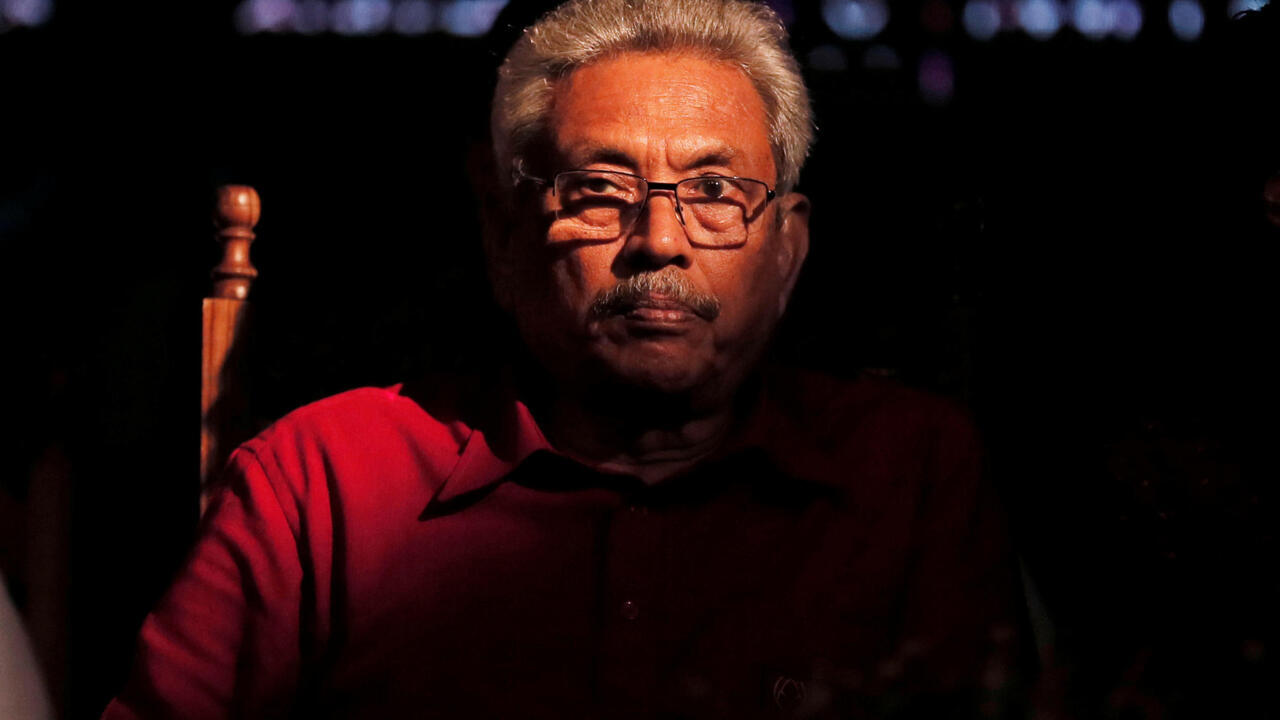
(Lanka-e-News -14.Nov.2025, 11.20 PM) In what may be the most consequential revelation in the post–war political history of Sri Lanka, President **Anura Kumara Dissanayake** has now publicly confirmed what whistle-blowers, victims’ families, and independent journalists have argued for nearly a decade: that during the Rajapaksa era—particularly under **Gotabaya Rajapaksa** as Defence Secretary—elements of the Sri Lankan military intelligence apparatus **funded, guided, and protected extremist groups on both sides of the communal divide**.
For years, these claims were dismissed as “opposition conspiracies” or “foreign-funded propaganda.” Now, the present head of state has broken the silence, saying the evidence is “undeniable, documented, and already in possession of the government.”
With this statement, the President has detonated a political earthquake.
A State Project of Extremism.
According to multiple intelligence insiders currently cooperating with the NPP government, a covert state operation operated under Gotabaya Rajapaksa’s command between 2009 and 2019. The operation had two branches:
1. Sinhalese right-wing extremist groups
(including Bodu Bala Sena, Sinhala Ravaya, and Sinhala Veeravidyahanaya)
2. Islamist radical cells
(including the Zaharan-led faction that ultimately executed the Easter Sunday attacks)
Contrary to the popular belief that these groups emerged organically, evidence now suggests that several “leaders” were **created, financed, and guided by rogue intelligence officers.
This shadow network allegedly aimed to:
engineer ethnic tension,
polarise communities,
manufacture periodic violence, and
paint the Rajapaksa family as “protectors of the Sinhala Buddhist nation.”
In other words, extremism was not an accident of history — it was a **state-engineered political investment**.
Documents now with the President reportedly show that the anti-Muslim violence seen across Sri Lanka—from Aluthgama to Digana—did not erupt spontaneously. Instead, the acts were carried out with:
coordinated messaging,
state-funded logistics,
targeted propaganda, and
intelligence-approved operatives.
The blueprint resembled the **BJP-RSS playbook** in India:
attacks on mosques,
campaigns against halal food,
boycotts of Muslim businesses,
arson attacks on homes and shops,
intimidation of madrasa teachers,
demonisation of Muslim burial practices,
and organised street mobs given de-facto protection by police.
President Anura Kumara stated that his investigators have “clear, traceable evidence” that these operations received money through secretive intelligence accounts, authorised under the Defence Ministry during Gotabaya’s tenure.
The purpose was simple:
manufacture a Muslim threat → create insecurity → present the Rajapaksas as saviours → convert fear into votes.
For years, journalists suspected that millions of rupees disappeared annually through an intelligence “black budget” with zero parliamentary oversight. Now, whistle-blowers claim that:
cash payments were made directly to extremist organisations;
motorbikes, mobile phones, and safe houses were provided;
intelligence operatives acted as liaisons;
and certain Buddhist monks were paid monthly stipends.
According to one former officer:
“We were told this was part of a national-security psychological operation. No one questioned it because it came from the top—Gotabaya’s office.”
President Dissanayake has confirmed that documentation exists to **audit every rupee**, including the authorisation signatures.
The most damning allegation emerging from the intelligence review is that the Easter Sunday attacks—which killed more than 270 people—were not simply a failure of intelligence, but a manipulated event** shaped by rogue actors.
Multiple sources now claim:
Zaharan’s movements from Sri Lanka → Malaysia → Indonesia → India
were monitored and sometimes facilitated by military intelligence.
In India, Zaharan met a Sri Lankan intelligence officer—a man who later rose to prominence in state security structures.
Lanka-e-News has obtained photographs showing the two men meeting at several locations in India.
A separate meeting took place in a luxury hotel library room in Colombo, involving:
a senior Sri Lankan intelligence officer,
a well-known right-wing Sinhalese politician,
and a powerful think-tank owner who is also a diplomat and former bank chairman owing over Rs. 1 billion** in loan defaults.
These meetings occurred **months before** the Easter attacks.
The implications are staggering:
Was the attack allowed to happen—or shaped—so that political fortunes could be reversed?
The victims’ families have been demanding this truth for five years. Now they are finally being heard.
Why Would the State Fund Islamist Extremists?
The logic is chilling but ruthlessly political.
1. Keep the Muslim community under constant suspicion.
2. Portray any government criticizing the Rajapaksas as “weak on terrorism.”
3. Create an environment where only the Rajapaksas could claim national security credibility.
4. Stage-manage a catastrophic event to trigger a Sinhala-Buddhist rally-round-the-flag effect.
This is exactly what happened:
The Easter attack destroyed public confidence in the Yahapalanaya government.
Fear and anger swept the Sinhala electorate.
Gotabaya Rajapaksa captured 6.9 million votes and won the presidency.
If current evidence holds, then the Easter Sunday attack was weaponised for electoral gain, making it one of the darkest political crimes in Sri Lankan history.
Whistle-blowers tell Lanka-e-News that:
The Defence Ministry allocated money using “contingency funds” and “national security emergency provisions.”
Payments were made in cash through **unregistered intelligence accounts**, bypassing the Treasury.
Some money even passed through private companies owned by Rajapaksa-linked businessmen.
Several extremist leaders received payments labelled as “community liaison support.”
We have seen copies of some documents. We have verified the signatures.
But to protect serving officers not involved in the atrocities, Lanka-e-News will not publish them yet.
The President now has the originals.
One of the most intriguing revelations is the alleged involvement of a powerful Sri Lankan think-tank owner:
He is known for his close relationship with New Delhi.
He served as a diplomat.
His private bank collapsed, owing over Rs. 1 billion to the public.
His think tank played an unusual role in “national security strategy advice.”
Sources claim he participated in planning discussions with intelligence officers and right-wing operatives. His motive?
To create political chaos that could shield him from corruption investigations unleashed during the Yahapalanaya era.
This is the first time his alleged involvement in Easter Sunday–related events has been officially acknowledged at high levels.
With the President’s acknowledgment, international families of victims—British, American, Chinese, Indian, Danish and others—are now preparing to:
file cases in Sri Lankan courts,
push for international compensation mechanisms,
request foreign investigations if Sri Lanka delays,
and support a global inquiry into state-funded extremism.
The Catholic Church, long frustrated with government evasions, is expected to renew its demand for justice. Cardinal Malcolm Ranjith has already signalled his willingness to cooperate with any credible investigation.
For the first time, victims may finally have the political environment necessary for truth.
If the President’s revelations are accurate—and the evidence proves strong—then Sri Lanka faces a historic test.
The NPP government must:
1. Form an Independent Special Judiciary Panel
with international observers and protection for whistle-blowers.
2. Audit all intelligence accounts
from 2009–2021.
3. Prosecute those responsible, regardless of their rank or political connections.
4. Compensate victims, both local and foreign.
5. Reform the intelligence service
so rogue networks can never again hijack national security.
If the state itself funded both Sinhala right-wing extremists and Islamist radicals—and indirectly enabled the Easter Sunday attack—then the Rajapaksa era becomes one of the greatest betrayals of the Sri Lankan republic.
At the centre of it all is one name:
Gotabaya Rajapaksa.
He was the Defence Secretary during the creation of the extremist networks.
He was the President when key officers involved were protected.
He fled the presidency during the Aragalaya uprising.
And now evidence suggests he authorised, enabled, or turned a blind eye to a project that destroyed national unity and cost hundreds of innocent lives.
The question now is not what happened.
The question is:
Will Sri Lanka finally hold its most powerful political dynasty accountable?
The world is watching.
The victims are waiting.
And for the first time in years, the shadows of the truth are beginning to dissipate.
-By LeN Special Investigations Desk
---------------------------
by (2025-11-14 19:38:00)


 Read 77310 Times
Leave a Reply
 0 discussion on this news