
-By Birmingham & Colombo Special Report
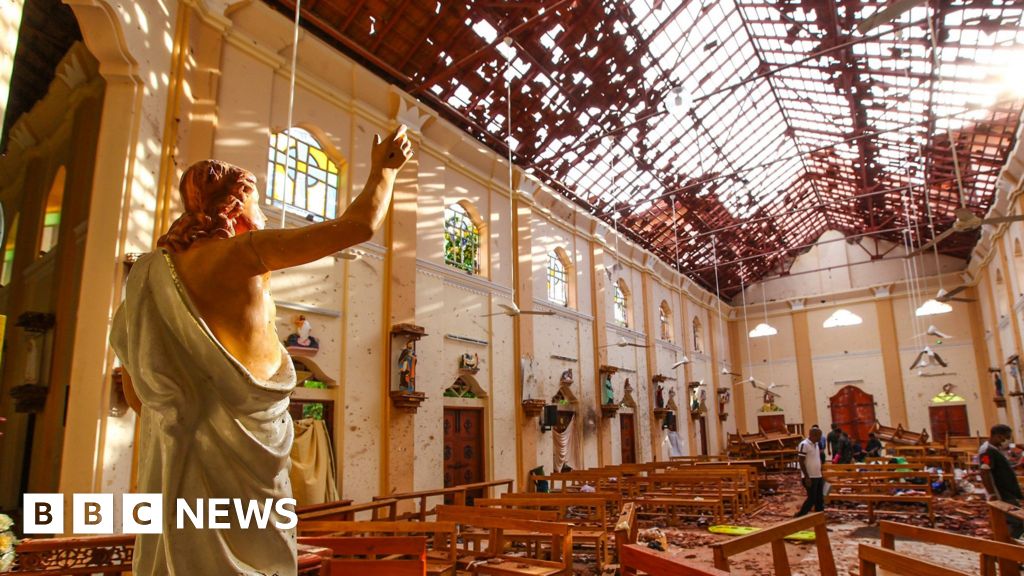
(Lanka-e-News -01.Dec.2025, 10.30 PM) A Sri Lankan national once arrested on suspicion of involvement in the Easter Sunday bombings that killed 269 people has won a significant victory in the United Kingdom, after the Upper Tribunal ruled that the Home Office’s decision to refuse him asylum was legally flawed and infected by “highly prejudicial” reasoning.
The man — known only as “YA” for legal reasons — arrived in Britain in 2022 with his wife, claiming that he faced torture, wrongful prosecution, and extrajudicial persecution in Sri Lanka. Behind his claim lies one of the most politically explosive allegations yet to reach a British courtroom: that the very individuals who purported to investigate the Easter attacks were themselves implicated in torture, cover-ups, and a broader intelligence-led conspiracy that continues to shake the Sri Lankan state.
At the heart of his defence is a disturbing assertion: that the Sri Lankan security apparatus under former President Gotabaya Rajapaksa tortured Easter Sunday suspects and manipulated prosecutions to shield senior military intelligence officers allegedly involved in financing and steering the extremist cell behind the bombings. YA further claims that the so-called “mastermind” narratives surrounding the attacks were influenced by a Singapore-based Sri Lankan academic, a man activists have long described as a “fake professor” whose theories — similar to film scripts — were used to frame Islamist suspects while silencing evidence that pointed elsewhere.
Last week, Deputy Upper Tribunal Judge Claire Burns in Birmingham delivered a damning assessment of the earlier proceedings, ordering a complete rehearing and declaring that “no findings of fact should be preserved.” This, in legal terms, is a clean slate — a rare judicial reset reserved for cases where the earlier judgment is considered beyond salvage.
The decision has reverberated through diaspora communities, legal forums, and intelligence circles alike — not for what it conclusively establishes, but for what it now permits to be argued openly: the contested narrative of Sri Lanka’s most devastating attack in its post-war history.
On 21 April 2019, six coordinated suicide bombings tore through Catholic churches and luxury hotels in Colombo, Negombo, and Batticaloa. While the Sri Lankan authorities quickly attributed the attacks to National Thowheeth Jama’ath (NTJ), a small domestic Islamist group, the Islamic State group later issued a claim, muddying the waters in a country already prone to political conspiracy.
The official narrative — that a group of radicalised Islamists independently executed the massacre — has long been challenged by families of victims, human rights activists, and even senior Sri Lankan clergy. Multiple parliamentary committees, independent journalists, and international organisations have repeatedly pointed to anomalies in the investigation: prior intelligence warnings ignored, surveillance failures unexplained, and intelligence officers quietly moved out of inquiry’s reach.
It is into this combustible context that YA’s asylum case falls.
YA told the tribunal that he was arrested shortly after the attacks, detained for months without charge, and repeatedly tortured by officers operating under intelligence commands. He alleges interrogators demanded that he confess to relationships with the bombers — individuals he insists he had no connection to.
“The entire purpose was to extract a confession the state needed for its narrative,” his barrister told the Tribunal. “He was held as a pawn in a much larger political game.”
His claims echo the testimony of dozens of Easter attack detainees who told human rights groups that they were beaten, water-tortured, or threatened with sexual violence during interrogations. Interviews conducted by Amnesty International, Human Rights Watch, and UN Special Rapporteurs all describe a pattern of torture consistent with Sri Lanka’s long record of coercive counter-terrorism practices.
YA told the Tribunal that after his release on bail — which the original judge improperly failed to account for — he faced continuous harassment and re-arrest threats. When he learned he was to be formally re-summoned under terrorism legislation, he fled the country with his wife, travelling to the UK and filing for asylum.
The Home Office concluded in 2023 that YA was “not at real risk of persecution” and that his testimony lacked credibility. The decision relied heavily on Sri Lankan state reports asserting that terrorism suspects were treated humanely and that the Easter investigations were conducted lawfully.
But YA’s legal team submitted extensive documentation demonstrating the opposite — including reports of torture, documented deaths in custody, and patterns of fabricated evidence involving Muslim detainees after the attacks.
Despite these submissions, the First-Tier Tribunal dismissed his claim. It was this decision that Judge Burns has now shredded.
In her written decision, Judge Burns was unequivocal:
“I find that there will need to be a complete rehearing wherein the Judge will make findings about the credibility of the applicant’s account. No findings of fact should be preserved.”
This means that the previous judge’s conclusions — that YA was not credible, that his arrest was lawful, and that Sri Lankan authorities posed no risk of persecution — are now formally erased.
The Tribunal identified multiple legal errors, including:
1. A Failure to Consider Evidence of YA’s Release on Bail
This omission undermined the prior judge’s reasoning, as YA’s release contradicted the Home Office suggestion that he was a high-value terrorism suspect.
2. Prejudicial Treatment of the Applicant
Judge Burns noted that the tone and handling of the original tribunal showed signs of bias, with the judge appearing to assume YA’s guilt without properly analysing evidence.
3. Insufficient Engagement with Torture Evidence
The Tribunal held that the earlier ruling failed to assess medical and documentary evidence of ill-treatment consistent with torture.
4. Over-reliance on Sri Lankan State Assurances
The Home Office’s position heavily depended on Sri Lanka’s claim that terrorism suspects are treated appropriately — an assertion repeatedly contradicted by international bodies.
The decision does not grant YA asylum outright — but it reopens the door fully and demands that every aspect of his story be freshly examined.
YA’s case intersects unavoidably with the legacy of Gotabaya Rajapaksa, Sri Lanka’s former wartime defence chief who became president months after the Easter attacks.
Under his post-2019 administration, dozens of suspects arrested after the bombings were reportedly tortured and held without meaningful due process. Local and international observers noted that investigations increasingly appeared designed not to uncover truth but to reinforce a predetermined storyline.
A key accusation — one now permitted to surface in a UK legal setting — is that senior military intelligence officials aligned with the Rajapaksa network had prior knowledge of the extremist cell and may have allowed the attacks to occur, or worse, aided factions within it. The explosive claim of “state complicity by omission or commission” has circulated for years in Sri Lanka but has rarely entered formal judicial scrutiny abroad.
YA alleges that intelligence figures used torture to silence detainees who tried to reveal financial and logistical links between radical elements and sections of the military.
If explored in the rehearing, this would place the British Tribunal at the crossroads of one of Asia’s most sensitive counter-terrorism controversies.
One of the more startling elements of YA’s claim involves a Singapore-based Sri Lankan academic long derided in the region as a “fake professor.” YA alleges — echoing claims from church leaders and former intelligence officers — that this academic produced narratives, theories, and “storyboards” that were used by government officials to frame the Easter attacks as purely Islamist, excluding any evidence that contradicted it.
Opposition politicians in Sri Lanka have for years accused this man of being a “pseudo-intelligence asset” used to manufacture consent for political agendas. The accusation that a fabricated academic narrative helped shape terrorism prosecutions is politically radioactive — and may now emerge in a British courtroom.
YA’s barrister indicated that expert witnesses may testify about the role of disinformation and state-sponsored misdirection in Sri Lanka’s post-2019 environment.
YA’s case tests the UK government’s long-standing approach to asylum applicants from Sri Lanka, a country London has historically classified as broadly safe despite decades of evidence of torture by security forces.
If YA persuades the Tribunal that Sri Lankan authorities continue to torture terrorism suspects — and that the Easter attacks were used to justify abuses or hide institutional misconduct — it could lead to stricter scrutiny for deportation cases and potentially influence broader asylum policy.
Several British MPs have already raised concerns about the Home Office’s reliance on Colombo’s assurances. A senior Conservative backbencher told The Times:
“We cannot base our decisions on diplomatic optimism rather than documented reality. The UK must not be complicit in returning people to torture.”
The Sri Lankan government has historically rejected allegations of torture and maintained that its investigations into the Easter bombings were thorough, lawful, and free from political interference.
But Colombo’s credibility has been deeply damaged. Since 2019:
Multiple presidential commissions investigating the attacks collapsed into partisan blame games.
Several Catholic bishops publicly accused the state of withholding evidence.
The country’s most senior Catholic cleric, Cardinal Malcolm Ranjith, demanded an international inquiry into alleged intelligence failures and political manipulation.
The Rajapaksa government, which vehemently denied wrongdoing, was itself swept from power in 2022 after mass protests over economic mismanagement — further muddying the political landscape.
YA’s testimony, stripped of legal jargon, paints a portrait familiar to many Sri Lankan Muslims in the aftermath of the attacks: a community collectively punished for the crimes of a fringe extremist cell, caught between militant radicalism and state repression.
His lawyers argue that YA and his wife, if returned, would simply disappear into a system where terrorism suspects can be detained indefinitely and tortured with impunity.
The Tribunal’s insistence on a full rehearing underscores the seriousness of these fears.
The case will now return to the First-Tier Tribunal, where an entirely new judge must consider:
whether YA was tortured;
whether he faces persecution if returned;
whether his arrest was politically motivated;
whether senior Sri Lankan intelligence figures sought to manipulate the Easter probe;
and whether the so-called “scripted narrative” promoted by Sri Lanka’s controversial academic influenced prosecutions.
It is expected that expert testimony on torture, political repression, and the plausibility of state complicity in the Easter attacks will be introduced.
If YA succeeds, his case may set a precedent allowing other Easter-related detainees — several of whom now live in Europe and the Middle East — to pursue similar asylum protections.
While the British courts cannot determine who truly orchestrated the Easter attacks, they can determine whether Sri Lanka’s official narrative is credible enough to justify denying asylum. And in doing so, the Tribunal may indirectly validate the concerns of Sri Lankan civil society, Catholic leaders, human rights groups, and families of victims who have long insisted that the truth remains buried under layers of political deception.
YA’s victory in the Upper Tribunal does not make him innocent, nor does it rewrite the tragedy of Easter Sunday. But it does expose the cracks in a legal and political edifice built hastily in the aftermath of national trauma.
As the rehearing approaches, Britain may soon become the stage for one of the most consequential interrogations yet of Sri Lanka’s darkest modern day catastrophe — and the question that still haunts thousands:
Was Easter Sunday truly a terrorist attack — or was it something far more sinister, and far more orchestrated, than the world was initially told?
-By Birmingham & Colombo Special Report
---------------------------
by (2025-12-01 17:08:45)


 Read 73074 Times
Leave a Reply
 0 discussion on this news