
-By Chula Goonasekera
(Lanka-e-News -02.March.2026, 8.30 PM) Although the Public Utilities Commission of Sri Lanka (PUCSL) has appropriately invited public consultation on the proposed electricity tariff revision from 27 February to 18 March, the online submission portal appears to contain a non-functioning submission tab. If this technical issue persists, it risks undermining the integrity and effectiveness of the entire consultation process. Consequently, I have chosen to present this letter openly for public consideration, including by the PUCSL.
Current geopolitical tensions in the Middle East underscore the urgent need for Sri Lanka to minimise its dependence on imported fossil fuels and prioritise the development of domestic renewable energy resources, including solar, hydro, and wind power. Such a transition is essential to securing a stable and independent energy supply. Regrettably, the Ceylon Electricity Board (CEB) appears to be moving in the opposite direction.
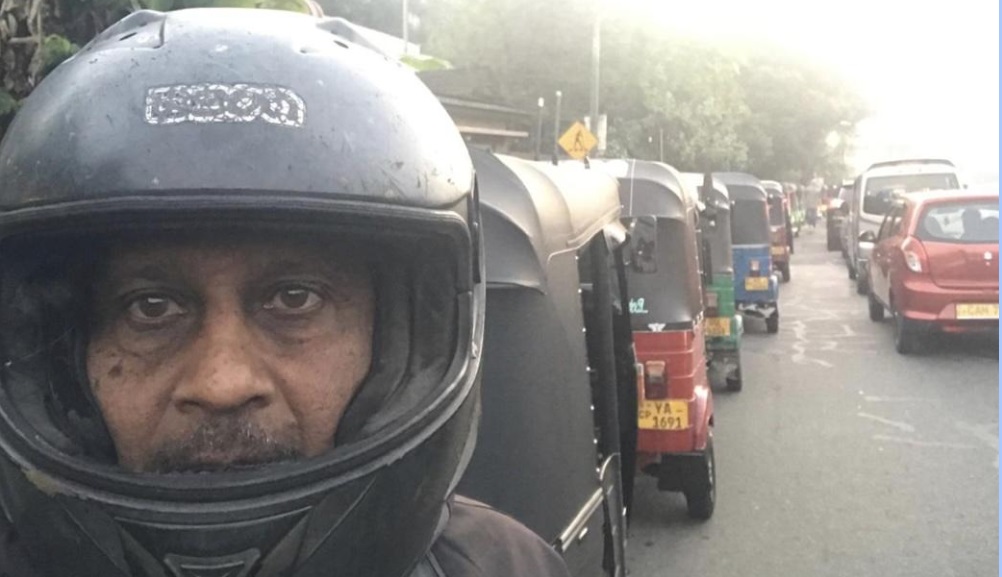
Promoting solar-powered electric vehicles supported by home-based renewable charging systems would strengthen national energy security and reduce pressure on imported fuel supplies. The fuel queues witnessed during periods of crisis, most notably in 2022, serve as a stark reminder of the risks associated with excessive dependence on external energy sources and the national anarchy that can follow.
As a small nation operating within a volatile global economy, Sri Lanka must remain as non-aligned and self-reliant as possible. Strengthening self-sufficiency in strategic sectors is critical to avoiding collateral damage amid escalating geopolitical rivalries among major powers. India has made steady progress along this path; Sri Lanka would be well-advised to do the same.
Raising electricity tariffs — a measure repeatedly adopted over the past decades to offset the high cost of fossil-fuel-based power generation — places an unfair burden on debt-ridden households and struggling businesses. Resorting once again to tariff increases, rather than addressing structural inefficiencies and fuel dependency, reflects a failure of long-term planning. The nation must instead pursue sustainable energy solutions that reduce costs over time.
As a debt-burdened country, Sri Lanka urgently requires pragmatic, forward-looking strategies that ease the pressure on citizens while strengthening resilience in times of geopolitical instability. Energy pricing is not a peripheral issue; it is a central pillar of economic stability and national security, demanding serious and immediate attention.
Established on 1 November 1969, the CEB was entrusted with the responsibility of generating and distributing electricity across the island while promoting social and economic development through the optimal use of national resources.
Recent developments suggest that the Ceylon Electricity Board has fallen short of these foundational objectives. Over the past two decades, electricity tariffs have been increased repeatedly under various justifications yet supply reliability has not consistently improved. The current proposed revision appears to perpetuate the same pattern: continued dependence on imported fossil fuels, directly contradicting the principle of optimally utilising national resources. This trajectory risks returning the country to recurring crises, including the prolonged fuel shortages and power cuts experienced in recent years.
Energy is not an ordinary commodity confined to a single sector; it affects every dimension of national life. High energy costs increase the cost of living by inflating expenses related to food production, transportation, manufacturing, and consumer goods. Ultimately, these costs are borne by citizens.
Moreover, elevated energy prices undermine national competitiveness by discouraging foreign investment and constraining local entrepreneurship, technological advancement, industrial expansion, and job creation. High-cost energy impedes national development.
Low-cost energy should therefore be formally adopted as a national policy objective. The CEB must adhere to its original mandate of optimising national resources for cost-effective electricity generation. Any deviation from this principle must be fully transparent and supported by clear, evidence-based justification.
Even in the sphere of renewable energy, concerns arise about the apparent preference for large-scale solar and battery storage projects that require substantial public funding. Previous claims of “grid instability” attributed to household rooftop solar generation were used to justify policy shifts. If electricity generated by rooftop solar during daylight hours was considered problematic, how would significantly larger solar installations differ in principle? Without systematic and transparent grid modernisation, such projects risk becoming costly stopgap measures rather than sustainable long-term solutions.
Poorly planned initiatives could once again expose the country to high delivery costs, reflected in elevated tariffs. They may also increase the risk of power disruptions due to battery limitations, spare-part shortages, infrastructure weaknesses, or maintenance failures. Sri Lanka has previously endured six- to ten-hour power outages, with severe economic and social consequences. The nation cannot afford a return to such instability.
It must also be recognised that rooftop solar installations, financed by homeowners — often through personal loans — have provided a crucial safety net for many families. By purchasing surplus energy from these “prosumers,” the system has functioned in a mutually beneficial manner for both households and the nation. Rather than discouraging decentralised generation, Sri Lanka should modernise its grid and meaningfully integrate citizen-led energy production. Short- and medium-term grid improvements could be facilitated through structured private-sector participation, including by prosumers themselves.
Globally, affordable energy underpins economic growth. Countries such as China, the United States, Norway, Brazil, and Canada have leveraged domestic energy resources to produce cost-effective power and accelerate development.
Sri Lanka must adopt a clear national policy centred on low-cost energy, fully utilising its natural endowments — solar, hydro, wind, and emerging technologies. Proposals prioritising imported fuels should be considered secondary and strictly transitional.
A nation that endures long queues for essential energy supplies cannot reasonably expect its citizens and businesses to remain productive and resilient. These realities are fundamentally incompatible.
Encouraging decentralised energy production would:
* Reduce the cost of living
* Improve national resilience
* Attract foreign investment
* Create employment
* Enhance export competitiveness
The people have entrusted the government with this responsibility. The time has come for a decisive, transparent, and forward-looking policy shift.
---------------------------
by (2026-03-02 15:21:36)


 on the Proposed Electricity Tariff Revision..!)


 Read 25818 Times
Leave a Reply
 0 discussion on this news