
-By Prof. Desmond Mallikarachchi
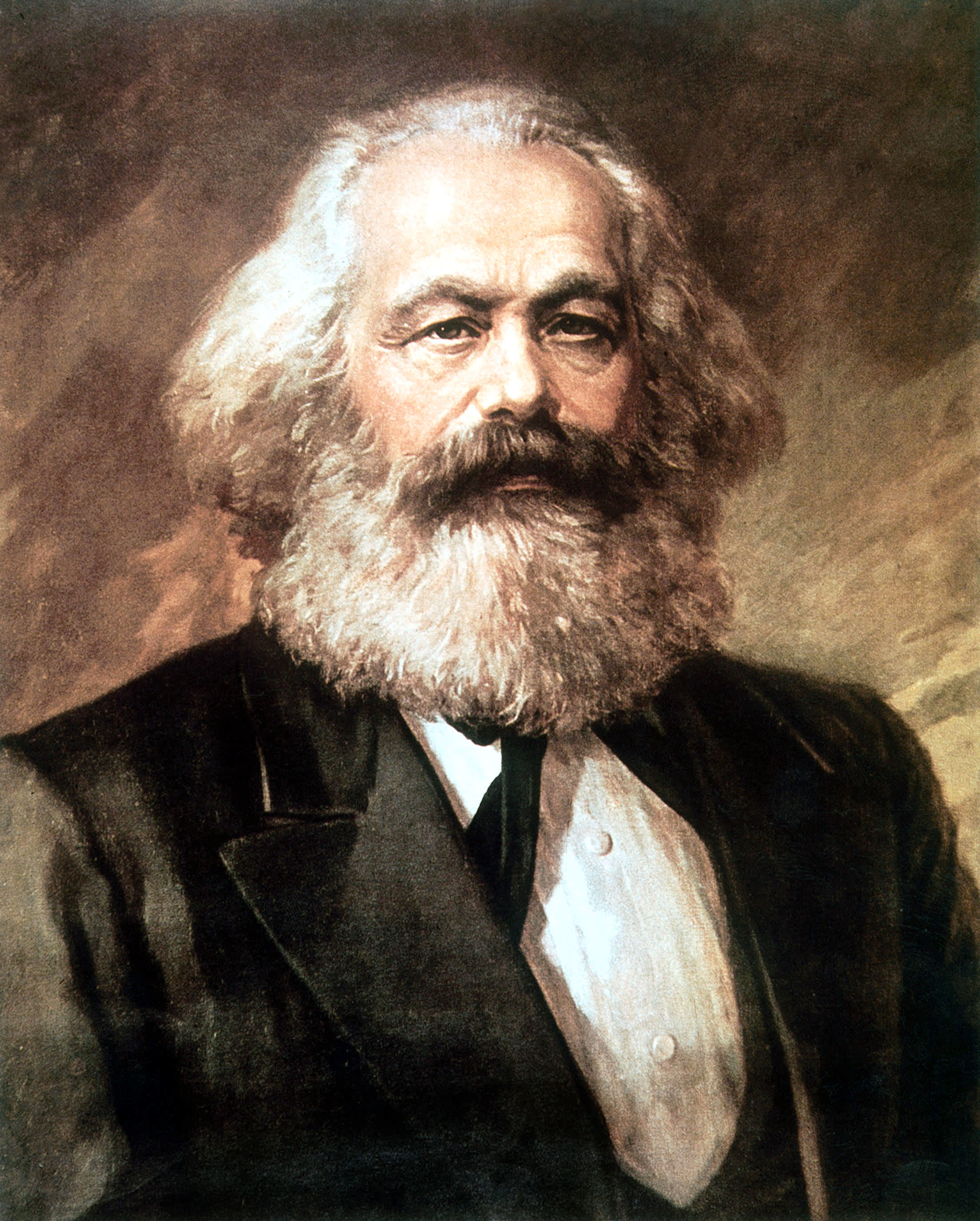
(Lanka-e-News -07.May.2026, 11.10 AM) This article, written as a tribute to the great materialist thinker Karl Marx—influential philosopher, economist, and social theorist—on his 208th birth anniversary, which falls on May 5, 2026, seeks to show briefly how sharply he foresaw, as far back as the 1860s, the eventual crises of capitalism. What we witness today bears a striking resemblance to what Marx anticipated more than a century and a half ago in his monumental work, Capital.
While millions have reviled Marx, portraying him as a destructive force, millions of others have revered him with near-religious admiration—as a figure comparable to Jehovah, Brahma, Mazda, Allah, or even the Buddha. At the turn of the millennium, a major European opinion poll ranked Marx among the greatest thinkers of modern times. A few years later, thousands of listeners to BBC Radio 4 voted him their favourite philosopher. Even today, Marx’s reputation as one of the most influential thinkers in history remains firmly intact. This enduring influence rests largely on one central claim: his penetrating analysis of capitalism and his prediction of its long-term instability.
Karl Marx was born in 1818 in Trier, in the Rhineland, then part of the Kingdom of Prussia. His father was a lawyer, and his mother a housewife of limited formal education. Marx studied law, philosophy, and history at the universities of Bonn and Berlin, completing his doctorate in philosophy at the age of 23 in 1841.
His early political engagement forced him to abandon an academic career and turn instead to journalism. As editor of the Rheinische Zeitung, he quickly became immersed in political and social struggles, publishing sharp critiques of the Prussian state and its repressive policies. Far from being “ludicrously prolix,” as some critics alleged, Marx was one of the most intellectually provocative and unsettling writers of his time—feared by defenders of the existing order. as some claimed; few writers have been as intellectually provocative, stimulating, and feared by the capitalist class.
Marx was an extraordinarily prolific author. His major works include The Economic and Philosophical Manuscripts, The German Ideology (with Friedrich Engels), The Communist Manifesto (with Engels), A Contribution to the Critique of Political Economy, Capital (Volumes I–III), Theories of Surplus Value, and Critique of the Gotha Programme. In addition, he wrote hundreds of articles and maintained extensive correspondence with both allies and critics. All of this intellectual labour was directed toward a single aim: to expose capitalism as the underlying source of modern social and economic contradictions.
Capitalism is an economic system founded on private ownership, market exchange, competition, the profit motive, and private control over the means of production. Marx’s central objective was its rigorous critique and eventual intellectual dismantling. Like Georg Wilhelm Friedrich Hegel, he viewed history as a dynamic and progressive process. However, unlike Hegel, he did not see capitalism as the culmination of that process, but rather as a transitional stage marked by internal contradictions. From an early age, Marx pursued this critique with relentless intellectual energy and revolutionary intent. He rejected the political economy of Adam Smith, David Ricardo, and Thomas Robert Malthus, arguing that their theories ultimately justified and obscured the exploitation inherent in capitalist society. His mature and systematic critique is most fully developed in Capital, Volume I of which appeared in 1867, with Volumes II and 111 Published posthumously in 1n 1885 and 1894.
Sales of Capital have reportedly soared in recent decades, especially during the 2008–2010 financial crisis, as economists and political leaders sought to understand whether Marx had indeed predicted capitalism’s self-destruction. Although critics like Lipset dismissed his analysis as “totally wrong” and Keynes called it “complicated hocus-pocus,” the severity of modern crises has driven many—reluctantly or otherwise—back to Marx.
The IMF defines a world recession as global economic growth of 3% or less. By this measure, major slowdowns occurred in 1990–93, 1998, 2001–02, and 2008–09. The 2008 crisis, in particular, has persisted without real recovery, laying bare systemic weaknesses.
USA: 12 million jobs lost; industrial output down 1.6%; GM production down 40%; gross national income down 12%; $50 trillion debt; $3 trillion spent on wars in Iraq and Afghanistan.
Japan: Exports down 8%; major automakers down 35–40%; $150 billion stimulus requested.
Australia: 100,000 jobs lost; cuts to education and health.
France: Job cuts, bailouts, and reduced public services.
China: Export economy down 25.7%; trade down 18%.
Italy: 35% recession by 2009 admission.
UK: Hundreds of thousands of public sector jobs cut; £90 billion deficit; asset values plummeted; banking crises closed even strong institutions.
Has capitalism been successful since the recession fifteen years ago? Developments across the world’s leading economies indicate that this is not the case.
USA: Job numbers have rebounded, yet real wages stagnate, inequality widens, and wealth concentrates in the top 1%—all while corporate profits surge and public debt surpasses $34 trillion.
Japan: Long-term stagnation persists with low growth, rapid population ageing, and extremely high public debt (over 250% of GDP), alongside continued exposure to export and currency volatility.
Australia: Growth has slowed under inflation and high interest rates, with falling real incomes and a severe housing affordability crisis.
France: Recurring mass protests over pensions, austerity, and living costs reflect persistent tension between social welfare and fiscal consolidation.
China: Growth has slowed sharply, with weakness in the property sector, declining exports, and high youth unemployment.
Italy: Chronic fragility continues, marked by very high public debt, weak productivity, and periodic financial instability within the Eurozone.
UK: Post-Brexit and pandemic pressures include stagnation, high inflation, declining real wages, and strain on public services
Taken together, these developments suggest that the crisis tendencies identified by Marx are not confined to episodic breakdowns (e.g. 1930s, 1973–75, 1982, 1987, 1997–98, 2000–01, 2008–09, 2020 ) but represent enduring structural features of capitalism. What appears as recovery is often merely the displacement of crisis—geographically, sectorally, or temporally—rather than its resolution.
Robert Aliber of the University of Chicago observed that the past thirty-five years have been among the most turbulent in international monetary history, marked by more national banking collapses than in any previous period.
Marx had already anticipated such dynamics. In Capital, he argued that the logic of accumulation drives capital to expand consumption through credit, pushing the working class toward ever-increasing indebtedness—until that debt becomes unsustainable and financial collapse follows.
This is, in essence, what has unfolded. Capitalist economists—from Adam Smith to John Maynard Keynes to Milton Friedman—have long sought remedies for capitalism’s recurring crises, yet without definitive success. Marx, however, offered not merely a critique, but a systematic diagnosis of the structural contradictions that generate these crises.
Some argue that Marx’s critique of capitalism is outdated in the era of high-tech capitalism. Yet a closer reading suggests otherwise. Marx anticipated a transformation in which labour, as the source of value, increasingly produces not only material goods but also symbols, signs, and manufactured needs. As later theorists have noted, contemporary capitalism often sells the idea of a product through its images before the product itself (Heller, Baudrillard, Zizek, Jameson, Delord, Kliein).
It is true that the form of the capitalist market has evolved through the digital revolution and the rise of gig work. However, despite these technological transformations, the underlying logic of labour exploitation and the practices of predatory capitalism remain fundamentally intact. In place of the industrial proletariat, we now witness the emergence of a digital or cyber proletariat; consequently, Marx’s theory of exploitation continues to hold considerable explanatory power. The exploitative nature of digital and cyber labour has been extensively examined by contemporary scholars such as Christian Fuchs, Trebor Scholz, and Nick Dyer-Witheford. These thinkers draw critical inspiration from Marx, who, as early as the mid-nineteenth century, anticipated that capitalism would ultimately commodify even human subjectivity—values, emotions, and social relations. (Grundrisse and Capital, Vol.I) What once appeared as a theoretical prognosis has today become an undeniable reality.
Thus, in both early industrial and high-tech capitalism, labour is reduced to an abstract, value-generating activity, subordinated to impersonal systems of accumulation. Marx’s concept of alienated labour—first articulated in 1844—remains strikingly relevant: workers produce goods and services they do not control and encounter them only as consumers in the marketplace. This estrangement is no less real in the software engineer’s cubicle than it was on the nineteenth-century factory floor.
Marx’s moral critique is equally enduring. Capitalism, he argued, subordinates human beings to the imperatives of profit and accumulation, generating inequality and deprivation even where material abundance makes a dignified life for all possible. The experience of nations across the world continues to bear out this insight.
Marx is declared obsolete in theory, yet confirmed daily in practice. Each financial collapse, each widening inequality, each expansion of debt-driven consumption silently echoes his critique. What is dismissed as nineteenth-century speculation reappears, with striking regularity, as twenty-first-century reality.
As he famously wrote, “All that is solid melts into air; all that is holy is profaned.” That insight now describes not merely a historical moment, but our condition.
Marx’s analysis thus remains not a relic of the past, but a living warning—and a challenge—to every generation confronting capitalism’s shifting yet enduring structures of exploitation—one that cannot be silenced until the vicious capitalist system is overthrown and uprooted from society. Until then, Karl Marx—the prophet of capitalist crisis—will return with renewed force.
Professor of Philosophy (rtd)
University of Peradeniya
[email protected]
---------------------------
by (2026-05-07 05:49:06)


 Read 41010 Times
Leave a Reply
 0 discussion on this news