
By Anubhavananda
(Lanka-e-News -16.May.2026, 6.20 PM) Eran Wickramaratne is one of the most distinguished figures to have represented the Sri Lankan Parliament. Known as a gentleman politician, he is a sharp analyst and critic of economics and financial management. Calm and rational in presenting arguments, he never becomes overly emotional. Among the handful of parliamentarians who delivered meaningful analyses of domestic and global economic trends in recent years, Eran stood at the forefront.
However, at the last general election, he failed to secure enough preferential votes to enter Parliament from the Colombo District. Even political opponents who disagreed with his views were shocked that a capable figure like Eran would no longer represent Parliament. There was considerable pressure within the Samagi Jana Balawegaya (SJB) for party leader Sajith Premadasa to appoint him through the National List. Yet Sajith instead chose political “jokers” like Banaana Suji. It is hardly surprising that he preferred jokers over figures such as Eran.
Educated initially at Royal College Colombo, Eran obtained both his undergraduate degree in Economics and Political Science and a Master’s degree in Economics from the University of London.
After completing his higher education, he joined Citibank in 1982 and rose to the position of Vice President by 1996. In 2000, he played a key role in establishing the National Development Bank (NDB) in Sri Lanka, and in 2001 became its Chief Executive Officer. Until entering active politics with the United National Party in 2010, Eran led NDB and transformed it into one of Sri Lanka’s leading banks. This is why he is still regarded as a giant in the local banking sector. In 2010, Eran entered Parliament as a National List MP for the UNP. In 2015, under the Yahapalana government, he was appointed Deputy Minister of Investment Promotion and Highways. In 2017, he became the State Minister of Finance. Eran was also among the founding figures of the SJB in 2019 and served on both its Working Committee and Management Committee.
After the recent election defeat, Eran Wickramaratne became a neglected figure within SJB politics. Sajith Premadasa failed to make proper use of him. Eran repeatedly submitted reform proposals to the party leadership to revitalize the SJB, but these proposals were ignored and discarded.
Meanwhile, President Anura Kumara Dissanayake and the NPP government faced a pressing need to remove Shammi Silva from the leadership of Sri Lanka Cricket and carry out structural reforms. However, the International Cricket Council (ICC) does not approve the dismissal of elected cricket boards in favor of interim committees. In such cases, the ICC can impose bans on the respective country.
When former Sports Minister Roshan Ranasinghe dissolved Sri Lanka Cricket, the ICC prepared to suspend Sri Lanka. Eventually, Shammi Silva, together with then-President Ranil Wickremesinghe, succeeded in removing Roshan Ranasinghe from office.
President Anura Kumara Dissanayake handled the Sri Lanka Cricket crisis with great care and subtlety. First, he reached an understanding with the ICC. Rather than dissolving the executive committee and appointing an interim board, he created conditions that pressured Shammi Silva and his team to resign voluntarily.
Secondly, instead of the traditional interim administration, he proposed a “Sri Lanka Cricket Transformation Committee” with ICC approval. Several individuals with business, management, and cricket experience were invited to chair this committee, but many were afraid to confront the “Thilanga-Shammi cricket mafia.”
Eran Wickramaratne, however, accepted the challenge. Ultimately, President Dissanayake had a shortlist of candidates for the chairmanship, including Eran. Yet the ICC chairman reportedly favored Eran. As one of the country’s leading bankers, Eran possesses more than enough management experience.
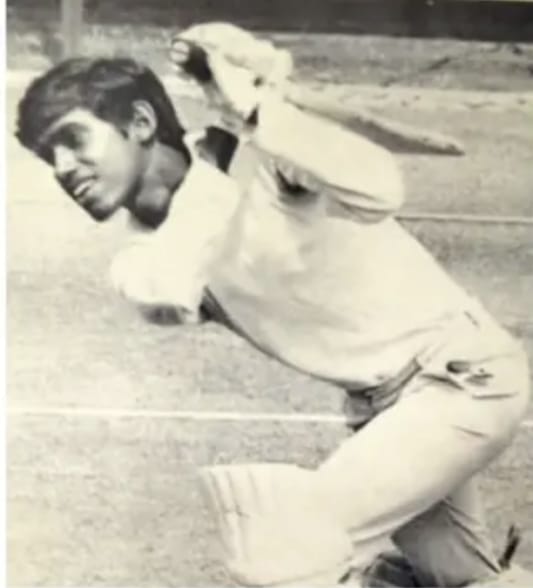
Eran Wickramaratne is also a skilled cricketer. He represented the Royal College first XI cricket team during the 1976–77 season as an opening batsman. After school, he played for the Tamil Union Cricket and Athletic Club. During his studies in Britain, he also competed in the Kent Amateur Cricket League.
President Anura Kumara Dissanayake invited Eran to chair the Sri Lanka Cricket Transformation Committee as part of a national responsibility. Eran reportedly told close friends that he was surprised that someone from an opposing political camp had been selected for such a role.
But this should not surprise anyone. During the last presidential election, it was Eran and Harsha de Silva who launched some of the harshest political criticisms against Anura Kumara Dissanayake and the NPP, arguing that the country should not be handed over to leaders without management experience.
It is no secret that the views of Harsha and Eran, both respected for their expertise in economics and finance, significantly influence middle-class voters. They argued that allowing another political experiment in a country that had already gone bankrupt would be dangerous.
So why would President Dissanayake appoint such a fierce critic to lead the Cricket Transformation Committee? This reflects a political approach that may determine the future credibility of the NPP government itself. Cricket is almost a religion in Sri Lanka — a national passion and lifestyle. There is a broad public consensus that the “Shammi-Thilanga cricket mafia” must be defeated to save the sport.
When Roshan Ranasinghe dissolved the cricket board, Parliament unanimously supported the decision without a vote. All 225 MPs effectively agreed that Sri Lankan cricket had to be rescued from this alleged mafia. The current government is now attempting to fulfill that national responsibility. Failure to do so would amount to a major political defeat for the NPP administration.
President Dissanayake appointed Eran despite the risks because he understood that reforming cricket is a national responsibility beyond party politics. Given Eran’s professional capabilities, experience, and cricket background, it is difficult to find someone more qualified. The ICC itself reportedly preferred Eran for the role.
Does this mean the NPP lacks people of Eran’s caliber? Perhaps. But the government need not be ashamed of that. During the election campaign, NPP leaders openly said they were willing to work with honest and competent individuals from other political parties.
The President’s decision to hand over the responsibility of rebuilding Sri Lankan cricket to the most suitable person, regardless of party affiliation, deserves praise — as does Eran’s willingness to accept the task.
Other committee members include Sidath Wettimuny, Roshan Mahanama, Kumar Sangakkara, President’s Counsel Upul Kumarapperuma, Thushira Radella, Prakash Schaffter, Avanthi Colombage, and Dinal Phillips. Wettimuny and Mahanama, in particular, are widely admired as gentleman cricketers.
Since the people’s uprising, Sajith Premadasa and the SJB have repeatedly claimed that the real experts and capable professionals are with them. Sajith has also repeatedly sworn, in the name of his father, that he would support the government’s good policies without petty politics.
The SJB, together with the rest of Parliament, agreed that Sri Lankan cricket must be rescued from the Shammi-Thilanga “mafia.” Therefore, there was no political disagreement on the issue. In such a context, the SJB leadership should have celebrated the fact that one of their senior leaders had been entrusted with this major national responsibility.
Instead, Sajith Premadasa expelled Eran Wickramaratne from the party. This incident exposed Sajith as an extremely hypocritical politician. Not only did he remove Eran from the party, but he also allegedly launched a disgraceful smear campaign against him through party-aligned media activists and social media operatives.
What is most unfortunate is that Eran Wickramaratne’s religion became a target. Eran is an Evangelical Christian (“born again” Christian). His father, Colton Wickramaratne, was a pastor, and his brother Dishan Wickramaratne is also a pastor. These were never secrets.
When Eran entered active politics with the UNP in 2010, he was already an Evangelical Christian. When he helped form the SJB in 2019, he was still an Evangelical Christian. Yet suddenly his religion has become a problem for some within the party.
While it is unsurprising for Rajapaksa loyalists to attack Eran on religious grounds, it is deeply disappointing that supporters of both the “telephone” and “gas cylinder” political camps have also descended into such behavior.
SJB General Secretary Ranjith Madduma Bandara told the media that Eran Wickramaratne had now become a member of the JVP.
After accepting the chairmanship of the Cricket Transformation Committee, Eran informed the SJB General Secretary by letter that he would resign from the party’s Working Committee and Management Committee to fulfill his responsibilities. In response, Ranjith Madduma Bandara immediately ordered him to resign from party membership altogether.
Other SJB spokespersons, including Niroshan Padukka, also reportedly joined the smear campaign.
Before Eran, Harsha de Silva had faced similar attacks. A group including SJB spokesperson Charith Abeysinghe accused Harsha of being an “NGO agent” who did not represent the SJB’s policies. They even alleged that he received funding from USAID.
These accusations are mere “Bayi talk,” rooted in Sinhala-Buddhist nationalist politics. Such attacks could not have happened without the tacit approval of Sajith Premadasa and the party leadership.
The reality is that figures like Harsha and Eran make the SJB shine — not the other way around. Leaders such as Sajith Premadasa and Ranjith Madduma Bandara are allegedly incapable of accepting this reality.
We extend our best wishes to Eran Wickramaratne and the committee members who have accepted the challenge of restoring the pride and excellence of Sri Lankan cricket. Cricket is deeply embedded in the blood and culture of Sri Lankan society. For years, we have repeatedly argued that this heritage must be rescued from the “Shammi-Thilanga mafia.”
The nine-member committee led by Eran aims to introduce a new constitution in line with ICC regulations, ensure transparency, rebuild public trust through anti-corruption mechanisms, strengthen national teams through world-class facilities and incentive systems, and elevate Sri Lanka in international rankings.
Together with the majority of the public, we remain hopeful about this committee. We also strongly urge Sajith Premadasa and the opposition not to undermine this national responsibility through narrow political interests.
---------------------------
by (2026-05-16 19:02:28)


 Read 41022 Times
Leave a Reply
 0 discussion on this news