
By Prof. Desmond Mallikarachchi
(Lanka-e-News -2026.June.04, 11.45 PM)
Contextualizing Prof. Obeyesekere’s Essay....
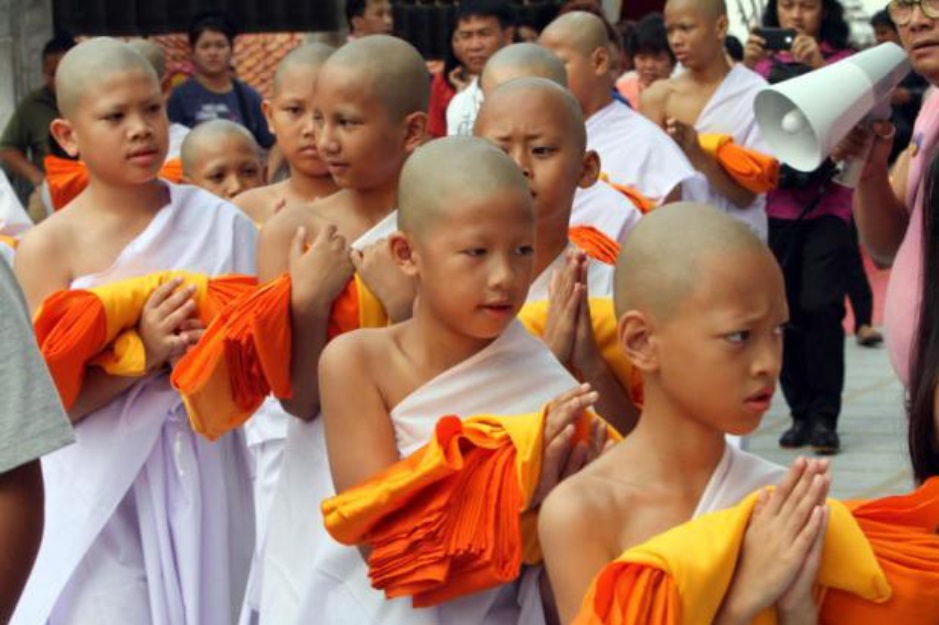
Monastic sexual abuse of children of both sexes has once again surfaced with alarming intensity across Sri Lanka. Cases have been reported from every corner of the island. Some bhikkhus are currently in custody, while others are already serving prison sentences. Only a few days ago, a Buddhist monk was sentenced to ten years’ imprisonment for sexually abusing a child who had been living in his temple in preparation for ordination. These incidents have once again brought the issue of child ordination into public debate and raised serious questions about whether children should be ordained at all.
More than two decades ago, when Prime Minister Ratnasiri Wickremanayake proposed the ordination of two thousand children in order to address the growing problem of disrobing among monks, the late Professor Gananath Obeyesekere, the distinguished scholar of the anthropology of Buddhism, expressed deep concern over the proposal. Responding at the time to the government initiative, he offered a thoughtful and critical analysis of the broader social, ethical, and institutional implications of child ordination in his essay ‘Child ordinations and the Rights of Children’, published in Pravada (2000). "Prof. Obeyesekere's ideas were given wider publicity by The Sunday Times in 2001 under the title 'Child Monks — Good or Bad?'
Although Gananath Obeyesekere's essay has been widely praised as a bold and insightful analysis of child ordination, neither his interpretation of the phenomenon nor the remedy he proposes enables us to understand the deeper structural causes of the contemporary crisis of Buddhism. At best, his analysis reveals only the visible tip of a much larger iceberg. Nevertheless, an examination of his views on child ordination is useful, both for understanding his anthropological perspective and for demonstrating the need for a theoretical framework with greater explanatory power. His principal arguments may be summarized as follows.
The essay presents a strong critique of the growing movement in Sri Lanka to recruit large numbers of children into the Buddhist monastic order as novice monks. The author argues that this trend raises serious ethical, social, and religious concerns because children are too young to make such life-changing decisions independently. While recognizing the important role monks play in Buddhist society, he questions whether child ordination is compatible with the true spirit of Buddhism and the Theravada Vinaya.
Professor Gananath Obeyesekere begins by referring to recent campaigns encouraging the ordination of thousands of children, some of them supported by political leaders. He recalls a newspaper photograph of a very young novice monk whose unhappy appearance symbolized, in his view, the burden imposed on children entering monastic life. Since even adults find the demands of a mendicant religious order difficult, he argues that children are even less capable of understanding or consenting to such a commitment.
The author next examines the social background of children likely to be recruited. Most, he suggests, will come from poor and vulnerable families affected by economic hardship, war, or displacement. Although monasteries may provide food, shelter, and education, he questions whether these benefits justify ordination. Poor children still enjoy family affection, companionship, and emotional support, all of which may be lost in monastic life. Rather than recruiting children, Buddhists should establish welfare institutions, educational assistance programs, and other forms of social support that better reflect the Buddhist ideal of compassion.
A major concern raised in the essay is the possibility of sexual abuse within monastic institutions. Obeyesekere notes that abuse has occurred in religious organizations worldwide and argues that Buddhist monasteries are not necessarily immune. Because Sri Lankan Buddhism permits child ordination, children are placed directly under the authority of adult monks, making them especially vulnerable. Although he believes many monks are decent and responsible individuals, he insists that the possibility of abuse cannot be ignored, particularly in large urban monasteries.
The author further observes that the Vinaya Pitaka itself contains rules against sexual misconduct, indicating that such problems existed even during the Buddha’s time. In the modern world, monks are exposed to numerous forms of sexual stimulation while monastic discipline denies them normal heterosexual relationships. For this reason, he argues that the risk of child abuse requires serious institutional safeguards.
Another criticism concerns the declining quality of monastic education. Many monks now pursue secular education, university degrees, and government employment rather than intensive study of Buddhism, Pali, Sanskrit, or meditation. Since many eventually disrobe and return to lay life, the recruitment of thousands of children is unlikely to strengthen Buddhism in any meaningful way. The author therefore argues that Buddhist institutions should focus on cultivating genuine religious learning, meditation, and moral discipline rather than increasing the number of monks.
The essay pays particular attention to the helplessness of children in situations of abuse. Unlike adults, children often cannot resist exploitation or leave oppressive environments. Family expectations and social pressures may discourage them from complaining. Although regulations require guardians to supervise child recruits, Obeyesekere doubts that guardians can effectively investigate abuse in a society where discussions of sexuality remain taboo. He suggests that professionally trained child-care personnel within the Sangha could offer some protection, but believes that little serious attention has been given to the issue.
Turning to the Vinaya, Obeyesekere argues that many Buddhists misunderstand the original regulations governing ordination. While parental consent is required, the Vinaya also states that boys under fifteen should not ordinarily be ordained. A later exception allows the ordination of younger youths only if they are sufficiently mature and capable of enduring monastic hardships. According to the author, this exception has been widely misinterpreted. The intention was not to encourage the ordination of small children but to permit exceptional cases. Consequently, he concludes that mass child ordination contradicts both the letter and spirit of Theravada monastic law.
Despite his criticism, the author does not reject the importance of monks. He acknowledges that they remain essential to Sri Lankan religious life through preaching, rituals, funeral ceremonies, and community leadership. However, he asks whether society truly needs large numbers of monks or a smaller body of well-trained, disciplined, and learned monks who faithfully uphold Buddhist principles.
As an alternative, Obeyesekere proposes recruiting older adults into the Sangha. Retirees and elderly people are often interested in meditation and religious practice, while also possessing the maturity and life experience necessary for monastic life. Having already fulfilled family and social responsibilities, they may be better prepared for genuine religious commitment. Moreover, monasteries could provide support for elderly people living on limited incomes. Given Sri Lanka’s aging population, he regards older adults as a more suitable and ethical source of future monastic recruitment.
In conclusion, the essay strongly criticizes campaigns promoting child ordination. Obeyesekere argues that such practices expose vulnerable children to emotional hardship, possible abuse, and exploitation while conflicting with the true principles of the Vinaya. Rather than responding to poverty by turning poor children into monks, Buddhism should address social problems through compassionate welfare measures. He therefore advocates a vision of the Sangha based on mature, educated, and genuinely committed adults rather than the mass recruitment of children.
While paying due respect to Professor Gananath Obeyesekere, my former teacher of Social Anthropology at the University of Peradeniya, (1966-1967), I wish to state that although I fully agree with his opposition to child ordination, I do not believe that the crisis of the Sangha in a money-centred capitalist society can be resolved merely through stricter adherence to the Vinaya, reform of ordination practices, or limiting ordination to mature adults. Such measures may address certain moral issues, but they do not confront the deeper structural causes of the crisis.
The roots of the problem lie in broader social and economic transformations. Changes in class relations, globalization, consumer culture, the power of money, and the tensions between renunciation and material accumulation have fundamentally reshaped the Sangha. Historically, its strength rested on a distinct economic and social foundation, but that foundation has been irreversibly transformed. As a result, traditional forms of monastic commitment are steadily eroding. In Marx's words, "all that is solid melts into air."
For this reason, the crisis of the Sangha cannot be adequately explained in moral, psychological, or institutional terms alone. It must be understood through the lens of historical materialism, following the work of scholars such as D. D. Kosambi, Leslie Gunawardana, and, inevitably, Karl Marx. My position is that Marxist analysis provides a more powerful explanatory framework for understanding the contemporary crisis of Buddhism in Sri Lanka than existing anthropological and sociological interpretations of Buddhist change, including those associated with Gananath Obeyesekere, Richard Gombrich, Stanley Tambiah and their successors such as Kemper, Spencer, Holt and Blackburn. A fuller defence of this argument, however, must await a separate article.
---------------------------
by (2026-06-04 19:27:48)


 Read 64620 Times
Leave a Reply
 0 discussion on this news