
By Gerard Adams
(Lanka-e-News -2026.June.08, 11.30 PM) "All animals are equal, but some animals are more equal than others." - George Orwell, Animal Farm
The 2024 general election in Sri Lanka produced a mandate of historic proportions. The AKD-led NPP coalition secured 159 of 225 parliamentary seats. Yet electoral dominance is not state power — and any honest observer of Sri Lanka's political history must confront that distinction without flinching.
A government commands the legislature and the executive. The state is something older, deeper, and far more resistant to democratic correction: the military, police, judiciary, bureaucracy, media, and cultural institutions — populated by individuals whose careers, loyalties, and interests long predate any election result.
Previous transitions of government in Sri Lanka were rotations within the same ruling class. Faces changed; the machinery did not. The mandate of 2024 was structurally different: for the first time, a government arrived with a popular mandate not merely to administer the state but to transform it. As political sociologist Prof. Uyangoda observed, the Aragalaya of 2022 was a tectonic rupture — a dislodgement of one class and the beginning of the ascent of another.
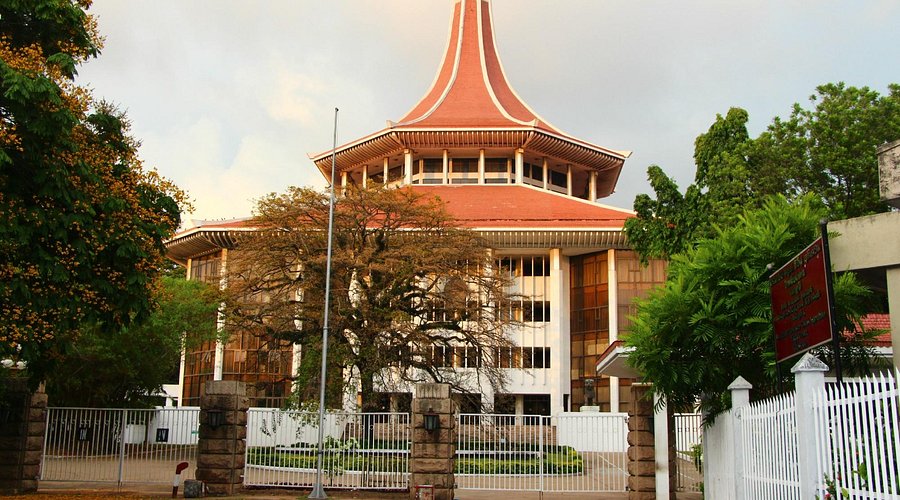
That transformation remains incomplete. The last fortress of the old order — the courts of Hultsdorf, the legal establishment, and the deep-state networks protected within them — has not yet fallen. This essay is a demand that it must.
The AKD government has moved with deliberate purpose to realign state institutions. In the police service, the removal of the Inspector General and the reinstatement of Shani Abeysekara — a figure associated with professional independence and a target of the very deep-state networks this essay concerns — signals a reconstitution of police command. The arrest of Major General Suresh Saley in military intelligence reflects an assertion of civilian accountability over the security apparatus that no previous government had the political will to attempt.
On the judiciary, the appointment of Ranga Dissanayake and the elevation of Chief Justice Preethi Padman Surasena are the most consequential institutional interventions. Historically, as Dr. Newton Gunasinghe observed, the Sri Lankan military has followed the elected government, confirmed in 2015, in the 52-day crisis of 2018, and after the Aragalaya. The judiciary is a different matter. It has never been tested in the same way. And it is now being tested.
What is philosophically remarkable is that the AKD government — with its Marxist ideological lineage — has chosen not populist force but the capitalist legal system itself as its instrument of transformation. The old régime, in turn, has retreated into that same system: using Hultsdorf as a fortress, procedure as a shield, and time as a weapon.
This is the central paradox of the moment. The courts that protected the powerful are now being used — cautiously, imperfectly, but purposefully — to hold the powerful to account. Whether Hultsdorf will resist or yield is the question that history is now putting to the Sri Lankan legal profession.
The term "deep state" is sometimes dismissed as conspiratorial. In Sri Lanka, it requires no conspiracy theory — only an honest reading of the evidence placed before the courts in the Easter Sunday bombing trials.
The Easter Sunday bombings of 21 April 2019 killed 273 people, including 45 children. They were not merely an intelligence failure. The evidence emerging from the trial proceedings has implicated, by name and by document, a network spanning politicians, military intelligence officers, police officers, vigilante groups, members of the legal profession, and — in testimony that should have shaken the foundations of the judicial establishment — a sitting judge.
A sitting judge. Named in open court. In proceedings concerning the mass murder of 273 citizens. This is not an allegation. This is testimony on record. The question that the Bar Association of Sri Lanka has conspicuously refused to ask is: what does it mean that one of their own is implicated in the protection of those responsible for the worst act of terrorism in Sri Lanka's post-war history?
The answer, when examined against what followed, is deeply troubling. Because that same judge — named in the Easter Sunday hearings — subsequently appeared at a BASL general meeting. Not coincidentally. The meeting was arranged by the same person who organized the appearance of a former Chief Justice of India as a speaker at BASL events — a figure whose presence lent institutional prestige to what was, in substance, a factional mobilization of the legal establishment against the present government and Chief Justice.
This connection must be stated plainly: a judge implicated by name in Easter Sunday testimony, appearing at a professionally arranged BASL forum, facilitated by the same network that brought a foreign judicial figure to add legitimacy to an internal power play. This is not a coincidence. This is a pattern. And patterns, in law, have evidentiary significance.
The 273 dead of Easter Sunday — including 45 children — deserve better than a legal establishment that closes ranks around those named in their murders. If the BASL cannot find the moral clarity to ask the most basic professional questions about a member implicated in such testimony, it has forfeited any claim to represent the administration of justice.
The deep state operates precisely through the credibility of institutions it has captured. A Bar Association that shelters implicated individuals, a judiciary populated by those who owe their advancement to the old order, an Attorney General's Department that has obstructed accountability — these are not separate failures. They are the same machine, wearing different professional robes.
A. The Hara–Kultoor Divide: Class as Destiny?
At Sri Lanka Law College, from approximately 1970 to 1990, two factions defined the profession's internal culture. The "Hara" — those of rural or modest origin — and the "Kultoor" — those of social pedigree and urban formation — represented in microcosm the class structure of the society that produced them. The Kultoors fought to preserve professional dominance through social inheritance. The Haras fought for entry on merit.
But the binary was never clean. Ran Banda Senevirathna, a Hara by birth, rose to distinction at the Colombo Bar and appeared, without hesitation, for university students unlawfully arrested and brutalized under the Jayawardena administration — the most vulnerable clients, in the most politically hostile environment. Gunarathna Wanninayake, also of Hara origin, used institutional position to obstruct rather than serve justice.
The lesson is philosophical and uncomfortable: the problem is not class origin. The problem is professional conscience. A Hara who ascends to the Bar and then protects the powerful is not a tribune of the people — he is simply a new member of the old club. A Kultoor who uses inherited privilege to defend the defenceless is more worthy of the name 'professional' than a dozen credential-laden careerists who never once stood on the wrong side of power for the right reason.
B. The Proud Moments the BASL Has Abandoned
The BASL has known genuine courage. In 1989, under H.L. de Silva, it stood publicly in defence of human rights lawyers being murdered by state-aligned vigilantes. Wijedasa Liyanarachchi, Kanchana Abeybala, and Charitha Lankapura filed habeas corpus petitions at personal risk, confronting enforced disappearances, extrajudicial killings, and unlawful detention. The BASL's support for those lawyers, under military and political pressure, was the institution at its best.
The BASL resisted the constitutionally irregular impeachment of Chief Justice Shirani Bandaranayake in 2012. Under Wijedasa Rajapaksa, Upul Jayasuriya, and Kalinga Indrathissa, it maintained a critical posture toward executive overreach. These are records to be proud of.
But the BASL's silence over the murders of Nadaraja Raviraj and Lasantha Wickrematunge — a human rights lawyer and a journalist-lawyer, killed for their professional work — exposed the institution's selective courage. It was brave when its own elite was threatened. It was silent when Tamil professionals and minority voices were killed. That is not a principle. That is ethnically coded self-interest dressed in professional language.
The BASL that arranges for a judge named in Easter Sunday testimony to appear at its general meeting — through a facilitator who also imports foreign judicial prestige to dress up factional opposition — is not the BASL of H.L. de Silva. It is something else. It is an institution that has confused institutional self-preservation with the administration of justice.
Ranil Wickremasinghe never practiced as an attorney. But his informal influence over the BASL, the Colombo Bar, and the Attorney General's Department was extensive and, over decades, corrosive. His arrest is what BASL President Saliya Pieris has called a "Rubicon crossing." That phrase is apt — but it understates the significance.
The Attorney General's Department has been identified in a report by the United Nations Human Rights Commissioner as a structural impediment to accountability in Sri Lanka. The AG's office has repeatedly declined to prosecute cases involving state actors, delayed proceedings in which the state's own officers are implicated, and provided legal cover for conduct that, in any functional democracy, would have resulted in criminal prosecution years ago.
The AKD government's decision not to impeach the Attorney General — despite this documented record — is a political calculation that carries real reputational costs. Sri Lanka's extradition requests, its international legal cooperation, and its credibility before human rights bodies are all directly affected by the perceived independence and integrity of the AG. Allowing a compromised AG to remain in post is not a neutral act. It is a decision with consequences, and those consequences fall hardest on the victims of state conduct that the AG has declined to prosecute.
The prosecution of Wickremasinghe is, in this context, a form of indirect pressure — a signal to the Department and the Hultsdorf ecosystem that the old protections can no longer be taken for granted. The BASL's institutional resistance to Chief Justice Surasena must be read against this backdrop: it is not a defence of judicial independence. It is a defence of a network whose independence from accountability has, until now, been its most valuable asset.
Professions are social compacts. They are agreements, made across generations, between those who hold specialized expertise and the society that grants them the exclusive right to exercise it. In exchange for that exclusivity — the monopoly on legal practice, the privilege of the Bar — the profession accepts obligations: to competence, to independence, to ethics, and above all, to the public interest.
This compact has ancient roots. The Code of Ur-Nammu (circa 2100 BCE) and the Code of Hammurabi (circa 1750 BCE) established that dispute resolution is a public function, not a private service. The legal profession as an independent institution — lawyers as defenders of rights rather than servants of royal prerogative — emerged through Roman law and English common law between 500 BCE and 1500 CE. Judicial independence — the principle that those who judge must not be subject to those they judge — was its highest achievement.
Modern professionalism added to this foundation: expert knowledge, public accountability, moral independence, and freedom from corruption. These are not aspirations. They are the terms of the compact. Breach those terms and the profession does not merely fail — it forfeits its authority.
The legal profession in Sri Lanka has, in too many documented instances, failed that compact most fundamentally: by protecting those responsible for violence against the very citizens whose legal rights the profession exists to defend. The 273 Easter Sunday dead are owed a reckoning. So are the disappeared. So are the tortured. So are the 11 children who never came home. A profession that cannot find its voice on its own behalf is not worthy of the name.
Preethi Padman Surasena is the son of a man killed in the political violence of 1989. He holds a Bachelor of Science degree (1985), passed at Law College (1989), and holds a diploma in Forensic Medicine (2007). He rose through the judiciary to its apex. His personal biography is a record of a man who knows, at the most personal level, what state failure costs.
As President of the Court of Appeal, Surasena ruled that the 52-day government of 2018 was unconstitutional — a ruling that required nerve in a deeply politicized environment. His Presidential Commission report recommended stripping Mahinda Rajapaksa of civil rights — a recommendation that served neither dynastic faction and reflected independent legal reasoning.
When the BASL elected to invite Supreme Court Judge Yasantha Kodagoda to its general meeting rather than the Chief Justice — a calculated act of institutional diminution — Surasena understood the manoeuvre exactly. His response was not wounded pride but institutional judo: he facilitated Kodagoda's appointment to the Judicial Service Commission, turning the BASL's chosen figure into a structural asset for the very body the Bar sought to undermine.
Judge Weeramanthry's words bear repeating: "If a judge fails in his duty of judicial integrity, that entire nation is lost." Chief Justices Neville Samarakoon and Shirani Bandaranayake faced impeachment rather than compromise. Chief Justices Mohan Pieris and Sarath N. de Silva chose differently. Surasena's record places him unambiguously in the former tradition.
A Chief Justice who came from nothing, who lost his father to state violence, who ruled against the politically powerful when it was professionally costly, and who is now opposed by the very institution that should be defending judicial independence — is being resisted not because he lacks integrity but because he has too much of it.
His ongoing programme of judicial digitalization and procedural reform is the substance of what independence looks like in practice: making the courts accessible, transparent, and efficient for people who cannot afford delay — the very people for whom justice has always been rationed.
The debate over extending the retirement age of Supreme Court judges is, in its ostensible form, a question of institutional design. In its actual form, as it is being conducted in Sri Lanka today, it is a question about whether the established legal network can remove a Chief Justice whose independence is inconvenient.
The substantive case for extended tenure is not trivial. Adjudication is one of the few professions in which the cumulative qualities of wisdom, moral steadiness, and independence deepen with experience. Ancient legal traditions entrusted judgment to elders for this reason. Modern jurisdictions with longer life expectancy have extended judicial retirement ages in recognition that the scarcity of senior legal talent and jurisprudential continuity serve the public interest. Extended tenure also insulates judges from the political cycle: fewer vacancies mean fewer opportunities for partisan appointments.
When opposition to extended judicial tenure comes loudest from those who fear a specific incumbent's independence, the argument must be identified for what it is: not an institutional principle, but institutional panic. Using procedural machinery to achieve what cannot be achieved through argument is the deep state's oldest technique. The legal establishment has no standing to employ it against the very independence it claims to defend.
Orwell's maxim describes, with precision and without satire, the operative constitution of Sri Lanka's legal order as it has historically functioned. Certain actors — senior clergy, political dynasties, military figures, senior members of the legal profession, and judges named in terrorism proceedings — have moved through the system with structural impunity. Their victims have been, in the bluntest possible sense, the unequals.
The unequals include the 273 killed on Easter Sunday, among them 45 children, whose murderers have been protected by a network that extends into the very institutions charged with prosecuting them. They include the disappeared of the 1989 terror, the tortured of the war years, the journalists killed for their professional work, and the ordinary citizens for whom justice has always been a commodity priced beyond reach.
This essay is a demand. Not a polite submission. Not an academic exercise. A demand, on behalf of those whose names have been entered into trial records while their killers enjoy institutional protection, that the legal profession in Sri Lanka decide, finally, what it is for.
The connection between the judge named in Easter Sunday proceedings and the BASL meeting arranged by the same facilitator who imported a foreign Chief Justice for institutional legitimacy is not a curiosity. It is a window into the machinery of protection. It must be investigated, named, and confronted by every member of the legal profession who considers themselves bound by the terms of the professional compact.
The BASL that stood against vigilante murder in 1989 knew what it was for. The BASL that arranges platforms for those named in the worst act of domestic terrorism in Sri Lanka's post-war history has forgotten. The profession does not get to selectively remember its finest hours while ignoring its present complicity.
A legal profession worthy of its compact with society does not calculate the professional cost of standing on the right side. It does not ask what the rate is. It asks what is right. The distinction between a warrior of justice and someone who rents legal skills to the highest bidder is not rhetorical. It is the difference between a profession and a transaction — between an institution and a cartel.
Hultsdorf's transformation will not be measured by which faction controls its corridors. It will be measured by whether the unequals — the dead, the disappeared, the tortured, and the voiceless — finally receive the justice that has, for far too long, been the exclusive property of the more equal animals.
(This essay is an analytical and advocacy commentary on Sri Lankan legal and political institutions.)
---------------------------
by (2026-06-21 13:10:33)


 Read 46152 Times
Leave a Reply
 0 discussion on this news