
-By Gerard Adams
(Lanka-e-News -2026.June.24, 5.40 PM) "If you want something you have never had, then you have got to do something you have never done."
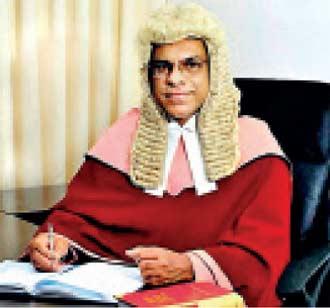
- Chief Justice Surasena
"The people are the only source of legitimacy; power without legitimacy is violence."
-Hannah Arendt
Every civilization makes a foundational choice about the kind of power it will worship. Will it kneel before justice, or before victory? Sri Lanka made its choice in antiquity - and that choice has echoed forward, generation by generation, into every mass grave, every disappeared lawyer, every bent court, every AG who learned to look the other way.
The ancient king Elara ruled by a creed of absolute judicial impartiality. When his own son violated the law, Elara upheld it. In that act, a principle was born: that rulers are bound, not above, the moral order. But Sri Lanka did not inherit Elara. It inherited Dutugemunu - the warrior-king who vanquished Elara, was absolved by the clergy for the lives he had taken and was celebrated as the nation's liberator. From that moment, a dangerous theology embedded itself in the island's political unconscious: that victory is its own absolution. That those who win need not answer to those they crush.
The British came and went. They left magnificent architecture — courts, codes, procedures, the Westminster form. But architecture is not faith. The buildings remained; the ethic that ought to animate them never arrived. Sri Lanka inherited the shell of accountability without ever internalising its soul. This is not a colonial grievance. It is the living philosophical root of everything that followed: the impunity is not a corruption of the Sri Lankan state. In a terrible sense, it is its founding principle.
In 1978, J.R. Jayewardene did not modernize Sri Lanka. He restored monarchy and gave it a ballot box. The executive presidency he fashioned was the old Dutugemunu arrangement rewritten in constitutional language: head of state, head of government, commander-in-chief, supreme appointing authority, and immune from suit. Power without accountability. Authority without answerability. The king now elected.
When a single office fuses political power, military command, and legal immunity, something philosophically catastrophic occurs: the law ceases to be law. It becomes a weapon aimed downward, never upward. Jayewardene court-packed, removed inconvenient judges, and transformed the Attorney General's Department from an independent office of the court into an instrument of presidential will. He also gave the state its most enduring legal weapon: the Prevention of Terrorism Act, enacted in 1979 as a temporary measure, which became permanent and which granted security forces the power to detain without trial, to interrogate without oversight, and to operate in a legal void where extrajudicial killing was not punished but protected.
Every president after JRJ understood what this architecture permitted. None surrendered it willingly. The deep state that grew from it was not a conspiracy assembled in dark rooms. It grew the way rot grows when oxygen is withheld from the root — organically, inevitably, from a structure of power that made collaboration between political dynasties, intelligence services, military elites, business cronies, and nationalist clergy not merely possible but mutually profitable.
It would be comforting to believe that five decades of judicial capture were the work of particular villains. Villains can be removed. A system outlasts its architects. It trains successors. It rewards conformity so quietly that those inside it barely notice they have been shaped. The record, laid out name by name, presidency by presidency, reveals not aberration but architecture.
Under Premadasa (1989–1993), the PTA and Emergency Regulations created a legal void in which extrajudicial killing became routine. Attorney General Sunil de Silva served during the bloodiest years of the anti-JVP counter-insurgency. Government-backed death squads — the 'Black Cats,' 'Yellow Cats,' 'Scorpions,' and 'Eagles' — moved through the south and central provinces with apparent security-establishment sanction. Bodies appeared by roadsides. Victims were burned on pyres of rubber tyres. JVP leaders Rohana Wijeweera and Upatissa Gamanayake were killed in custody. Lawyer Wijedasa Liyanarachchi was abducted and tortured to death — post-mortem revealing 19 broken ribs and over 100 internal injuries. Journalist Richard de Zoysa was taken from his home by men in a police jeep, identified by eyewitnesses as members of a special team reporting directly to the President. Human rights organizations estimated 30,000 killed or disappeared in the south alone in 1988–1989. The AG's Department under Sunil de Silva did not investigate these crimes. It administered the legal architecture that enabled them.
Under Chandrika Bandaranaike Kumaratunga (1994–2005), the promise of accountability arrived and then slowly retreated. Commissions were established; their reports documented over 16,000 enforced disappearances. But prosecutions of perpetrators moved at a glacial pace while witnesses were killed. Most senior officers from the JVP crackdown were promoted rather than charged. Kumaratunga elevated Sarath N. Silva from Attorney General directly to Chief Justice — a politically engineered appointment that placed a pliant operator at the apex of the judiciary. AGs who showed inconvenient independence were forced to resign.
Under Mahinda Rajapaksa (2005–2015), the system reached its most naked expression. The AG's Department operated under direct presidential control. The PTA and Emergency Regulations were deployed not merely against the LTTE but against journalists, activists, and those who dared question military conduct. The impeachment of Chief Justice Shirani Bandaranayake in January 2013 — driven through parliament by a Rajapaksa-controlled majority after she challenged legislation that would have extended executive control over public finance — was the crudest demonstration of what the system had become. The judiciary was treated as a department of the presidency, staffable and removable at will.
Under Maithripala Sirisena and Ranil Wickremesinghe (2015–2019), reform was promised and ambiguity delivered. The tools remained intact. The 2018 constitutional crisis revealed not the end of the old pattern but a new iteration of it: then-Court of Appeal President Padman Surasena suspended the cabinet of Rajapaksa's 52-day government in a ruling widely read as a political favour to Wickremesinghe. The judiciary was once again an instrument — only now pointed in a different direction.
Under Gotabaya Rajapaksa (2019–2022), the security state returned openly to the foreground. Attorney General Dappula de Livera faced sustained pressure. The Easter Sunday victims waited as the AG's Department failed to act on the presidential inquiry's recommendations. Meanwhile, under Rajaratnam's later tenure as AG, charges were dropped against senior military figures implicated in serious crimes — including the Navy 11 disappearances case, where charges against Admiral Ravindra Wijegunaratne were dropped on the AG's recommendation, and Wijegunaratne was then appointed High Commissioner to Pakistan by President Wickremesinghe.
Under Ranil Wickremesinghe (2022–2024) — who arrived in the presidency through parliamentary election, unelected by the people, elevated by the same political class the Aragalaya had tried to displace — the machinery continued with characteristic sophistication. Wickremesinghe inherited Sanjaya Rajaratnam as Attorney General and made him his instrument. When Rajaratnam's term expired in June 2024, Wickremesinghe twice proposed to the Constitutional Council a six-month extension. The plan was transparent: keep Rajaratnam in post long enough to position him as successor to retiring Chief Justice Jayantha Jayasuriya. An AG transformed into a CJ. A loyal legal officer elevated to the apex of the judiciary. The Constitutional Council rejected the extension - twice. Cardinal Malcolm Ranjith condemned it. The Catholic Bishops' Conference noted that Rajaratnam had failed to implement the Easter Sunday inquiry's recommendations throughout his entire tenure. Wickremesinghe then appointed Parinda Ranasinghe Jr. as Attorney General — bypassing the seniority principle the Bar Association had urged — in what observers read as another attempt to shape the successor architecture of judicial power before the presidential election he would eventually lose.
"The degree of civilization in a society can be judged by entering its prisons." - Fyodor Dostoevsky
This was not a series of aberrations. It was a system. And systems do not end when individual actors are replaced. They end only when the underlying logic that sustains them is broken — when the institutions at the centre of that logic finally refuse to be instruments, and become, instead, courts.
In 2022, something unprecedented happened in Sri Lanka. The people — not any party, not any ideology, not any leader — walked toward the gates of power and did not stop. The Aragalaya was more than a protest against economic collapse. It was a philosophical event. It was the moment when the governed collectively refused the central premise upon which impunity rests: that the powerful are sovereign, that the state's violence is legitimate by virtue of its authority, that those who rule need not answer to those they rule.
"The people are the only source of legitimacy; power without legitimacy is violence." - Hannah Arendt
Arendt understood what the deep state never could: that power is not a possession. It is a grant, given by the governed and revocable. The old elite-security nexus fractured under the weight of that revocation. The presidency lost its aura of invincibility. And within the institutions themselves, something shifted — the judiciary, watching the public reclaim its sovereign voice from the streets of Galle Face, sensed that the ground beneath fifty years of impunity had finally moved.
Into this altered landscape stepped Chief Justice Preethi Padman Surasena.
What distinguishes genuine judicial independence from its performance? Not the bold speech or the impressive ceremony. It is the willingness, in the face of pressure, to do the thing that cannot be undone — to issue the ruling that cannot be recalled, to hold the powerful to account when the powerful expect deference, to remain free when freedom is the one quality the deep state cannot tolerate in a judge.
Under Surasena's leadership, the Easter Sunday victims received judicial attention long denied them. Landmark anti-corruption rulings were delivered. Extremist clergy — among them Gnanasara Thero, who had long operated with impunity beneath the canopy of nationalist politics — were held accountable. Judicial independence began to be reasserted not as rhetoric but as institutional practice. A historic digitisation programme was launched. The courts began, visibly, to function as courts.
It is worth noting the arc of Surasena's own rise: he served as a member of a Presidential Commission that inquired into the Easter Sunday attacks, and separately led a committee that investigated the conduct of IGP Deshabandu Tennakoon — a figure Wickremesinghe had backed against Supreme Court opposition. The committee's findings were damning. Soon after, Surasena was named Chief Justice. In a system that had long rewarded deference, here was a judge whose elevation followed not accommodation of power but scrutiny of it.
"If you want something you have never had, then you have got to do something you have never done." - Chief Justice Surasena
This is not a motivational slogan. It is a precise diagnosis of what breaking a cycle requires. Sri Lanka has never had a fully independent judiciary — not sustained, not structural, not intergenerational. To have it now, those within the institution must do what their predecessors would not: refuse to be controlled, accept the consequence of courage, choose law over loyalty to whoever holds the palace.
"He who is brave is free." - Seneca
The deep state fears Surasena not because he is clever — it has survived clever people before. It fears him because he appears to be free. And a free judge is the one thing an architecture of impunity cannot accommodate.
When power cannot control an institution, it attempts to discredit it. This is as old as politics itself, and the campaign against extending the Chief Justice's retirement age follows the script precisely.
The campaign dresses itself in procedural language — questions of age, constitutional propriety, institutional continuity. But the real argument, stripped of its camouflage, is simpler and more frightened: we need someone we can manage. The retirement age is not the point. The point is the door it would close on the deep state's capacity to install a successor it can control.
Sri Lanka's own civilizational tradition has always understood what the smear pretends to forget: that age in judicial office is not liability but safeguard. Those who have lived and served long have less to lose and more to protect. They are harder to seduce, harder to threaten, more anchored in the accumulated wisdom of having witnessed what cowardice costs.
"Law is nothing else than an ordinance of reason for the common good." — Thomas Aquinas
For decades, Sri Lankan law was bent away from reason and the common good. It was twisted into an instrument of those who needed protection from accountability — the generals who ordered the burning of bodies, the politicians who orchestrated pogroms, the intelligence officers who ran disappearance networks, the AGs who dropped charges against admirals. To extend the tenure of a Chief Justice who has begun to restore law to its true purpose is not a political favour. It is the preservation of institutional memory against those who profit from institutional forgetting.
Sri Lanka stands at a threshold it has never quite reached before. On one side: the familiar architecture of impunity, the accumulated arrangements of five decades, the habits of institutions that learned to survive by bending. On the other: something this country has not had in full since independence — a judiciary that judges, a law that applies to the powerful as well as the powerless, an accountability that does not stop at the palace gate.
The attacks on Chief Justice Surasena and the Judicial Services Commission are not about law. They are the deep state's attempt to reclaim the one thing it cannot function without: a judiciary it can manage. Every smear, every manufactured procedural controversy, every political whisper about the retirement age — these are not legal arguments. They are the sounds of a system fighting for its survival.
President Dissanayake has already offered his answer, not in words but in acts. He has not impeached Parinda Ranasinghe. He has not moved against inconvenient judges. He has not reshaped the AG's Department to serve factional convenience. In a country with Sri Lanka's history, the decision not to do these things is itself a statement — a quiet refusal to play the old game that the deep state built and the ballot box has now, for the first time, genuinely threatened.
The people must answer this moment with clarity. Not with the language of political loyalty — not left or right, not this party or that — but with the foundational assertion that has been too long deferred.
Sovereignty belongs to the people - not to the deep state.
Chief Justice Surasena must be permitted to continue his work. Not because any president allows it. Not because any faction endorses it. But because the rule of law — the ancient and unglamorous principle that power must answer to something beyond itself — demands it. The deep state was built over generations. It will not fall in a season. But it begins here: at this moment, in these courts, with this judge — when a society finally decides that the Elara principle, so long abandoned, is the one worth keeping.
They wanted something else.
They will get nothing.
Because justice is finally within reach — and a people who have tasted its possibility do not easily let go.
Collection of articles written by Gerard Adams
https://www.lankaenews.com/category/22
---------------------------
by (2026-06-24 12:20:21)


 Read 67350 Times
Leave a Reply
 0 discussion on this news