
-By Gerard Adams
(Lanka-e-News -03.Aug.2026, 10.00 AM)
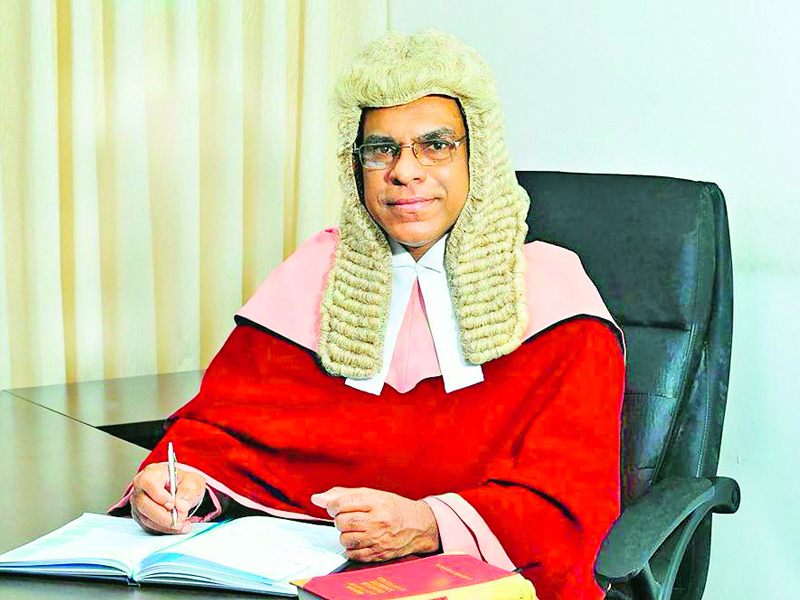
“If you want different results, start making different choices.” -Chief Justice Preethi Padman Surasena, on assuming office as the 49th Chief Justice of Sri Lanka
On 31 July 2026, a three-judge Colombo Permanent High Court Trial-at-Bar convicted former Inspector General of Police Pujith Jayasundara on 854 of 855 charges and sentenced him to death, alongside former Defence Secretary Hemasiri Fernando, for criminal dereliction of duty in failing to act on advance intelligence that could have prevented the 2019 Easter Sunday bombings — an atrocity that killed more than 270 people, including over forty foreign nationals.
That verdict exists only because of one earlier ruling. In February 2022, that same Trial-at-Bar quietly acquitted both men outright, dismissing all 855 charges without ever calling a single defence witness — a file closed, no one made to answer for the deadliest security failure in the country's post-war history. The Attorney General appealed, and in November 2024 a five-judge Supreme Court bench headed by Chief Justice Preethi Padman Surasena set aside that acquittal and ordered the trial reopened.
Without that single ruling, Jayasundara and Fernando would still be free men, and Sri Lanka would still not know who let the Easter Sunday attacks happen. This is the strongest case there is for defeating the impeachment against Surasena: the deep state tried to bury this file, and his court reopened it. Removing him now, weeks after that verdict, is not a coincidence anyone should be asked to swallow.
Forget the polite language about what comes next. What is happening to Chief Justice Surasena is not a “debate” about a retirement age. It is not a “concern” about judicial conduct. It is an execution attempt — carried out in slow motion, through paperwork, by an entrenched elite machine that has ruled Sri Lanka from behind the curtain for half a century. And the attempted impeachment of CJ Surasena is not a one-off scandal. It is the latest chapter in a long, ugly playbook of judicial capture and elite self-preservation.
Call it what serious scholars call it: infrastructural power. Michael Mann, Joel Migdal, Guillermo O'Donnell, Charles Tilly and C. Wright Mills all describe the same beast — a durable, bureaucratic, coercive network that survives every election, every reform, every revolution. It runs through the Attorney General's Department, the judiciary, the police hierarchy and intelligence apparatus, the senior bureaucracy, the religious establishment, and even professional bodies like the Bar Association of Sri Lanka. O'Donnell called zones like this a “brown area” — places where accountability dies and impunity thrives.
Drop the cabal fantasy, though. No one is meeting in a smoke-filled room. What you have instead is worse — a self-perpetuating machine built from institutional inertia (Mann), state-within-a-state networks (Migdal), informal power structures (O'Donnell), and elite reproduction mechanisms first mapped by Pareto, Mosca and Mills.
Sri Lanka built this machine the hard way, through trauma: ethnic violence in 1983, extra-judicial killings in 1988-89, wartime impunity through the 1990s and 2000s, white-van abductions from 2010 to 2015, the catastrophic Easter bombing failures of 2019, drug-underworld infiltration through the 2010s and 2020s. Every crisis added a fresh brick to the wall protecting the elite. The result: a gerontocratic guardianship — a self-appointed council of political, legal, bureaucratic and religious elders who genuinely believe they own the state. This isn't conspiracy talk. It is structural reproduction, plain and documented.
Sri Lanka's elite doesn't break the law — it rewrites it. Every “reform” of the past four decades has quietly expanded elite impunity while dressed up as progress.
Smuggling foreign loyalty into Parliament. The 19th Amendment barred dual citizens from sitting in the legislature, a provision widely understood at the time to target the Rajapaksa family, since Basil Rajapaksa held both US and Sri Lankan citizenship. The 20th Amendment tore that bar down in 2020, and Basil Rajapaksa entered Parliament through the National List the following year while still holding a US passport. This was never about inclusion. It was about giving one connected family a seat at the table. Mills has a name for it: transnational elite circulation.
The third-term gambit. The 18th Amendment tore out presidential term limits, clearing the runway for Mahinda Rajapaksa to seek a third term. This wasn't reform — it was entrenchment, an attempt to freeze political alternation permanently. O'Donnell's term fits perfectly: delegative democracy, where an elected leader starts acting like an uncrowned king.
The 1978 monster presidency. JR Jayewardene said it himself, and he wasn't joking: “The only thing the President cannot do is change a man into a woman.” The executive presidency delivered control over judicial appointments, the AG's Department, the police, the military, and Parliament itself — Mann's despotic power in its purest form.
The retirement-age trap. JR Jayewardene fired it once to remove Chief Justice Neville Samarakoon. The deep state is now loading the same weapon against Surasena — what Migdal calls institutional strangulation: killing reformers not with bullets, but with bureaucratic mechanisms nobody bothers to question.
Nothing about judicial capture in Sri Lanka is accidental. The 1978 presidency lets the executive appoint judges, steer transfers, brush off Supreme Court rulings, delay elections despite court orders, and invoke emergency powers to override judicial oversight whenever convenient. A domineering executive, a neutered legislature, and a retirement age fixed at 65 — put these together and judicial independence isn't just fragile, it's designed to fail.
The AG pipeline is the real engine room. Somewhere between 30 and 50 percent of Supreme Court judges have historically come up through the Attorney General's Department, a pipeline that manufactures a prosecutorial mindset, executive-aligned jurisprudence, tight loyalty networks, and judges primed to bend under elite pressure.
But something changed after Aragalaya. Since the 2022 uprising, a handful of AG-pipeline judges have broken the mould — Justice Jayantha Jayasuriya, Chief Justice Murdu Fernando — delivering rulings that clipped executive power and protected fundamental rights. Surasena is one of them, and that's exactly the problem for the deep state. He came through the AG pipeline but refused to stay loyal to it, delivering constitutionally independent, anti-impunity rulings, pushing digitalisation, and disciplining corrupt judges. He is not a pipeline loyalist — he is a pipeline defector, what elite theorists call elite defection: the moment an insider turns on the system that made him.
Even the cracks below prove the point. The Judicial Service Association passed a resolution without quorum — a small scandal exposing a bigger truth: lower courts remain hostage to political patronage and administrative manipulation. The upper judiciary has held the line, barely, which is exactly why the deep state wants it gone.
Here's the number that should embarrass every policymaker in Colombo: Sri Lankan Supreme Court judges retire with just 10 to 15 years of judicial experience. Compare that to the rest of the world.
India: retirement at 65 (Supreme Court) / 62 (High Court) — 20–25 years of experience
Pakistan: retirement at 65 — 20–25 years of experience
Bangladesh: retirement at 67 — 20–25 years of experience
United Kingdom: retirement at 70 — 25–30 years of experience
Australia: retirement at 70 — 25–30 years of experience
Canada: retirement at 75 — 30-plus years of experience
Sri Lanka: retirement at 65 — just 10–15 years of experience
Sri Lankan judges are being shown the door five to ten years earlier than their counterparts in comparable democracies. The consequences are not abstract: thinner jurisprudential maturity, weaker institutional memory, faster turnover, greater susceptibility to executive pressure, and deeper dependence on the AG pipeline to keep refilling the bench.
The deep state loves every bit of it. Frequent retirements let elites quietly reshape judicial succession, ease out independent judges without a fight, keep the AG pipeline dominant, and smother long-term reform before it can take root. This is the real headline: the retirement age isn't bureaucratic housekeeping. It is the central mechanism of judicial capture in Sri Lanka.
Sri Lanka's impeachment record tells one story on a loop: judges who challenge elite power get removed, one way or another.
Neville Samarakoon, 1984. He criticised political interference. He defended judicial independence. He ruled against the government. JR Jayewardene answered with the retirement age and parliamentary muscle, and pushed him out.
Shirani Bandaranayake, 2012. She ruled against the Divineguma Bill, blocking Basil Rajapaksa's pet project. Her impeachment was widely condemned around the world as unconstitutional and nakedly political.
The pattern is not subtle. Neither impeachment was about misconduct. Both were about discipline — punishing judges who refused to protect elite impunity.
Chief Justice Surasena is being targeted precisely because he is a structural anomaly — a product of the AG pipeline who defected from its loyalties. He has ruled against Ranil Wickremesinghe, Mahinda Rajapaksa, Gotabaya Rajapaksa, Sirisena, Basil Rajapaksa, powerful bureaucrats, and corrupt judges alike. He has pushed digitalisation, transparency, and a clean-up of lower-court corruption.
That is precisely why the deep state fears him. That is precisely why the impeachment machinery has been switched on. And this time, don't expect a parliamentary spectacle — expect the quieter weapon. Just as JR Jayewardene did to Samarakoon, the deep state intends to use the retirement age to remove Surasena without ever calling it removal at all.
Here is the part nobody wants you to remember. In 2016, two official bodies formally proposed raising the judicial retirement age, as part of Sri Lanka's 2015-2018 constitutional reform process.
The Public Representations Committee, May 2016, chaired by senior attorney Lal Wijenayake, brought together twenty members — civil society activists, lawyers, academics and retired officials, including Dr. Saravanamuttu Manoharan, Winston Pathiraja and K.T. Chitrasiri. Submissions came directly from the Bar Association of Sri Lanka, the Judicial Service Association, and senior legal practitioners and retired judges. Their evidence was blunt: judges enter the superior courts late and retire right as they hit peak experience, and case delays were driven by a shortage of experienced appellate judges. Public consultations backed this conclusion overwhelmingly.
The Constitutional Assembly's Sub-Committee on Judiciary, November 2016, chaired by Rauff Hakeem, included M.A. Sumanthiran PC, Dr. Jayampathy Wickramaratne PC, Wijeyadasa Rajapakshe PC, Anura Dissanayake and Sujeewa Senasinghe. It reviewed submissions from the Ministry of Justice and the Judicial Service Commission on caseloads and judge-to-population ratios, adopted the PRC's conclusion that the 1978 retirement age was obsolete, and studied comparative constitutional practice from the UK, Canada, Australia and India.
So: the reform was originated by BASL, the JSA and the senior legal community through the PRC, and formally drafted by the CASCJ under Rauff Hakeem, with Sumanthiran and Wickramaratne driving the detail.
Now watch the same actors — BASL, the JSA, several of the very CASCJ members who proposed this reform in 2016 — turn around and oppose it today. This is not a policy disagreement. This is not principled caution. This is structural alignment with the deep state, in real time, in public.
Why the sudden reversal? Because raising the age limit today would stop Surasena's removal. It would disrupt judicial laundering. It would block delay tactics. It would protect judicial independence. And it would threaten the very gerontocratic guardians who currently have cases sitting before the courts. Strip away the legal language and what's left is naked strategy — dressed up as principle, serving nothing but elite impunity.
Here's a number the deep state cannot spin away: the Saroj Pathirana poll, reported by Lankatruth, found that 79 percent of respondents support raising the judicial retirement age to 70.
That is not a marginal preference. That is a democratic mandate, loud and clear. Elite resistance has no claim to legitimacy here — none. The public wants judicial reform. The public wants independence. The public wants Surasena protected. The only people standing in the way are the ones with the most to lose.
If you want proof that Sri Lanka's elite treats judicial authority as optional, look at the record. Ranil Wickremesinghe ignored Supreme Court orders on election delays and emergency powers. Mahinda Rajapaksa ignored Supreme Court rulings during the Divineguma controversy. Sirisena ignored Supreme Court rulings throughout the 52-day constitutional crisis. This is not a one-off lapse — it is a decades-long pattern of executive impunity. Which is exactly why judicial independence has to be defended now, and why protecting Surasena is not optional.
Make no mistake about what is actually on trial here. The impeachment of Chief Justice Surasena is not about judicial conduct. It is the deep state's latest attempt to defend its impunity architecture — full stop. Every impeachment in Sri Lanka's history, Samarakoon in 1984 and Bandaranayake in 2012, followed the same script: discipline the judge who refused to serve elite interests.
If this impeachment succeeds — through a parliamentary trial or through the quieter route of forced retirement — the message will be unmistakable: judicial independence is impossible in Sri Lanka. The deep state will have proven it can remove any judge who threatens its impunity. The AG pipeline will keep dominating the Supreme Court. Lower-court capture will deepen. The sovereignty of the people will bow to the interests of the elite.
Defeating this impeachment isn't about saving one man's career. It is about defending the very idea of judicial independence. If Surasena falls, the judiciary falls with him.
The deep state doesn't always need a parliamentary spectacle to remove an inconvenient judge — constitutional architecture can do the job just as quietly, as JR Jayewardene proved with Samarakoon. The same mechanism is now aimed at Surasena. Raising the judicial retirement age remains the only structural fix on the table — protecting him from removal, weakening AG-pipeline dominance, and delivering what the PRC and CASCJ recommended in 2016-2018, a reform 79 percent of the public already backs. This is not a technical fix. It is a shield — and protecting Surasena was never about one man: it is about judicial independence and the integrity of Hulftsdorf itself.
For seven years, the families of the 270 people killed on Easter Sunday 2019 — mothers, fathers, children, worshippers gathered for Mass, tourists eating breakfast in hotel restaurants — waited for anyone in a position of power to answer for what was allowed to happen. In February 2022, the system told them, in effect, to stop waiting: the two most senior officials responsible for acting on the warnings were acquitted without even being asked to explain themselves.
It was Surasena's Supreme Court that refused to let that stand. The five-judge bench he led reopened the file, forced the missing evidence into daylight, and sent the case back to a court that has now, finally, delivered a verdict proportionate to what was lost. That is not a footnote to this impeachment fight. It is the reason the fight matters.
If Sri Lanka allows the deep state to remove the Chief Justice whose court gave the Easter Sunday families this measure of justice, it will be telling every grieving parent, every widow, every survivor still carrying shrapnel in their body, that justice here is conditional — available only for as long as it doesn't inconvenience the people who failed to protect them. Defeat the impeachment. Raise the retirement age. Let Surasena finish what his court started, so that the 270 are not, in the end, failed twice.
Collection of articles written by Gerard Adams
https://www.lankaenews.com/category/22
---------------------------
by (2026-08-03 04:35:34)


 Read 26712 Times
Leave a Reply
 0 discussion on this news