
-By Gerard Adams
(Lanka-e-News -08.Aug.2026, 8.15 PM)
There is a crime committed in Sri Lanka every single day, and no one is arrested for it. No indictment names it, no court punishes it. It has no fingerprints, no weapon, no single perpetrator — only a filing cabinet, a postponed hearing, a case number swallowed by a queue with no end in sight.
The crime is delay.
It does not announce itself as violence; it wears the mask of procedure, hides behind the dignity of "due process," disguises itself as patience. Strip away the mask, and what remains is this: a citizen promised a due, made to wait so long that the due arrived worthless, or never arrived at all.
This is the oldest indictment in the philosophy of law, restated for a modern age: a right that cannot be enforced within a human season of need is not a right at all — it is a promise broken slowly enough that no one notices the moment it died. Sri Lanka's judiciary has, for decades, been the site of exactly this slow death: a hyper-presidential constitutional order since 1978, politicised appointments, opaque registries, an adjournment culture rewarding those who can afford to wait, and a legal elite too often profiting from the inefficiency it claims to lament.
This is not an abstraction. It has a face and a date.
More than 260 people were killed in the Easter Sunday bombings of April 2019; indictments were not served until October 2021, and the main trial did not properly begin until March 2026 — seven years for a nation to give its dead a hearing. It has tens of thousands of faces: the Office on Missing Persons has registered as many as 25,000 disappearance complaints, yet independent monitors report barely two dozen ever traced, and not one senior official successfully prosecuted.
These are not footnotes to the argument above. They are its proof.
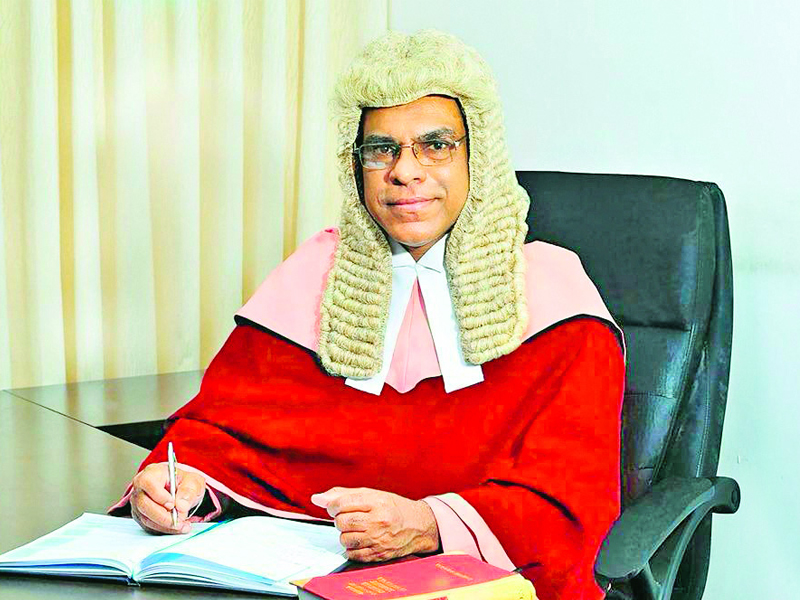
And yet — something has begun to move. Since July 2025, under Chief Justice Preethi Padman Surasena, the Supreme Court of Sri Lanka has started to behave as though time itself were a matter of conscience. This essay makes an unapologetic argument: Sri Lanka needs Surasena to continue leading its judicial reform project — not personality, not politics, but because he has done what philosophy demands and history proves is possible: treated delay as what it actually is.
Not an inconvenience. An injustice.
Every tradition of legal philosophy converges, eventually, on the same uncomfortable truth: the correctness of a judgment is only half of justice.
The other half is time.
Aristotle taught that justice is the rendering of what is due to each person. But a due delivered a decade late is a debt paid in a currency devalued into meaninglessness.
Lon Fuller argued that law possesses an "inner morality," a congruence between the rules a society announces and how those rules are actually applied. Every year a case sits untouched, that congruence cracks further, until the law on paper and the law in a citizen's lived experience become two different systems.
John Rawls sharpened the point into a test: design a justice system from behind a veil of ignorance, not knowing whether you will be born rich or poor. Would you choose a system where cases drag for years for whichever party can outlast the other? No rational person would.
Delay is a tax levied disproportionately on the weak.
H.L.A. Hart added the structural warning: a legal system without functioning procedures for timely resolution has failed the very task that justifies its existence. Legal theorist Tom Tyler showed, empirically, that people judge courts less by outcomes than by process — whether they were heard, respected, whether the wait itself felt like dignity or erasure. A slow court is not merely inefficient; it teaches citizens, hearing after postponed hearing, that they do not matter enough to be prioritised.
Put these four thinkers together and one conclusion is unavoidable: timeliness is the moral spine of justice itself. A judge's conscience is meaningless if the machine around them cannot deliver a decision while it still matters. Independence is not merely freedom from a politician's phone call; it is freedom from vanishing files and an adjournment culture that lets the powerful outlast the powerless.
A slow system, however proud its judges, is a captured system in slow motion. Only a disciplined, transparent, fast system can honestly call itself free.
Sri Lanka is not being asked to invent something new. It is being asked to catch up to a lesson the world has already learned, repeatedly, across different legal traditions.
Consider Singapore in the late 1980s: a judiciary so paper-bound that civil cases routinely took five to six years to resolve. Under Chief Justice Yong Pung How, that system was rebuilt around one principle — delay was a moral failure, not an administrative inconvenience. He reshaped the Bench, imposed brutal discipline on sitting hours, introduced pre-trial conferences and simplified procedure, and pushed early adoption of electronic filing and "technology courts." He did not simply hope corruption would disappear; in Lim Poh Tee v Public Prosecutor (2001), he personally imposed an uncompromising deterrent sentence on a corrupt police inspector, declaring that public office demands absolute integrity, or it demands nothing. By 1994, Singapore's backlog had become "a footnote"; by the late 1990s, ninety-five percent of civil cases resolved within a year. Its Corrupt Practices Investigation Bureau, founded in 1952 with power to investigate even senior officials, reinforced what the reforms had already begun structurally: removing the vanishing file that makes corruption possible.
Crucially, Singapore did not solve its capacity problem by simply retiring experience away: under Article 95 of its Constitution, the court formalised a Senior Judge scheme recalling retired judges to the bench on fixed, renewable terms — a standing bridge that keeps institutional memory without permanently expanding the Bench or freezing any one office-holder in place. Facing that backlog at his welcome ceremony in 1990, Yong Pung How vowed of the reforms ahead that "we shall not hesitate to do them."
Consider the United Kingdom, where the Woolf and Jackson Reforms dragged the common-law system toward proportionality, judicial retirement age rose from seventy to seventy-five, and temporary "Nightingale courts" opened from 2020 across dozens of extra venues — proof that even a long-reformed system leans on emergency capacity when backlog spikes.
Consider Canada and the Nordic countries, where judges may serve until seventy-five inside frameworks of deep independence; Canada went further in 2016, when R v Jordan imposed hard presumptive ceilings — eighteen months for provincial trials, thirty for superior court — beyond which delay is a constitutional violation.
Consider India, whose e-Courts project and National Judicial Data Grid dragged case data into public view, complemented by 775 Fast Track Special Courts, 398 exclusively for child sexual-abuse cases, which have disposed of more than 366,000 cases since 2019.
The pattern across these jurisdictions is simple: leadership that treats delay as a moral emergency, technology that makes manipulation visible, procedure that is proportionate, and discipline that does not wait for more resources before demanding more from what already exists. None of these countries fixed their courts by hoping. They fixed them by deciding time was no longer negotiable.
What has happened in Sri Lanka's Supreme Court since 28 July 2025 is not a minor administrative story. It is the first serious attempt in a generation to apply this philosophy at home.
When Chief Justice Surasena assumed office, the Supreme Court carried 5,326 pending cases — thousands of human beings whose due had been indefinitely deferred. What followed was arithmetic citizens could verify: 602 cases cleared by end-2025; 805 more between January and May 2026; a further 156 cleared between May and July 2026. A total reduction of 1,563 cases, driving the backlog down to 3,763. Each number is a litigant, a family, a small business owner who could finally close a chapter left open for years.
And crucially — echoing Yong Pung How's own refusal to treat "more judges" as a serious answer — this was not achieved by expanding the Bench, but through discipline: structured case management, five-day sittings, five benches of three judges in tandem, and prioritisation of the oldest cases first. This is structure imposed on chaos, the same philosophy that turned Singapore's judiciary from cautionary tale into global model.
Alongside the arithmetic came the architecture. Sri Lanka's National e-Case Management System now delivers real-time case lists, live status updates, downloadable judgments, online certified copies, online fee payment, and public statistics. An e-filing portal opened in February 2026, letting attorneys file cases electronically, day or night. On 26 March 2026, the Supreme Court held its first fully paperless hearing, SC Contempt 03/2026, every document and signature digital — a structural rupture with a century of paper-bound procedure.
Nor has this been comfortable, symbolic reform alone. Surasena has disciplined the judiciary from within — a formal inquiry into Justice Gamage over alleged breaches of judicial discipline; the transfer and investigation of a magistrate at Agunakolapelessa over alleged misuse of authority; and, through the Judicial Service Commission, the transfer, reassignment, or investigation of a wider circle of magistrates and district judges for delay and misconduct.
A reformer who digitises procedure while ignoring misconduct decorates a captured system; one who disciplines colleagues while digitising dismantles it. A file that cannot be lost cannot be sold; a hearing that cannot be quietly postponed cannot be quietly bought.
His tone has matched his choices: non-aligned, crediting the Bar for the backlog reduction, observing that if you want to walk far, you walk together. He has refused political convenience, the easy applause of demanding more judges, and the comfortable silence of ignoring misconduct on his own bench — independence directed inward as often as outward.
No reform proceeds without resistance, and it would be dishonest to pretend Sri Lanka's judicial machinery wants to be fixed. It does not. Structural barricades remain paper registers, outdated codes, chronic courtroom shortages, opaque scheduling that rewards insiders. Cultural barricades remain: the quiet tyranny of "we have always done it this way." Beneath both lies vested interest — senior lawyers whose fees compound with every adjournment, a Bar Association too often positioned as gatekeeper rather than reformer, court staff whose discretion evaporates once a file becomes transparent, and political actors for whom a slow court lets inconvenient cases quietly starve.
This is the long shadow of 1978: a hyper-presidential constitutional architecture that politicised judicial appointment and created fertile ground for informal networks to shape outcomes through delay and selective attention. Ask, honestly, who profits from a justice system that moves so slowly you cannot see it, until one day the world has changed shape. Never the victim, never the rural litigant or the small trader too poor to outlast a decade of postponements. Inefficiency redistributes power from the many who cannot afford delay to the few who profit from it.
This coalition is not hypothetical; it is visible in real time. In July 2026, when the Cabinet approved raising judicial retirement ages, the Bar Association responded not with scrutiny of substance but with a near-unanimous vote of rejection, some branding the measure a personal favour rather than a structural fix.
Whatever the merits of that specific objection, the pattern is instructive: reform threatening to outlast those who benefited from its absence reliably meets resistance organised around procedure rather than principle. A profession that took years to notice 5,326 stalled cases found, within days, the energy to mobilise thousands against the one leader who had actually reduced that number.
The comparison to Singapore was never flattery. It is an unfinished blueprint. Every principle Yong Pung How lived by — discipline over headcount, transparency over ritual, independence as identity rather than talking point — already has a Sri Lankan mirror in the record above. What Sri Lanka has not yet copied is the mechanism that let Singapore protect its reform without turning judicial retirement into a referendum on one individual: a standing, statutory bridge recalling experienced judges to the bench on fixed, renewable terms, set in law rather than fought over case by case.
Seen this way, the current argument over extending one Chief Justice's retirement age is a symptom of missing infrastructure, not a genuine constitutional crisis. A framework letting any judge — not one man — be recalled on transparent, time-limited terms would let Sri Lanka keep institutional memory without ever again deciding, in public, whether a single office-holder is indispensable. That is the argument this essay is actually making: not that Surasena is irreplaceable, but that the country cannot yet afford to replace him, because it has not yet built the machinery that would make any replacement safe.
Different country, different resources, different constitutional scars. But the same wager holds: a court's legitimacy is not inherited from history or title. It is earned daily, by how honestly it delivers what it owes — and preserved, structurally, by mechanisms built to outlast whoever currently sits in the chair.
Strip away the software and the statutes, and Sri Lanka is left facing one naked question: does this country still believe that time belongs to its citizens, or has it quietly accepted that time belongs to whoever can afford to wait it out? There is no third option. Every hour spent litigating whether one Chief Justice should be allowed to finish his repair is an hour the old order gets to spend clawing back what it lost. Indecision is not neutrality here. Indecision is a vote — for the file that goes missing, the hearing that gets adjourned one more time, the backlog that quietly starts climbing again the moment discipline is interrupted.
For decades, the answer was written into the architecture of delay itself — structural decay, cultural inertia, elite manipulation, a Bar Association too often cast as gatekeeper rather than partner, and a Constitution whose 1978 design left the judiciary open to quiet capture. That architecture did not fall on its own. It has been dismantled, case by case, for eighteen months — decisively, measurably, and uncomfortably for everyone who once profited from the old rhythm of delay. Reverse course now, and it will not politely pause. It will rebuild itself, faster than it was built the first time, because now it knows exactly what discipline looks like and exactly how to wait it out.
So ask the only question that matters and ask it plainly.
What does Sri Lanka actually want to protect: the comfort of a profession that mistook decades of drift for tradition, or the mother still holding a photograph of a son who never came home; the families who waited seven years for an Easter Sunday verdict; the small trader whose case outlived three lawyers?
An institution's dignity is not measured by how carefully it guards its own procedures. It is measured by whether a citizen who was wronged twenty years ago can still believe, today, that the wrong will be answered.
Sri Lanka does not need a saviour.
It needs a mechanic who has already proven, in eighteen months and 1,563 cases, that he knows exactly where the machine is broken and how to fix it — and it needs the nerve not to pull him off the job halfway through the repair.
Justice delayed is not merely denied.
It is justice quietly murdered, in a filing cabinet, with nobody ever charged.
The debt is still on the table.
Surasena is the one hand still reaching for it.
The only real question left for Sri Lanka is whether it will let that hand finish the job — or whether, once again, it will choose the comfortable, familiar cruelty of making its own people wait.
Collection of articles written by Gerard Adams
https://www.lankaenews.com/category/22
---------------------------
by (2026-08-08 14:51:21)


 Read 3720 Times
Leave a Reply
 0 discussion on this news