
Investigation within a drug cartel by Ruwan Weerakoon
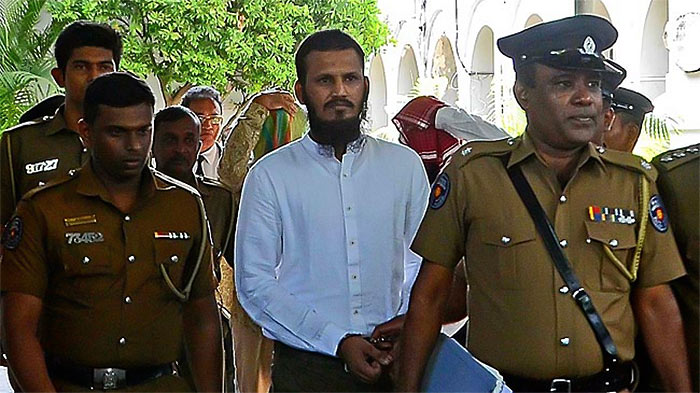
Kanjipani Imran Leaves Pakistan
(Lanka-e-News -18.Aug.2026, 11.50 PM) On 16 July at 7 p.m., a Toyota pulled up outside Lahore's Allama Iqbal International Airport. A man stepped out with a small piece of luggage, dressed in a white long kurta and brown trousers with matching shoes. He was bearded, with a slightly receding hairline. He walked to the check-in counter and presented a passport — a fake one. The foreign country that issued it is not being disclosed here, as revealing it could compromise the ongoing investigation.
The man is a familiar traveller across Sri Lanka and India, and is internationally recognised — according to an Indian intelligence officer speaking exclusively to this investigation — as a major drug supplier operating across Sri Lanka, India, Pakistan, Malaysia, Thailand, Vietnam and Singapore. That officer confirmed the individual to be the most-wanted drug baron and criminal, Kanjipani Imran.
He boarded Batik Air flight OD 132, seated in economy, seat 27. The flight landed in Malaysia on 17 July at 8:15 a.m. Imran passed through the airport undetected, took a taxi, and drove to Penang — home to one of Malaysia's major ports — where he checked into a small hotel.
Well-informed sources inside the drug cartel say Imran keeps his principal backers updated regularly: Pakistan-based Haji Salim, "Uti" the millionaire, and Sri Lanka's Mohamad Siddick. (This publication will not reveal which country the sources are speaking from — doing so could get them killed.) Imran is reportedly married to a Pakistani woman and travels frequently between Dubai and Pakistan.
Imran travelled to Malaysia to meet local counterparts and plan the transport of heroin and crystal methamphetamine ("ice"). According to the source cited above, he instructed associates to purchase second-hand or unused 65- and 55-inch televisions and washing machines. The plan: strip out the television's motherboard and pack the cavity with crystal methamphetamine — each set said to hold close to 10 kg — while washing machines, similarly repackaged into new boxes, could conceal roughly 10 kg of heroin each.
Imran is said to have hosted several ship captains for drinks and dinner, though he himself does not drink alcohol. Between hospitality, he discussed methods for moving the cargo. His movements were kept deliberately unpredictable — changing location every few days between meetings — with regular progress reports sent back to Pakistan.
Sri Lanka Police received credible intelligence that Kanjipani Imran was in Malaysia. The officer who first received the tip has not been named. It was briefed to Inspector General of Police Priyantha Weerasooriya, who asked intelligence officers to verify its authenticity. Once satisfied, the IGP contacted his Royal Malaysian counterpart, Inspector General of Police Mohd Khalid Ismail, and briefed him on Imran. The Malaysian IGP agreed to receive a Sri Lankan police delegation — an operation built entirely on mutual understanding between the two police chiefs, outside any formal extradition process.
IGP Weerasooriya selected Walana Vice Squad Director, Assistant Superintendent of Police (ASP) Rohan Olugala, and ASP Wasantha Kumara (an Attorney-at-Law), for the assignment.
ASP Olugala and ASP Kumara departed Sri Lanka for Malaysia on 19 August. The following day, they met senior Royal Malaysian Police and Special Branch officers at police headquarters in Kuala Lumpur, briefing them on the importance of apprehending Kanjipani Imran. The names of the Malaysian officers involved are being withheld because, by the time this is published, a joint Royal Malaysian Police and Special Branch search operation will be underway. The two Sri Lankan officers reportedly handled the diplomacy carefully, conveying the scale of the threat Imran poses to Malaysia itself.
ASP Olugala received further credible intelligence identifying one of Imran's close associates and two others. He briefed the Royal Malaysian Police team, who moved on the location and made the following arrests:
Dhanushka Kaushalya, alias "Ratmalana Saima," 41, from Ratmalana — identified as a key financial and social-media manager for Kanjipani Imran.
Two other suspects, arrested alongside Kaushalya at the same address, were extradited together with him.
Kanjipani Imran on the Run
Around the same time, Imran was tipped off by a counterpart drug dealer that the joint Sri Lankan-Malaysian team was closing in — and that his mobile phone was being tracked. Realising this, he destroyed the phone before placing one final call to Pakistan to report the situation. It is unclear whether he acquired another device.
Imran is believed to have fled into the Banjaran Titiwangsa mountain range — a location later confirmed to Pakistan by a Malaysian contact. The area is covered by some of the oldest tropical rainforest in the region and is crossed by river systems. According to well-informed sources, the Royal Malaysian Police manhunt continues.
Following the arrest of drug lord Shiran, Imran is reportedly moving to dominate the local market left behind.
Imran has been in contact with several associates in Sri Lanka, instructing them to build out distribution networks — with a particular focus on crystal methamphetamine ("ice"). Sources say he has directed his network to target schoolchildren involved in rugby and athletics, and to avoid supplying the drug in bulb-style glass pipes in favour of small test tubes — easier to buy, carry, and conceal from parents.
The Effects of the Drug
Euphoria, intense confidence, and increased energy
Elevated heart rate, blood pressure, and body temperature
Dilated pupils, teeth grinding, and reduced appetite
Student athletes seeking an edge in endurance and energy are said to be a specific target of this strategy. More details will follow in future reporting.
According to sources, Imran's method is simple: anyone who crosses him is warned once. If the warning goes unheeded, he has them killed — the same fate, sources say, that befell "Club Wasantha." His alleged method is to have a henchman issue the contract while the person who ordered it leaves the country. Imran reportedly pays well for this work. Most recently, sources say he recruited eight army deserters — trained commandos — supplying them with motorbikes and 9mm pistols fitted with silencers.
When we received more information about the hit squad's identity and location, we exposed them to save lives.
Sources describe a deliberate campaign by Imran to compromise officials who intersect with his drug trade — police, narcotics officers, customs officers, navy personnel, and coast guard officers. He is said to have ordered intelligence-gathering on individual officers to identify vulnerabilities — a weakness for women, or for alcohol.
Where an officer is known to be a womaniser, the network allegedly arranges for an attractive woman to be introduced to him, with several models already under contract for this purpose — details and evidence to follow in a future report.
Officers in financial difficulty are approached through relatives or close friends, with money funnelled to them indirectly. In parallel, wives are contacted through the same network of women mentioned above, with school and university fees for officers' children — particularly for overseas education — offered as leverage.
Sources say this strategy has already succeeded: six customs officers at a Sri Lankan port have allegedly been bribed with sums running into the millions. Names and photographic evidence will be published once independently verified.
Both Imran and an associate identified as "Dehibala" are reported to have cultivated relationships with several YouTubers and NGOs, and are said to be working to extend that influence to broadcast journalists. Several Facebook pages linked to the network have been used to attack police officers and journalists reporting against them.
Lanka e-News has never feared drug barons, and never will. Further details of this investigation will be published as they are verified. Our aim remains a drug-free country and a safe future for the next generation.
Help Us Expose the Drug Trade Threatening Sri Lanka's Future
Do you have information about drug traffickers, or about politicians, officials, or public figures with links to narcotics networks — whether operating within Sri Lanka or directing activities from overseas?
Your knowledge could help protect the next generation of Sri Lankans from the harm these networks cause.
As a responsible citizen, you have the power to make a difference. We urge anyone with credible information — names, connections, evidence of trafficking routes, or political protection given to drug networks — to come forward.
All information will be treated with strict confidentiality. Your identity will be protected.
Send your tip to: [email protected]
Every piece of information matters. Silence protects the guilty — speaking up protects our children.
---------------------------
by (2026-08-20 18:31:07)


 Read 13788 Times
Leave a Reply
 0 discussion on this news