
Investigation By Ruwan Weerakoon
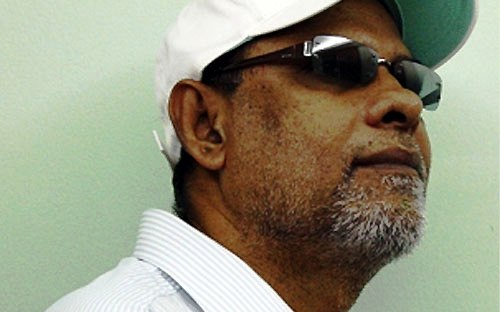
(Lanka-e-News -30.Aug.2026,9.00 PM) An investigation into the extraordinary case of Kumaran Pathmanathan — the LTTE's chief arms procurement officer who was arrested, never charged, and now lives openly in Kilinochchi.
Selvarasa Pathmanathan — known to the world as Kumaran Pathmanathan, or simply "KP" — is, by every credible account, one of the most consequential figures of Sri Lanka's thirty-year civil war. As the head of the LTTE's international arms procurement network for roughly three decades, he is alleged to have built and run the clandestine pipeline that supplied the Tigers with:
Multi-barrel rocket launchers and artillery guns
Assault rifles and rocket-propelled grenades (RPGs)
Shipments of C4 explosive — including the MV SWENE consignment of some 60 tons of C4 procured from the ZARYA chemical plant in Ukraine in 1994, financed with a US $50,000 transfer from a Singapore Citibank account
Detonators, communication equipment, underwater equipment and high-speed boats (as in the MV SUNBIRD case detected in Malaysia in December 1990)
Intelligence assessments of the era note that he held at least 16 passports from different countries, ran a global network of illicit arms contacts stretching from the former Soviet bloc and the former Yugoslavia to the Middle East, Africa and East Asia, and was a close relative and trusted lieutenant of LTTE leader Velupillai Prabhakaran.
After Prabhakaran's death in May 2009, Pathmanathan attempted to present himself as the "leader in exile" of the proscribed organisation — even as pro-LTTE diaspora groups overseas attacked Sri Lankan embassies and community targets.
On the night of 5 August 2009, KP was seized in Kuala Lumpur in what has been described as a joint Sri Lankan–Malaysian intelligence operation, allegedly with the involvement of Interpol channels. He was moved via Thailand, and a CID team flew to Bangkok and brought him back to Sri Lanka on a special flight on 6 August — handcuffed, hooded, and disembarking at Katunayake in front of SIS and military intelligence officers.
What happened next is the heart of the mystery. Instead of being handed to the Terrorist Investigation Division (TID) for formal detention and prosecution under the Prevention of Terrorism Act, the escort convoy — reportedly including black Montero jeeps — carried him, according to sources cited in the account under review, to the private residence of Defence Secretary Gotabaya Rajapaksa, where, by one insider's account, he was received over tea and chocolate cake, opened his laptop, and dictated information about the LTTE's international network for roughly two hours. That same night he travelled to Kilinochchi under intelligence protection.
No charges followed. No indictment followed. No court case followed.
If the allegations against KP were tested in a Sri Lankan court, the exposure would be severe — among the most severe penalties available in the country's criminal law:
Waging war against the Republic (Penal Code ss. 114–116; PTA s. 2) — the death penalty or rigorous imprisonment for life, with forfeiture of property.
Murder and mass-casualty attacks (Penal Code s. 296; PTA s. 3(1); Explosives Act) — death sentences are regularly handed down, though a de facto moratorium on executions means such sentences are typically commuted to life imprisonment.
Claiming leadership of a proscribed organisation (PTA; Public Security Ordinance regulations) and sedition (Penal Code s. 120) — five to twenty years' rigorous imprisonment, plus automatic forfeiture of assets tied to the offence.
Human cost is the backdrop: tallies of documented major LTTE attacks — massacres, suicide bombings, landmines — attribute roughly 3,700 to 4,100+ civilian deaths to such operations, alongside the far larger toll among security forces and police over the conflict, and thousands of soldiers permanently disabled. If KP was the pipeline that armed those operations, the argument runs, he is among the most directly responsible individuals still alive — and still free.
This is not a hypothetical grievance. On 19 January 2015, JVP parliamentarian and later Cabinet minister Vijitha Herath filed a writ petition in the Court of Appeal demanding KP's immediate arrest and prosecution, naming the IGP, the Army Commander and the Controller General of Immigration and Emigration as respondents, and asking for a travel ban — which the court imposed.
The petition pointed out that KP was wanted by Interpol and by Indian authorities in connection with the 1991 assassination of former Indian Prime Minister Rajiv Gandhi — a matter for which Indian courts have convicted LTTE-linked accused. The JVP's argument was straightforward: if CID had not had sufficient grounds, it would not have sought a Red Notice from Interpol. Red Notices are not requested for people for whom there is no evidence against.
The response came not from KP, but from the state itself. The Attorney General's Department — appearing through senior Additional Solicitors General including Kapila Waidyaratne and Jayantha Jayasuriya — resisted the petition, submitting that TID inquiries were ongoing and that there was insufficient evidence to prosecute. In December 2017, the Court of Appeal dismissed the petition as lacking sufficient legal basis for further judicial examination.
The consequence: a court order could not compel the arrest of a man whom the state had itself arrested in 2009 — because the state argued it had no case against him.
Since 2009, KP has lived within the Kilinochchi urban limits, at the Thiruvaiaru premises of the organisation he founded — the North Eastern Rehabilitation and Development Organization (NERDO) — a two-storeyed house that once served as a residence-cum-office of former LTTE political wing head S.P. Thamilchelvan, the man killed in an airstrike in that same compound in 2007.
According to accounts from the area, KP has been guarded throughout — first, it is said, by armed men in civilian dress during the Mahinda Rajapaksa and Gotabaya Rajapaksa years, and thereafter protected by security personnel — with restrictions on visitors, no telephone use, and minimal public movement.
There is no publicly documented evidence of a formal presidential pardon, amnesty, or immunity instrument granted to Pathmanathan by Mahinda Rajapaksa, Gotabaya Rajapaksa (who held no power to grant such immunity as Defence Secretary in any case), Sirisena, or Ranil Wickremesinghe. What the record shows is a consistent practice — arrest, then indefinite non-prosecution, maintained across four successive administrations. Whether that practice amounted to a deal — his international knowledge exchanged for his liberty — has never been officially answered. The criticisms are therefore matters of public record as questions, not as proven transactions.
Mahinda Rajapaksa (2005–2015): His government captured KP and chose interrogation over indictment; the parallel is unavoidable with what came next — within months of the war's end in early 2010, the same administration ordered the arrest of the victorious Army Commander, Sarath Fonseka, the man who led the campaign against the LTTE. An investigating writer may fairly ask: the state jailed the commander who defeated the terrorists, while the man who armed them lived under its protection. By that test, what does "patriot" mean?
Sirisena–Wickremesinghe (2015–2019): The JVP petition was filed in this period; the TID's "ongoing inquiries" continued; the petition was dismissed in 2017. No prosecution followed.
Gotabaya Rajapaksa (2019–2022): The Defence Secretary of 2009 became President. No prosecution followed.
Ranil Wickremesinghe (2022–2024): No prosecution followed.
This is the question the article's requester poses directly, and it deserves a careful answer rather than a prediction.
The NPP/JVP government is, ironically, the very party that fought for KP's prosecution in court in 2015 through Vijitha Herath — now a senior figure in the administration. That gives the question unusual weight: the petitioner of 2015 is now part of the government that could order the arrest the petition sought.
But the obstacles are the same as they always were: the evidentiary record never tested in court, the convenience of KP's continued cooperation, and the political sensitivity of reopening the war's final chapter. Whether this government chooses to enforce the PTA and Penal Code against Kumaran Pathmanathan — or to continue the fifteen-year pattern it once campaigned against — is a decision that will be watched by the families of the dead: the civilians of every ethnicity massacred with the explosives he shipped, and the soldiers disabled in battles fought with the guns he procured.
At its core, the KP file tests whether Sri Lankan law applies equally. A man whom intelligence services describe as the chief arms supplier of a terrorist organisation for three decades — the procurement head behind multi-barrel rocket launchers, artillery, C4 explosives, and the suicide missions they enabled — has never faced a single charge in a Sri Lankan court, while remaining under state protection ever since.
Until a court charges, prosecutes, and acquits or convicts him, the question will not go away: why does the law reach everyone — except KP?
---------------------------
by (2026-08-30 16:30:56)


 Read 22548 Times
Leave a Reply
 0 discussion on this news