
By Ruwan Weerakoon
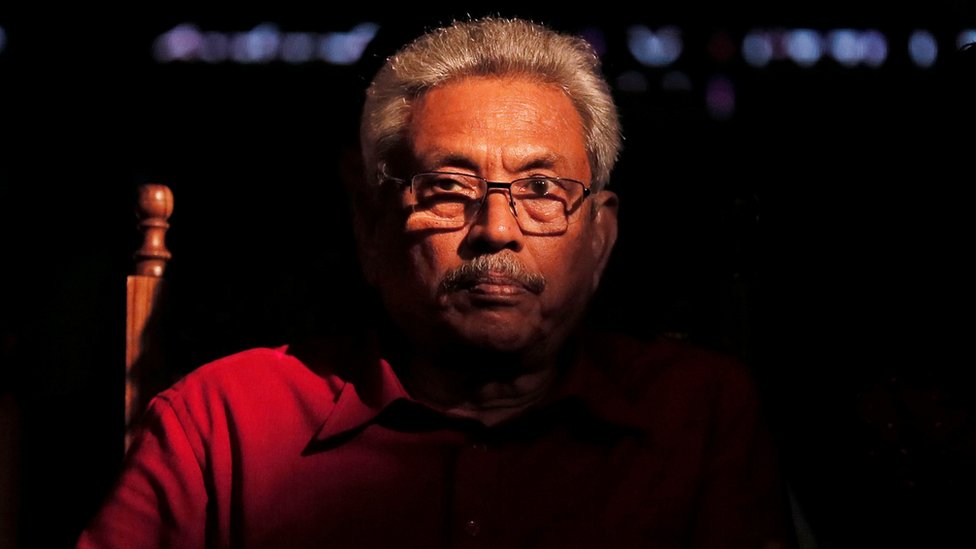
(Lanka-e-News -09.Sep.2026,11.45 PM) During President Mahinda Rajapaksa's administration, his brother, then-Secretary of Defence Gotabaya Rajapaksa, allegedly proposed that President Mahinda Rajapaksa approve a Cabinet memorandum exempting certain Army Intelligence and Ministry of Defence funds from audit. These funds, drawn from public money, were allegedly diverted in part to finance what has come to be known as the "Deep State" political wing.
Wimal Weerawansa and Udaya Gammanpila are named as the two key figures in this political wing. Both are alleged to have benefited financially from these diverted state funds, receiving substantial payments in exchange for publicly defending Gotabaya Rajapaksa.
When Suresh Sallay, alleged deputy commander of the Deep State, was arrested, the political wing organised a satyagraha (protest) from July 7 to July 15. This protest is alleged to have been instructed and coordinated by Gotabaya Rajapaksa's secretary, acting on Gotabaya's own directions.
Wimal Weerawansa and Udaya Gammanpila are alleged to have personally benefited from these state funds throughout this period. The Court of Appeal has ordered legal action against Wimal Weerawansa, Udaya Gammanpila, Dilith Jayaweera, Sugeeshwara Bandara, Asanka Navaratne and Mahinda Pathirana in connection with a satyagraha held to protest the arrest of former Director of State Intelligence Service, retired Major General Suresh Sallay, and statements made in connection with it.
Charge: Making statements that criticized/undermined the judicial process during a satyagraha held in front of the Colombo Fort Railway Station between July 7–15 (based on CID investigations).
Bench that issued the order: Court of Appeal President Justice Rohantha Abeysuriya and Justice Fernando (issued on September 8).
Next step: The Court of Appeal Registrar has been directed to take further legal action on the complaint.
Legal process (under Section 10 of Act No. 8 of 2024)
First stage (preliminary inquiry): The Court of Appeal examines the facts and evidence referred from the Fort Magistrate's Court to determine whether there is a prima facie case to proceed.
Second stage (issuing a "rule"): If sufficient grounds exist, a formal charge sheet signed by the Registrar is personally served on the persons concerned, and a date is fixed for the hearing.
Third stage (trial and rights): The respondents are entitled to a fair trial — including the right to cross-examine the Attorney General's witnesses and to present their own evidence/affidavits.
The Act also provides for an appeal to the Supreme Court against the final decision of the Court of Appeal.
The President of Sri Lanka
The government must initiate a thorough investigation into deep-state networks and the alleged misuse of billions in public funds for the personal gain of the Rajapaksa family.
---------------------------
by (2026-09-09 20:11:44)


 Read 9522 Times
Leave a Reply
 0 discussion on this news