
By Ruwan Weerakoon
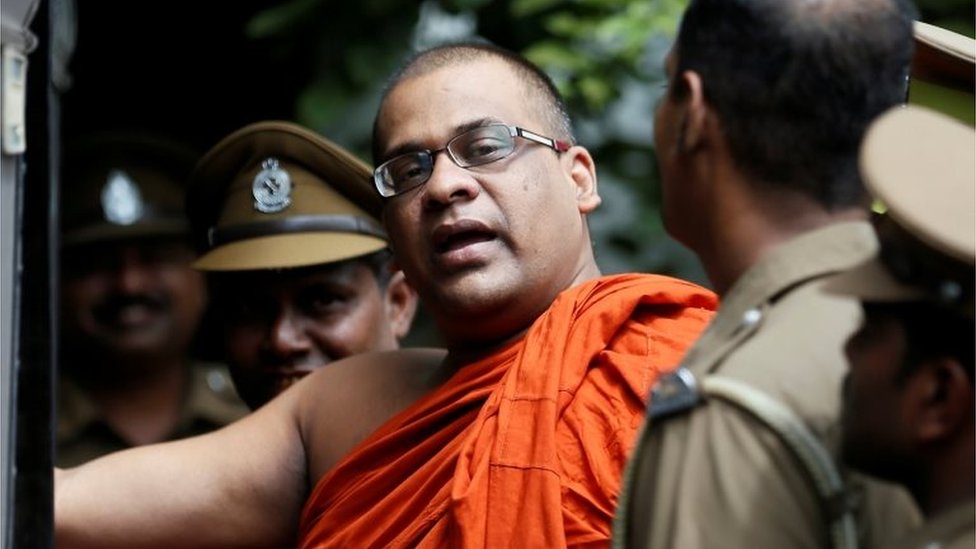
(Lanka-e-News -22.Sep.2026,2 A.M) In Sri Lanka, when a court convicts someone and imposes a prison term, the next steps are routine—the convict surrenders. The Fiscal takes charge. Prison officers escort him to remand or to Welikada. If he does not surrender, the court orders the police to arrest him and produce him. No lawyer, no magistrate, no prison officer in this country would describe that as controversial. It is simply how the law works for a fisherman in Negombo, for a clerk in Kurunegala, for a businessman in Colombo 7.
On 10 September, the Supreme Court declared invalid the presidential pardon granted in 2019 by then President Maithripala Sirisena to the General Secretary of the Bodu Bala Sena, holding that the clemency power had been exercised arbitrarily and unlawfully. The court struck down the pardon that had released him from Welikada Prison in May 2019, finding that the power had been used in breach of the public trust and beyond the President's authority. The ruling came on fundamental rights petitions filed by, among others, Sandya Eknaligoda, wife of the cartoonist and journalist Prageeth Eknaligoda, abducted in January 2010 and never found.
The conviction the pardon had wiped away was not a minor one. In 2018 the Court of Appeal found Gnanasara Thero guilty on four counts of contempt of court over his conduct at the Homagama Magistrate's Court in 2016, during an inquiry into the abduction of Eknaligoda in which army intelligence officers were the suspects. He shouted at the presiding judge and at lawyers when the accused officers were refused bail, and the same day he threatened the missing journalist's wife. The terms imposed ran concurrently, an effective six years. He had served roughly nine months when the pardon came. With the pardon void, that sentence stands
A prison official said the department could do nothing further unless the Thero surrendered to police or was taken into custody by them. As of this week, he had not been located.
This is the question the country is entitled to ask. When an ordinary citizen cannot be found at his registered address after a judgment against him, the police open a file, circulate a description, and put his name on a list. Ten days on, the most recognisable monk in the country, a man who has held press conferences, chaired on "One Country, One Law," and appeared at public functions, is said to be untraceable. Untraceable to whom?
Lanka e-News understands that Gnanasara Thero has since appealed to President Anura Kumara Dissanayake for a fresh pardon. He has been reported appearing in public, at a book launch in the company of his mother, speaking of her ill health and of his hope of presidential clemency.
His mother is unwell. That is a human fact, and no one needs to be cruel about it. But two sons in this country have grown up without a father because Prageeth Eknaligoda was taken in a white van and never came home. Their mother went to the Homagama court to ask what had happened to her husband, and was threatened in the court precincts by a monk who had come to speak up for the intelligence officers under inquiry. If compassion is the argument, the Eknaligoda family has the older claim on it.
The Supreme Court has left the door open. It made clear that a future president may pardon him again — but any fresh pardon would have to be granted according to law, and only after proper consideration of all the relevant material. That is the heart of the judgment, and it is a warning as much as a permission. The court found that Sirisena had abdicated his own authority and recorded no reasons at all for the 2019 decision. A second pardon granted in the same manner would invite the same fate — and would tell every convicted person in Welikada that the law is a matter of who you know.
President Dissanayake came to office on a promise that the powerful would no longer be treated differently from the powerless. This file is now on his desk. Three questions go with it:
Is his failure to surrender, ten days after a Supreme Court judgment, not itself contempt of court?
And will the President grant the pardon?
The answers will be read closely not only by the Eknaligoda family, but by every journalist in this country who has ever wondered what protection the law actually offers them.
investigative journalist and defence correspondent.
Tips: [email protected]
---------------------------
by (2026-09-20 20:42:35)


 Read 570 Times
Leave a Reply
 0 discussion on this news