Red Notice Looms for Basil: FBI Arrest, Flight Home to Colombo - AG Prepares an extradition request, as the hunt for the family’s alleged US assets and Dubai money trail widens
By Ruwan Weerakoon - Investigative Correspondent
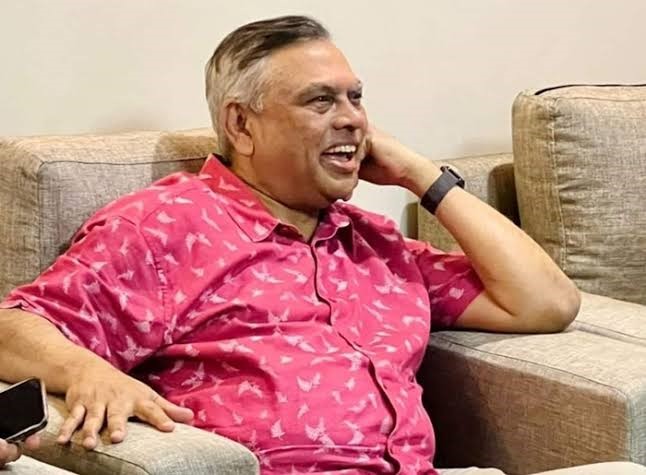
(Lanka-e-News -19 Oct 2026,10.30 P.M.) Sri Lankan authorities are moving to bring Basil Rajapaksa home. Sources in the Attorney General’s (AG) Department told Lanka e-News that the department is working with the Interpol Division of the Criminal Investigation Department (CID) to obtain a Red Notice for the former minister. The department is then expected to prepare a formal extradition request. These are the sources’ claims; it has been confirmed.
How the process would work
According to the sources, the AG’s Department would pass the request to the Ministry of Justice, which would send it to its American counterpart. Sri Lanka and the United States have signed an extradition treaty, and the sources say that obliges Washington to process the request. When the US Attorney General accepts it, the Federal Bureau of Investigation (FBI) would be instructed to arrest Mr Rajapaksa. An FBI agent would then escort him to Colombo and hand him to CID officers.
Extradition is normally decided by a US court, not by the executive alone, and any attempt would likely be contested. The timeline given by the sources is their expectation, not a confirmed schedule.
The extradition relationship between Sri Lanka and the United States is governed by a formal, bilateral Extradition Treaty.
1. History and Legal Status
Signing and Entry into Force: The treaty was signed in Washington, D.C., on September 30, 1999, and officially entered into force on January 12, 2001.
Predecessor: Before this modern treaty, Sri Lanka and the U.S. relied on a colonial-era arrangement—specifically, the 1931 Extradition Treaty between the United States and Great Britain. The 1999 treaty completely replaced that old framework to modernize law enforcement cooperation.
2. Core Principles of the Treaty
The Obligation to Extradite: Both nations agree to surrender persons wanted for prosecution, trial, or the execution of a sentence for an extraditable offense.
The Dual Criminality Rule (The "1-Year Rule"): An offense is considered extraditable only if it is punishable under the laws of both countries by deprivation of liberty (imprisonment) for a period of more than one year, or by a more severe penalty. If the act is a crime in one country but not the other, extradition will not be granted.
Extraditable Offenses: Rather than relying strictly on a fixed list of crimes, the treaty uses the "dual criminality" standard. This covers a wide spectrum of criminal behavior, including fraud, white-collar crimes, narcotics trafficking, terrorism, murder, and serious property offenses. Conspiracy or attempts to commit these crimes are also included.
3. Key Procedural Safeguards
Political and Military Offenses: Modern extradition treaties typically bar extradition for political offenses. Under standard frameworks, if a crime is political in nature, or if the request is motivated by political persecution, the requested state can refuse.
The Rule of Specialty: A person extradited under this treaty can only be detained, tried, or punished in the receiving country for the specific offense for which they were extradited (unless local courts grant special permission or the person willingly stays/returns).
Non-Bis-In-Idem (Double Jeopardy): Extradition will be denied if the person has already been convicted, acquitted, or pardoned in the requesting state for the same acts.
4. Diplomatic and Legal Channels
Channel of Communication: All formal extradition requests must be transmitted through diplomatic channels (typically via the U.S. Embassy in Colombo and Sri Lanka's Ministry of Foreign Affairs, working alongside the respective Ministries of Justice and law enforcement agencies like the FBI and Sri Lanka Police).
Documentation Requirements: The requesting country must provide extensive documentation, including:
A detailed description of the person sought (identity, nationality, and probable location).
A statement of the facts of the case and the text of the laws violated.
In cases where the person has already been convicted, a certified copy of the judgment or judicial statement confirming the conviction.
Evidence establishing probable cause (under U.S. standards) or fulfillment of the evidentiary threshold required by Sri Lankan law to prove that the fugitive committed the crime.
The California properties
Lanka e-News has also reviewed information on part of the family’s alleged holdings in the United States. It lists four houses in California in the name of Pushpa Rajapaksa, Basil Rajapaksa’s wife.
Information regarding a part of the billions worth of assets in the USA belonging to Basil Rajapaksa and Gotabhaya Rajapaksa, the President of Sri Lanka, has been revealed. Among the assets are 3 houses in California belonging to Mrs. Pushpa Rajapaksa, the wife of Minister Basil Rajapaksa.
Their addresses are:
1. 5581 Homecoming, Mira Loma, CA 91752
2. 15067 Preston Dr, Fontana, CA 92336
3. 222 Dexter St, Covina, CA 91723
During this period, the market value of Mrs. Pushpa Rajapaksa’s house was estimated at US$ 24.5 million
A loophole for dual citizens
Sri Lankan legislators and senior officials must declare their assets every year. Critics say a 2007 amendment under then-President Mahinda Rajapaksa relieved dual citizens of any need to declare assets held in their second country. They argue that this later made it easier for Gotabaya Rajapaksa to contest the 2019 presidential election. Political and economic commentators had long warned of a family plan to plunder the country and leave before the collapse.
The money trail
Our sources say the funds did not move directly from Sri Lanka to the US. They allegedly passed through Dubai, via intermediary export companies, before reaching American accounts. The sources say Mr Rajapaksa adopted the structure on the advice of a US lawyer who specialises in money laundering. Lanka e-News intends to name the lawyer in a later report. An investigative journalist in the United States is supplying documentary evidence.
Sources also describe Mr Rajapaksa’s early career. While Mahinda Rajapaksa led the opposition, Mr Rajapaksa held a modest job in the US. He returned when his brother became Prime Minister and became one of his secretaries. The sources allege that the questionable dealings began then. They say Mrs Rajapaksa is closely tied to Shiranthi Rajapaksa.
The record of allegations
• Public funds probe: Investigations by the Bribery Commission (CIABOC), based on findings of the Presidential Commission of Inquiry (PRECIFAC), examined the alleged misuse of more than Rs. 1.03 billion between 2010 and 2015. The allegations cover Air Force aircraft used for domestic travel, “Maga Neguma” development funds, and 14 Presidential Secretariat vehicles and military personnel allegedly used for personal security.
• Divi Neguma: Mr Rajapaksa was arrested and remanded in 2015 over alleged irregularities at the Divi Neguma Department. The charges concerned funds meant for housing grants and roofing sheets that were allegedly used to print calendars and promotional material for political campaigns.
• Malwana villa: Under the Yahapalana government, investigators looked into a luxury villa on a large plot in Malwana, valued at over Rs. 250 million. Ownership was disowned during proceedings, and the court issued orders on its disposal.
• “Mr Ten Percent”: US diplomatic cables published by WikiLeaks said he earned the nickname for allegedly demanding a 10% commission on development projects. Earlier records also cite corrupt election practices at the 1987 Mulkirigala by-election.
Getting the money back.
Sri Lanka has several routes for recovering assets abroad. The UN Convention against Corruption (UNCAC), to which it is a party, is the core instrument. Chapter V (Articles 51-59) covers tracing, freezing, and confiscation, including non-conviction-based confiscation where domestic law allows (Article 54), and the return of assets (Article 57). The Palermo Convention on organised crime offers a fallback.
Beyond the treaties:
• Standards: The Financial Action Task Force (FATF) recommendations on confiscation and international cooperation set the benchmark. The Egmont Group lets Sri Lanka’s Financial Intelligence Unit exchange information faster than a formal mutual legal assistance request.
• Networks: These include the World Bank/UNODC StAR Initiative, the Global Forum on Asset Recovery, and the ARIN-AP and CARIN networks.
• US tools: The DOJ Kleptocracy Asset Recovery Initiative and civil forfeiture.
• Sri Lanka’s own law: Outgoing requests run through the Mutual Assistance in Criminal Matters Act No. 25 of 2002, normally via the AG’s Department.
Two questions will show how serious the effort is: what UNCAC reviews and FATF evaluations have said about Sri Lanka’s weaknesses, and how many outgoing requests have been answered.
Lanka e-News will continue to investigate the wider Rajapaksa family’s assets.
Expose Corruption | Guaranteed Confidentiality
Do you know of corruption involving individuals or groups, with or without evidence? Report it to us and help build a corruption-free society.
Ruwan Weerakoon
---------------------------
by (2026-10-19 18:28:03)
We are unable to continue LeN without your kind donation.


 Read 9504 Times
Leave a Reply


 0 discussion on this news