
By Ruwan Weerakoon, Investigative Journalist
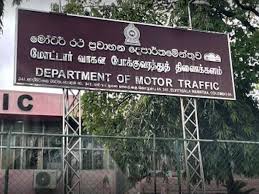
(Lanka-e-News -05 Nov 2026, 3.30 A.M.) The computers at the Registrar of Motor Vehicles (RMV) have a habit of failing at precisely the wrong moment. According to sources familiar with the matter, whenever a law-enforcement agency has arrived to inspect the department's data, even with a court order in hand, the entire system has gone down that same day. This, the sources say, is not a recent glitch. They allege it has happened for the past five years.
Now, for the first time, investigators have taken a complete copy of the database. What it reveals could implicate officials at the very top of the department.
The trail begins with information received by the Inspector General of Police (IGP) that an illegal vehicle had been registered. The IGP referred the matter to the Walana Vice Squad, led by Officer-in-Charge Indika Weerasinghe. His team's inquiries, sources say, uncovered vehicles registered through fabricated data on the RMV system.
Weerasinghe and his officers went to the department and told the then Commissioner General, Kamal Amarasinghe, that they intended to arrest the head of the IT division, assistant director Sajith Disanayake. The date is given by sources as 28 June 2025. (The original notes say "2005"; this is presumed to be a typographical error and must be confirmed.)
Amarasinghe, who is himself an attorney-at-law and was later arrested by the CID, is said to have asked the police team for ten days to "make arrangements", in effect, to find a replacement for Disanayake. Well-placed sources allege that he also advised Disanayake to file a writ petition in the Court of Appeal to block the arrest. Those sources claim Disanayake paid a lawyer Rs. 4 million for the case, and that further Court of Appeal orders have since been sought to keep him from being arrested.
The same day, the Walana Vice Squad obtained a court order permitting an audit of the RMV's IT system, something Amarasinghe, sources say, was not willing to allow.
The allegations do not stop with one man. Sources claim that successive Commissioners General were well aware that the IT system could be paralysed at will, and that bribe money from the arrangement was shared. These claims are unproven and are denied or unanswered, as noted below.
Amarasinghe's own record, investigators note, offers a window into the problem. He is already accused of engaging in the illegal assembly of vehicles at Mawathagama, a case that remains pending. Three vehicles linked to him were traced by Weerasinghe's team. Data from the RMV is now being examined by IT experts at the University of Colombo.
Sources describe Sajith Disanayake as the central figure in the alleged paralysis of the system. Several allege that he is technically capable of breaking into private laptops with weak security, and that he has used such access to obtain sensitive data. Others, speaking on condition of anonymity, make more serious claims: that he has blackmailed people, and that he was paid to create fake Facebook accounts and doctored images. A person said to be close to him describes him as obsessed with money.
These are allegations from unnamed sources. None has been tested in court, and no charge of this kind has been brought against Disanayake to our knowledge. He is entitled to the presumption of innocence.
More damaging for the department, sources say, is the claim that Disanayake maintained close ties with certain commissioners. When one of them wished to alter or delete a record illegally, the allegation runs, he was paid a "handsome" sum, which was then divided with the commissioner concerned. Not every commissioner is implicated, sources stress. This newspaper is continuing to investigate and will name individuals only when documentary evidence is in hand.
Lanka e-News has long been at the forefront of exposing corruption in this country. We were the first to expose the vehicle registration scandal involving former Commissioner General Kamal Amarasinghe. Our sources at the Narahenpita and Werahera offices continue to keep us informed.
We have now received highly credible information that departments providing services to the public are secretly collecting bribes, either directly or through brokers. The money is pooled and then distributed among commissioners. Our information indicates that some commissioners refuse to take any share, but that previous Commissioner Generals also received a portion from each department.
Last year, one commissioner was found with Rs. 4.7 million in his cupboard, collected for distribution under this arrangement. He and two others were arrested in a bribery raid.
At Werahera, we have received reliable information that one commissioner in particular is taking bribes on a large scale. Once Lanka e-News obtains documents, video, audio, or photographic evidence, we will publish it together with the name, address, and photograph of the person involved. Readers need not question the authenticity of our evidence, as we have the tools and expertise to verify it.
RMV commissioners and all staff are paid from public funds, the taxes paid by ordinary citizens. It is a disgrace that the same citizens must pay bribes to obtain the services they have already paid for.
The turning point came with the appointment of Air Vice Marshal Thushara Fernando as Commissioner General. Sources say he received highly credible information about the system paralysis and moved quickly. He briefed the Minister of Transport, Bimal Rathnayake, and Deputy Minister Prasanna Gunasena, along with the Minister of Public Security, Ananda Wijepala, the IGP, and the Digital Economy ministry, as well as Weerasinghe of the Walana Vice Squad. After the discussions, the minister gave approval for a full audit of the RMV system.
On the 28th, a team of IT engineers descended on the department. They came from the Government's technology agency, Sri Lanka Telecom, the University of Colombo, IBM, and the system's own provider, Informatics. Over a day and a half, they backed up the data, which was then sealed. It is now being analysed by University of Colombo experts using modern intelligence software.
The question hanging over the exercise is simple: what will the data show?
The stakes are not small. The RMV's system is the national record of who owns what on Sri Lanka's roads.
Registration and ownership: first registrations of new and imported vehicles, ownership transfers, and changes to colour, engine or structure.
Driving licences: new licences, smart-card renewals linked to medical certificates, duplicates and conversions of foreign licences.
Revenue licensing: annual licences, linked to emission-test certificates and insurance.
Online services: appointment booking and public vehicle-information portals.
The system underpins ownership security, road safety and a stream of state revenue from licences, luxury taxes and fees. When it is corrupted, all of these are compromised.
An illegally assembled or smuggled vehicle can never be made lawful under the Motor Traffic Act. But manipulating the database can create the appearance of legality. Investigators describe three common methods:
Identity cloning. The chassis and engine numbers of an old or scrapped vehicle are stamped onto an illicit one, and the database entry is altered to match.
Back-end entry. Corrupt officials, or outsiders with compromised access, inject fake records or skip validation checks, producing a registration number and a digital revenue licence.
Bypassing customs. A genuine registration requires a customs declaration (CUSDEC). Spoofing these markers defeats the cross-check between the RMV and Sri Lanka Customs.
Such schemes tend to unravel. Physical inspections can expose re-welded or double-stamped chassis numbers, and audits routinely flag duplicate numbers or irregular entry timelines. The vehicle is then confiscated, the entry blacklisted, and those involved face prosecution.
Those convicted could face penalties under several laws, according to legal commentary reviewed for this report:
Computer Crimes Act: unauthorised access or alteration of state data carries imprisonment of up to five years and fines.
Motor Traffic Act: falsified identities, cloned chassis numbers or forged documents bring fines, imprisonment and permanent confiscation of the vehicle.
Penal Code: forgery, fraud and tax evasion, with fines that can run to multiples of the duties evaded.
Public officials: dismissal, loss of pension and prosecution under the Bribery Act.
For now, the sealed backup sits in the hands of the University of Colombo's analysts. If the allegations are even partly true, the database will hold the evidence: who changed what, when, and why the screens went dark on cue. As one source put it, the country is waiting to see what the data says about the cyber criminals behind it.
---------------------------
by (2026-11-04 22:04:37)


 Read 2940 Times
Leave a Reply
 0 discussion on this news