
By Ruwan Weerakoon, Defence and Investigative Correspondent
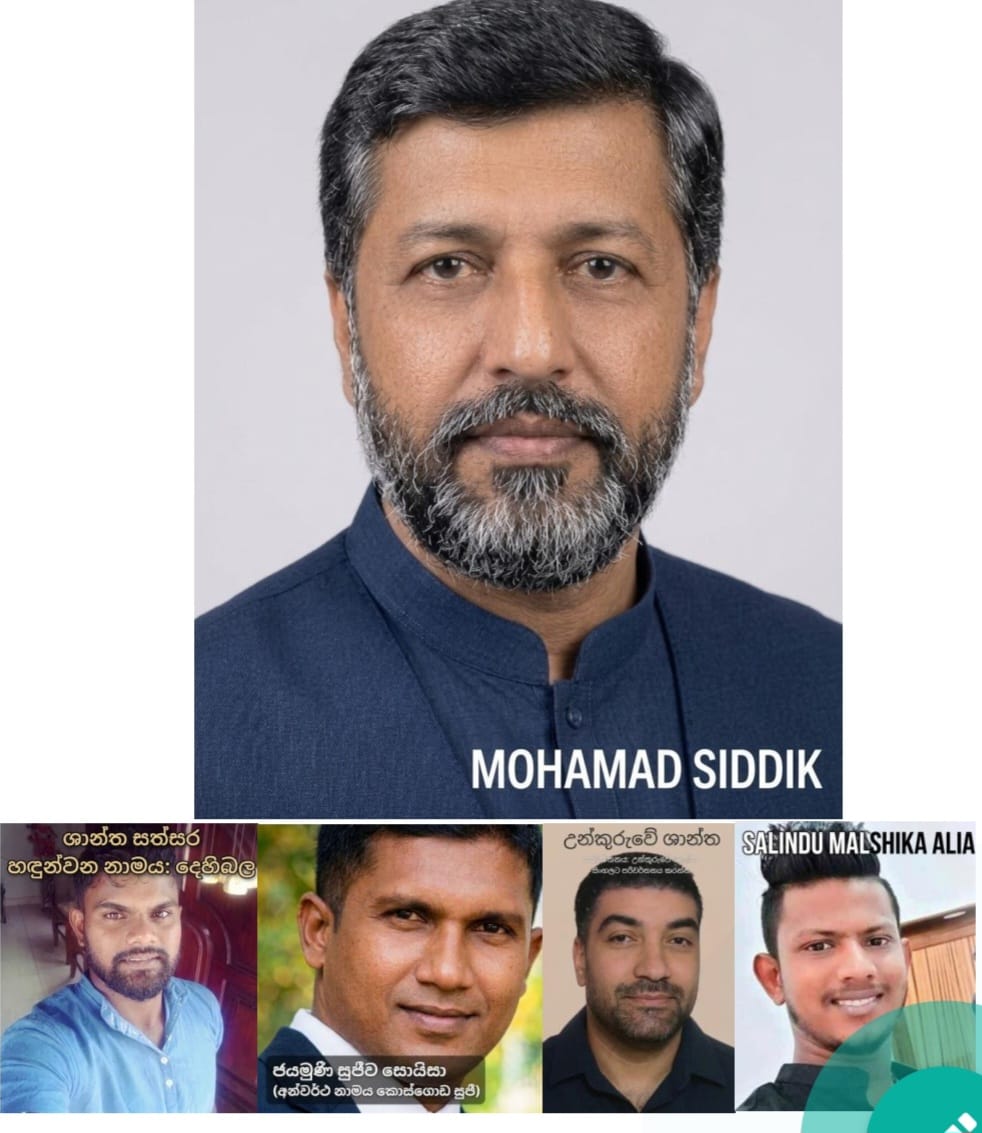
(Lanka-e-News -10 Nov 2026, 8.30 P.M.) From a Dubai-and-Pakistan syndicate to a fugitive baron who slipped Sri Lankan justice, intelligence sources reveal how drug lords move heroin and crystal methamphetamine across the Indian Ocean
Mr. President, why can’t we stop them? If other countries can sign death sentences for drug dealers, why can’t Sri Lanka?
That question now hangs over a country that, in just 13 days, saw attempts to bring in a total of 379.161 kilograms of heroin, alongside a separate multi-day seizure of crystal methamphetamine, known as “ice”. Had drugs on this scale reached our streets, the damage to a generation would have been incalculable.
Lanka e-News publishes what follows out of deep concern for the country and its young people. We do so at considerable personal risk, because as a media institution we believe we must.
The Sri Lanka Navy intercepted 371.79 kg of crystal methamphetamine aboard a multi-day fishing trawler in deep sea. According to our information, the Navy acted on highly reliable intelligence and located the vessel roughly 700 nautical miles from the island.
The operation was a significant success. It also confirms what Lanka e-News has reported before: more shipments are on the way, and ice, with its larger market and higher profit margins, has become the product of choice for the syndicates. We expect further attempts and urge the Navy to remain on high alert.
According to intelligence sources, the seized drugs are linked to a group of Sri Lankan traffickers operating largely from overseas. All individuals named below are alleged to be involved. None has been convicted in connection with this consignment.
1) Jagamuni Sujeewa de Soysa, alias “Kosgoda Suji”, is said to be living in France. A native of Matara, his market is reportedly the southern region.
2) Shahan Sathsara, alias Dehi Bala, surrounded by controversy, has moved from Dubai to Europe. We are tracking his movements and will expose his location as soon as it is confirmed. His market is said to be the Western Province and areas further up.
3) Unakuruwe Shantha, reportedly in Dubai, said to operate in the south.
4) Galawatte Gamage Chaminda Dilruk, alias “Parvi Suda”, reportedly living in Dubai and Pakistan, and described by sources as a close associate of Mohamad Siddick.
5) Vijayalath de Silva, alias “Karandeniya Suda”, said to market drugs into the south.
6) Salindu Malshika, alias “Kudu Salindu”, is reportedly in Dubai.
Our sources say these are not isolated players. Behind them stands a single figure who has the understanding and trust of the rest, and who purchases and arranges shipments on their behalf to Sri Lanka, India, Malaysia, Indonesia, Thailand and Singapore.
Supply to some of these countries has become extremely limited because of corrupt officers and very tough laws. That is precisely why the syndicates are pushing harder toward Sri Lanka.
[Photo: Lanka e-News exclusively publishes Siddick photograph]
The man at the centre of this network is known as Mohamed Siddique, Mahmud Siddik, Mohammad Siddeek and by various other transliterations. His identity has proved as slippery as his legal record. Our sources now say he has changed his name to “Maseed Khan”.
His documented history with Sri Lankan law enforcement stretches back to 2003, when the Western Province North Crime Division arrested him and four others while they were transporting heroin in a jeep through Boralasgamuwa. It should have ended there. It did not.
After a protracted remand period, he was granted bail. He then fled, first to India, where he had cultivated connections near the Nepal border, and then onward. Tamil Nadu police, who had arrested him years earlier in a separate matter, saw his associates carry out a brazen armed ambush on a police escort to free him from custody. It remains one of the more cinematic episodes in the history of Sri Lanka’s drug trade.
He eventually surfaced in Pakistan where, according to sources, he married the sister of a powerful Afghan-Pakistani heroin supplier. It was not simply a personal relationship. It was a business merger. The marriage reportedly gave him access to supply chains running from Afghanistan’s poppy fields through Pakistan’s port cities and onto vessels bound for Sri Lanka, Thailand, Malaysia and Vietnam.
Crucially, sources say, he abandoned conventional shipping agents and cultivated direct relationships with ship captains and chief engineers, the men who control what happens in the hold when no one is watching.
In March 2015, Pakistan handed him over. A CID team flew to collect him. He was produced before the Colombo Magistrate’s Court, remanded, and investigated under the Prevention of Money Laundering Act, accused of accumulating more than Rs. 510 million through the heroin trade.
In September 2018, the Colombo High Court acquitted him, citing severe contradictions in the police evidence. He was re-bailed in 2019 on a cash bond of Rs. 1 million, barred from leaving the country and ordered to report to the CID twice a month. According to our information, he no longer complies with any of those conditions.
Based on confidential intelligence reports and investigative tracking of South Asian drug networks, Siddick is now believed to operate from Pakistan in partnership with a figure known as Haji Salim.
Sources say Siddick is fluent in Urdu, Punjabi and Pashto, is married to a Pakistani national, and lives in a privately owned luxury residence roughly 15 kilometres outside Karachi. He reportedly holds local identification documents and a Pakistani passport under a localised name, with his spouse listed on official records. He is also said to own several vehicles, including a Range Rover, to facilitate covert movements.
His partner, Haji Salim, also known as Haji Baloch, is described by intelligence sources as a politically influential transnational maritime drug and weapons baron. He is reportedly tracked by regional agencies, including India’s National Investigation Agency and Narcotics Control Bureau.
Intelligence dossiers link him to a vast narcotics network responsible for a significant share of maritime drug trafficking across the Indian Ocean. It reportedly moves heroin and methamphetamine from Afghanistan and Pakistan toward South Asia, including India, the Maldives and Sri Lanka, and onward to international markets.
Haji Salim is said to leverage high-level protection, political patronage and deep financial resources to secure his transit corridors. Because he operates as a clandestine fugitive, verified official photographs of him are extremely rare in open-source records. Agencies rely instead on surveillance intelligence, intercepted communications and network mapping.
According to intelligence reports, the pipeline begins in Afghanistan. Siddick, Salim and their core administrative staff are said to cross the border to meet major Afghan producers directly, avoiding their personal vehicles when they travel. These meetings reportedly take place in producing provinces such as Helmand, Kandahar and Nangarhar, where raw materials and ice-manufacturing labs operate.
Once consignments are ready, they are smuggled across the porous Afghan-Pakistani frontier. Sources allege the network evades interception by systematically bribing border guards and checkpoint officials along the routes to the southern hubs.
From there, the syndicate relies heavily on the sea. Narcotics are moved to coastal areas such as Balochistan and the Pakistan-Iran border region around Turbat, and loaded onto mother vessels or fishing trawlers. Consignments are reportedly identified by distinctive marking stamps such as “777”.
Because commercial containers are heavily sealed and digitally monitored, the syndicate allegedly avoids tampering with them. Instead, trusted operatives are said to load narcotics onto vessels at night, directly at the Port of Karachi. The syndicate maintains direct contact with ship captains, mostly of Asian origin with a few foreign nationals, whose vessels sail from Pakistan past Sri Lanka toward Thailand and other destinations. Siddick is described as the key handler for these captains, distributing large sums of cash, with portions passed on to compliant crew members to guarantee secrecy.
Once a cargo ship enters international waters near its destination corridor, the crew allegedly uses satellite phones to coordinate with local trawlers waiting in deep sea. The transfer of heroin and ice is then carried out rapidly, often in around 15 minutes, to minimise the risk of detection by regional navies.
This is exactly the kind of high-seas rendezvous that the Sri Lanka Navy’s long-range detection has now disrupted.
Foreign intelligence assessments suggest Siddick acts as a central supplier to major distributors in Dubai, India, Malaysia, Indonesia, the Philippines, Thailand and Sri Lanka. Sources say he is actively urging fragmented regional cells to unite under a single logistics pipeline, to control street-level pricing and ensure consistent supply.
If true, that is a frightening prospect for Sri Lanka: not scattered dealers competing for customers, but one coordinated supply chain deciding how much poison reaches our children, and at what price.
Interpol frameworks, past arrests, detentions and Red Notices have all been used against traffickers of this calibre. Yet kingpins like Siddick repeatedly exploit regional safe havens.
Our sources say the main reason Sri Lankan law enforcement struggles to get the foreign ministries and the Attorney General’s Department to execute airtight extradition requests is the deep political influence and protective patronage that figures like Haji Salim allegedly wield in Pakistan.
Extradition between Pakistan and Sri Lanka depends on formal treaties, verified state-to-state evidence sharing and, above all, political will. When a high-value target holds local identity papers and powerful domestic protection, authorities face systemic delays, bureaucratic friction and, at times, outright resistance from political factions shielding syndicates from foreign prosecution.
The backbone of Asian narcotics finance is a set of centuries-old informal networks that predate modern banking.
Hawala and Hundi networks are widely used across South Asia, the Middle East and expatriate communities. Cash is handed to a broker, the hawaladar, who instructs a counterpart in another country to pay out local currency to a designated recipient. No physical money crosses a border, and balances are settled later through trade accounts, commodities, or counter-claims. The result leaves almost no paper trail for investigators.
Chinese underground banking systems, active across East and Southeast Asia, work on similar principles but are tightly integrated with international trade. They use import-export fronts, matching accounts and mirror invoicing to clear drug proceeds quickly.
Until these financial channels are exposed and cut, seizures at sea, however impressive, will only remove the cargo and not the cash that funds the next one.
The situation is not good. Lanka e-News calls on the Government to act quickly: to pursue the extradition of Sri Lankan drug dealers living overseas and bring them home to face the law, and to give the Navy and the police the intelligence-sharing and legal backing they need.
There is also a political failure that must be named. Despite their differences, Sri Lanka’s politicians have never sat down together and agreed on a national plan to fight drugs, one that survives a change of government. Policies are abandoned each time power changes hands, while the traffickers keep working.
The question at the start of this article remains. Other countries have chosen the harshest penalties for those who deal in this poison. What will Sri Lanka choose?
Tips: [email protected]
.
---------------------------
by (2026-11-10 16:30:05)


 Read 2652 Times
Leave a Reply
 0 discussion on this news