
By Ruwan Weetakoon | Special Investigative Report
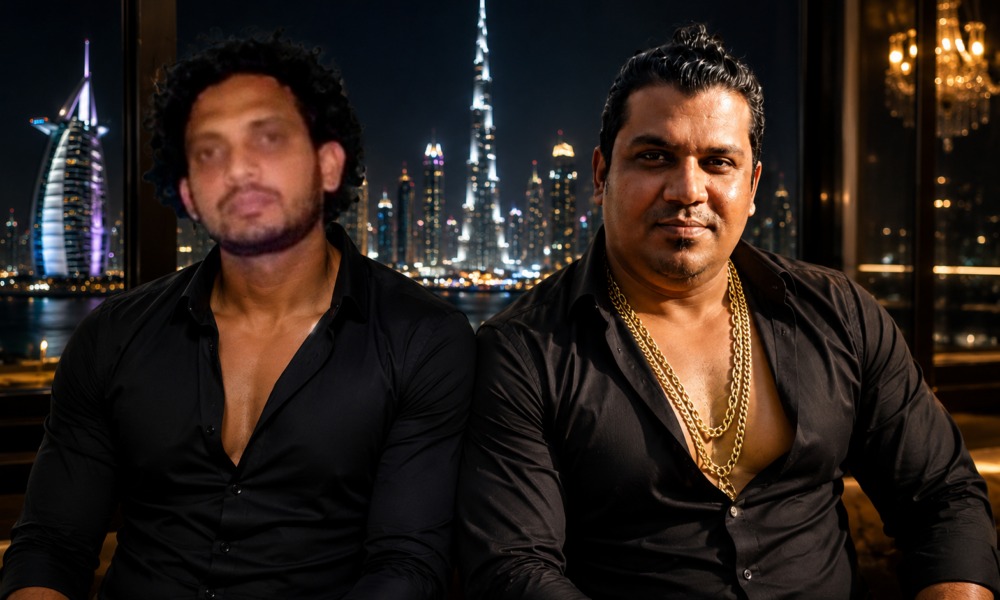
(Lanka e News -2026.May.29, 2.30 A M) On a sun-drenched main street in Dubai, the doors of Shiran Basik's jewelry shops stand quietly closed. The gold that once gleamed inside was purchased at a price mixed with blood and tears from the streets of Sri Lanka. But now those doors are locked. The owner sits as a prisoner in a Dubai detention facility.
He is a name well known to Sri Lanka's law enforcement agencies, a puppeteer always operating from a distance, yet positioned precisely where the strings of every criminal network are pulled. For over a decade, moving through Sri Lanka's social, economic, and political circles, he quietly built not merely a drug network, but a transnational criminal empire.
Shiran Basik, whose full name is Mohammed Shiran Basik, began in the densely populated urban areas of Sri Lanka, gradually becoming the principal supplier for drug distribution networks centered around Dehiwala, Mavanella, and central Colombo. His name appeared in police files, yet he always remained just beyond the reach of the law.
In 2011, he was arrested near Kirulapana with heroin, but in 2024, the Colombo High Court acquitted him due to severe contradictions in the testimonies of police officers presenting evidence. He secured that freedom not from within Sri Lanka, but from a position of power in both worlds from Dubai.
For nearly a decade living in Dubai, Basik constructed an extraordinarily convincing image as a jewelry businessman. He resided in luxury apartments, moving between high-end hotels and business meetings. Nowhere in that lifestyle was there any sign of a "trafficker." Yet UAE security authorities were watching him through a very different lens.
This is what made him an international target. American intelligence units monitoring the financial flows of Iranian drug networks began detecting Basik on their radar screens. The UAE had also been progressively hardening its stance against Iran-linked networks operating within its borders.
The sequence of events that ended his carefully constructed life was straightforward yet precisely the kind of straightforward recklessness he had never anticipated.
First Step: The Undiyal Transaction: Dubai Police intercepted an illegal Undiyal transaction, a hawala-style informal money transfer system widely used across South Asia to move funds outside formal banking channels. Basik allegedly attempted to funnel 600,000 Dirhams (approximately USD 163,000) to an Iranian narcotics network supplying ice (methamphetamine) to Sri Lanka. Under the UAE's powerful anti-money laundering framework, the transaction was automatically flagged. He was quietly taken into custody.
Second Step: The Public Brawl: Briefly released pending further investigation, his fortune ran out completely when he became embroiled in a severe, highly public altercation at a luxury hotel in Dubai. UAE authorities, operating under a strict zero-tolerance policy, swiftly returned him to custody this time under a compounding stack of charges, including public disturbance, financial crimes, and illegal currency trafficking.
Within Sri Lankan national security and narcotics policy circles, he had long been referred to as the "Godfather of Sri Lanka's drug network." That title was not an empty honorific; the puppet network he had constructed across Sri Lanka's government, business community, and institutional infrastructure stood as a living testament to it.
Political Connections: Intelligence reports indicate he maintained close relationships with senior figures within two of Sri Lanka's major political parties. He allegedly arranged the transportation of large numbers of people from the Dehiwala-Galkissa and Mavanella areas to political rallies, treating the "success" of those events as a calculated business investment, protected with the proceeds of crime.
Iranian Maritime Networks: His operational ties to Iranian maritime smuggling networks operating through Sri Lankan waters elevated him from a regional fugitive to an internationally monitored target.
Encrypted Communications: From secure luxury apartments in Dubai, he managed orders, payments, and targeted hits across Sri Lanka through encrypted platforms, including WhatsApp and Signal, thousands of miles away, yet in complete operational control.
Alongside Basik, his associate, known as "Alto Dharme," was also taken into custody by Dubai Police. His wife and two children were likewise detained. An Interpol Red Notice had been active against him, and he faced multiple serious allegations, including involvement in large-scale narcotics trafficking.
The question now before Sri Lankan authorities is singular: Can he be brought back to Sri Lanka? History does not offer an optimistic answer. The extradition framework between the UAE and Sri Lanka lacks the strength of seamless bilateral treaties, and wealthy prisoners with vast resources and powerful connections have historically demonstrated considerable skill in navigating legal structures to secure their freedom. Previous attempts to repatriate senior Sri Lankan criminal figures from the UAE have ended in prolonged bureaucratic battles and occasional quiet releases. However, several factors make this case meaningfully different.
His American intelligence profile may accelerate international diplomatic pressure and legal cooperation
The UAE's increasingly aggressive stance on Iran-linked networks makes him a problematic presence even for Dubai authorities
Testimony and intelligence potentially available from the 12 or more co-detainees arrested alongside him
The sheer weight of compounding charges across financial crime, narcotics, and public order offences
For years, Shiran Basik operated a business empire gilded with the blood and tears of Sri Lanka's streets. The network he constructed, stretching from Iran through Dubai, into Colombo, Dehiwala, and touching the corridors of Parliament itself, reveals the extraordinary depth to which he penetrated Sri Lanka's security apparatus, business community, and state institutions.
Now he sits behind bars. His jewelry shop doors are locked. But the network he built, the threads of that network still running through Sri Lanka, that question remains standing before Sri Lanka's law enforcement agencies, its government, and its people.
He came. He built. He was caught. Now what will Sri Lanka do?
---------------------------
by (2026-05-28 21:22:36)


 Read 50574 Times
Leave a Reply
 0 discussion on this news