
By -Gerard Adams
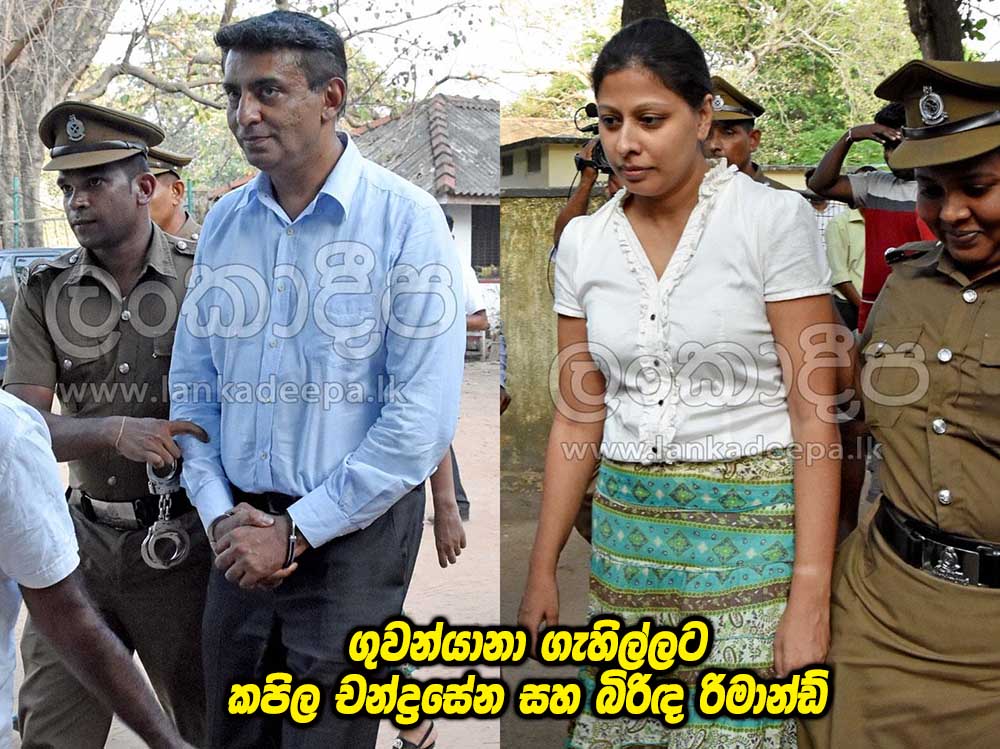
(Lanka-e-News -2026.June.04, 6.30PM) "You are wrestling with life. But there comes a final act — when death itself steps forward and enfolds you."
The death of Kapila Chandrasena : former Chief Executive of SriLankan Airlines, Airbus buyer, and kinsman of the Rajapaksa dynasty, does not rest quietly in its official preliminary verdict. It reverberates. It accuses. It demands to be read not merely as a police case file, but as a dramatic text , one that belongs to a long and terrible tradition of politically convenient deaths dressed in the respectable clothing of personal tragedy.
Two theatrical masterworks cast their long shadows over this moment.
The first: Arthur Miller's devastating 1949 Broadway monument, Death of a Salesman - a hammer-blow of social realism that forged Willy Loman from the wreckage of post-war American mythology. An unremarkable man. A man of small dreams and spectacular self-deception - crushed, finally, by a system that promised everything and delivered ruin. A commoner transfigured by catastrophe into a tragic hero. Miller's next thunderclap, The Crucible, tore open the wounds of McCarthyism — the state's rabid, self-righteous persecution of the dissenting mind. Together, the two plays form a diptych of state-sanctioned destruction: one economic, one political, both lethal.
The second : and here the parallel sharpens into something razor-edged — Dario Fo's incandescent 1970 masterpiece: Accidental Death of an Anarchist. Fo's play crossed oceans and found its Sri Lankan voice in 1987, when the visionary director Vijitha Gunarathna staged Saakki : a ferociously localised adaptation performed as street theatre, with the irreplaceable Dr. Gamini Haththotuwegama searing the leading role into collective memory. That production was an act of political courage in one of Sri Lanka's most blood-soaked years : a declaration, made in open air before ordinary people, that official versions of convenient deaths would not go unchallenged.
Fo's play was no abstraction. It was constructed from the corpse of a real man: Giuseppe Pinelli, a working-class railway fitter, who fell from a fourth-floor window of Milan's police headquarters in 1969 while in custody for a bombing he almost certainly did not commit. The authorities called it suicide. They called it an accidental fall. They manufactured a medical episode. The story changed. The story kept changing. And with each revision, the cover-up became more theatrical than the play itself.
Fo's genius was to dramatize this machinery of official lying : to show how the state, when it needs a death to stay buried, mobilises its institutions: the police, the judiciary, the press, the bar, the medical examiner — all conscripted into a chorus of coordinated untruth.
Now consider Chandrasena.
A suspicious death under active investigation, where the preliminary verdict serves the interests of the most powerful actors in the case, demands the most rigorous scrutiny possible. That is not conspiracy. That is the elementary logic of justice.
And what do we find when we apply that scrutiny? We find obstruction.
Chandrasena's own legal team — his lawyers — have reportedly declined to cooperate fully with the police investigation into the circumstances of his death. Their non-cooperation is not a minor procedural footnote. It is a flare fired into the darkness — illuminating exactly where the shadows are thickest.
The Bar Association of Sri Lanka — an institution whose independence is foundational to justice — has reportedly moved to shield rather than illuminate. Old order elements, loyalists of the monarchist establishment embedded within the legal profession's own governing body, appear to be pulling levers. The Bar, which should be the first defender of transparent investigation, becomes instead a fortress wall behind which the truth is kept.
This is Fo's play. This is Vijitha's Saakki. Not a metaphor. Not a literary parallel. This is the play — restaged in Colombo, with Sri Lankan actors performing the same ancient roles: the powerful death, the convenient verdict, the institutional closing of ranks.
Giuseppe Pinelli fell from a window. The authorities said: accident, illness, suicide — the story shifted as needed. The institutions closed around the wound. Fo tore that closure open with laughter and fury.
Kapila Chandrasena died under circumstances that remain, despite the preliminary theory, genuinely unresolved. And already — with forensic speed — the institutions of the old order are performing the same choreography: the lawyers who will not speak, the bar association that intervenes, the monarchist media that frames the narrative, and the political beneficiaries who need this death to remain exactly what the preliminary verdict says it is.
To understand what drove Kapila Chandrasena to his final extremity — whether that extremity was self-inflicted or otherwise engineered — one must understand the three-front war that had been systematically dismantling him.
The First Front: Southwark Crown Court
The UK's approval of Airbus's deferred prosecution agreement placed internationally incontestable evidence on the record. There was no negotiating with London. The deal had been documented. The commissions, the mechanisms, the names — crystallised in a foreign court's judgment, beyond the reach of Colombo's politics.
The Second Front: The People's Court
Under Rajapaksa rule, Kapila had obtained bail in 2020 and the investigation stalled — insulated by dynastic proximity. But May–July 2022 shattered that protection. The citizens of Sri Lanka exercised raw constitutional sovereignty, driving the Rajapaksas from their thrones. The people's court has never adjourned. It sits permanently — on social media, in collective memory, in the relentless moral arithmetic of public verdict — and it found Kapila guilty by association long before any formal judgment.
The Third Front: An Independent Sri Lankan Judiciary
Emboldened by the AKD electoral victory, no longer subject to the gravitational pull of dynastic power, the courts pressed forward. Bribery Commission Commissioner General Ranga Dissanayake — cast in this drama as a figure of institutional pressure — allegedly reminded Chandrasena, with chilling explicitness, of another case that had ended in suicide. A threat wrapped in a precedent. The Devil, in the monarchist imagination, had arrived wearing the robes of due process.
And now the Devil summoned God himself: Mahinda Rajapaksa — patriarch of the dynasty, the Sun King of Medamulana— commanded to appear before the Bribery Commission on the 12th of May. The monarchy in the dock. The empire under examination.
Kapila stood at the intersection of all three fronts, exposed on every side. His final transaction was the most pitiable of his career — allegedly procuring two impoverished commoners for fifteen thousand rupees to post his bail, the suspected intention being to flee the island entirely. The high-flying Royal Buyer, reduced to this.
He could not negotiate his transformation into a state witness. He could not return to the shelter of the dynasty — the dynasty itself was under siege. He could not escape the gravitational collapse of three simultaneous judicial pressures.
Whether that collapse ended in self-destruction, or whether other hands — old order hands, hands with an interest in keeping him permanently silent — accelerated that ending, is precisely what the investigation must determine. And precisely what powerful forces appear determined to prevent it from determining.
The cover-up is always more revealing than the crime.
Fo's anarchist Giuseppe Pinelli might have fallen, might have been pushed, might have been thrown — but it was the institutional response to his death that convicted the state. Every contradictory statement, every shifted timeline, every closing of professional ranks, every silencing of inconvenient voices — these were the confession. The lie told the truth.
In Colombo today: the lawyers who will not cooperate tell us something. The Bar Association's interference tells us something. The monarchist media's swift adoption of the suicide narrative tells us something. The speed with which the old order settled on a story — before any rigorous investigation could establish one — tells us everything.
Rajive Jayaweera, who exposed the Airbus scandal, was found dead near Independence Square within weeks of Chandrasena's first bail being granted. The prosecutor Thusitha Mudalige died during COVID. Chandrasena's death is now counted among a sequence that investigative journalists are refusing to treat as coincidence. Whether or not each death was directly caused by human agency, the pattern itself is a document — and that document implicates the old order's desperate need to keep the full truth of the Airbus scandal permanently interred.
AKD and the new political dispensation are consolidating power. But the old regime did not dissolve — it dispersed. Into military intelligence. Into police investigation units. Into the AG's Department. Into the professional associations. Into the very bar that now reportedly shields the investigation from full transparency. Old loyalists, embedded like shrapnel in the body of the state, awaiting the moment to act — or to obstruct.
This is the deep state. Not a film villain's conspiracy, but the entirely mundane reality of institutional capture: the ordinary men and women who owe their careers, their promotions, their safety, to the old monarchy, and who exercise their small bureaucratic powers in its service long after the palace has fallen.
The new Bolsheviks — AKD's dispensation — do not use jackboots. They use courtrooms. They use commissions. They use the capitalist judiciary as the instrument of accountability. And this is precisely what the old élite cannot tolerate: because under Rajapaksa, Premadasa, and Wickramasinghe rule, the élite existed above the law entirely. They never knew the Batalanda brutality. They never experienced the terror visited upon Lasantha Wickramatunge, Richard de Soyza, or the vanished Prageeth Eknaligoda.
But an air-conditioned hospital room — when it is the chamber of your final unravelling, when every exit has been closed, when the dynasty that sheltered you can no longer reach you — becomes its own kind of dungeon.
Willy Loman was a tragic hero — a man destroyed by forces larger than himself, ground to nothing by an America that discarded its spent dreamers.
Giuseppe Pinelli was a tragic hero — an innocent man, a working-class fitter, destroyed by the state's need for a body to blame.
Lasantha Wickramatunge was a tragic hero. Richard de Soyza was a tragic hero. The thousands who fell in 1971 and 1989 — they were tragic heroes, everyone.
But Kapila Chandrasena was a tragic villain.
This distinction is not cruelty — it is precision. He was not an innocent man crushed by a system he never chose. He was an architect of the very arrangements now prosecuting him. He moved in the corridors of dynastic power. He brokered the deals. He accepted the proximity. He enjoyed the shelter of the monarchy while it stood, and when the monarchy fell, he found himself exposed to the full weight of consequences he had spent years avoiding.
He could not outrun his karma. And he is not alone in that category. There are others in the old order's hall of tragic villains — others who built their lives upon the same foundations, who will face, in their own time and in their own way, the same reckoning.
What Miller showed in Death of a Salesman, and what Fo showed in Accidental Death of an Anarchist, and what Vijitha Gunarathna and Dr. Gamini Haththotuwegama brought blazing onto the streets of Sri Lanka in Saakki, is this. That within the gleaming, self-congratulatory citadels of so-called civilised society, suppression does not always arrive wearing a uniform. Sometimes it arrives wearing a legal brief. Sometimes it arrives as institutional silence. Sometimes it wears the face of a Bar Association resolution.
And the most dangerous moment — the moment all three works identified with surgical clarity — is when the institutions that exist to pursue truth become the instruments deployed to bury it.
That is the moment Sri Lanka is in, right now, with this death.
Whether Kapila Chandrasena was driven to self-destruction by three converging judicial pressures, or whether his death was accelerated by other agency — that question must be answered. Not for his sake. Not for the monarchy's sake. But because the integrity of Sri Lanka's post-monarchist democratic moment depends entirely on whether its institutions can pursue truth even when that truth is inconvenient to the powerful, the embedded, and the protected.
The investigation must not be permitted to close. The lawyers must be compelled to speak. The Bar Association must be held accountable for its interference. The pattern of deaths must be examined as a pattern, not as isolated tragedies.
Fo's anarchist fell from a window in 1969. The Italian state spent decades insisting it was an accident.
History did not agree.
And now the judiciary has moved again — decisively, publicly, and without apology.
Magistrate Pasan Amarasena has summoned the lawyers to court. This is not a procedural courtesy. This is the independence of the judiciary asserting itself in plain sight — compelling those who have chosen silence to stand before the law and account for that silence. The same lawyers who declined to cooperate with the police investigation, the same professional fraternity shielded by an old order Bar Association, must now appear before a magistrate who answers not to dynasties but to the constitution.
And here — with the precision of a playwright who knows his third act — Fo's drama reaches its Sri Lankan crescendo.
Because the old order will play exactly as the script demands. They will perform. They will manoeuvre. They will deploy procedural objections and professional privilege and the thousand small instruments of institutional obstruction. They will treat the courtroom as a stage upon which their own counter-narrative can be rehearsed — mocking, in their way, the very process that summons them. This is what Fo understood so perfectly about power: that when cornered, it does not capitulate. It performs. It turns the court itself into theatre, hoping that the spectacle of defiance will exhaust the pursuit of truth.
But here is what the old order cannot rewrite, cannot perform away, cannot bury beneath procedural theatre or Bar Association resolutions or the coordinated silence of compliant lawyers:
The Southwark Crown Court judgment exists. The Airbus deferred prosecution agreement exists. The documented commissions, the named intermediaries, the forensic trail of a deal struck in the corridors of dynastic power — these exist in the permanent record of an international court, beyond the reach of Colombo's political weather. No performance in Magistrate Amarasena's courtroom — however elaborate, however legally adorned — can erase a single line of that record.
Fo's Maniac, in Accidental Death of an Anarchist, mocks the authorities with their own contradictions — exposes the absurdity of the cover-up by performing it back at them with exaggerated fidelity. The old order, summoned now before an independent magistrate, will attempt precisely this inversion: to turn accountability into farce, to make the court's seriousness appear as the real theatre.
They will not succeed. Because the audience has changed. The people who drove a dynasty from power in the summer of 2022 are not a credulous audience. The investigative journalists counting the bodies are not impressionable spectators. And Magistrate Pasan Amarasena, in summoning those lawyers, has demonstrated that the judiciary is no longer a stage set for monarchist convenience — it is a functioning institution, and it intends to function.
The play the old order is rehearsing has already been performed. Dario Fo wrote it in 1970. Vijitha Gunarathna staged it on Sri Lankan streets in 1987. The ending is known. The cover-up does not hold. The institutional choreography of convenient death eventually collapses under the weight of its own contradictions. The lie, compounded and continued, becomes the loudest testimony of all.
Kapila Chandrasena cannot be summoned. But the lawyers who served him, the institution that protected them, and the dynasty whose shadow falls across every element of this case — they are being summoned. One by one. By a magistrate. By a commission. By the irreversible arithmetic of documented truth.
You may mock the court. You may play your part with practiced confidence. But the history you are trying to rewrite was written before you entered the room.
The curtain does not fall on this story. It rises.
---------------------------
by (2026-06-04 14:42:56)


 Read 8490 Times
Leave a Reply
 0 discussion on this news