
-By Anubhavananda
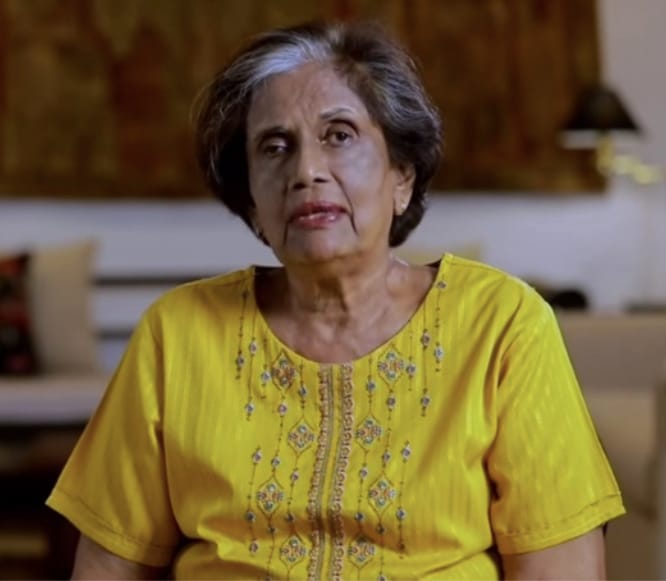
(Lanka-e-News -2026.June.29, 12.40 PM) Former President Chandrika Bandaranaike Kumaratunga recently publicly emphasized that disciplinary and illegal incidents involving certain Buddhist monks, including allegations of drug offences and child abuse, are eroding public confidence in Buddhism, particularly among the younger generation. In a special video statement issued on 25 June, she stated that urgent reforms concerning the discipline of Buddhist monks are necessary to safeguard Buddhism in Sri Lanka. Pointing out that the Buddha Sasana has historically been preserved through ecclesiastical reforms (programmes to protect the Dhamma and Vinaya), the former President publicly appealed to the Mahanayake Theras of the three Nikayas to intervene immediately.
In her special video statement, she said that many people who love the country are deeply concerned about the recent incidents involving Buddhist monks. She referred both to the arrests of monks on allegations related to narcotics and to allegations that the chief incumbent of eight prominent temples sexually abused a minor girl over a period of two years. She warned that such incidents have severely shaken the confidence of many Buddhists and that the erosion of public trust in religious institutions could have grave consequences for society, especially for the younger generation. Considering the seriousness of the issue, she also expressed regret that many political leaders have remained silent.
She stated that she had written to the senior Mahanayake Theras requesting them to take the lead in initiating the necessary reforms within the Buddhist Sangha. She added that the proposal had received a positive response and suggested appointing a committee consisting of senior monks, representatives of civil society, and leaders of other religions to formulate recommendations for the required reforms. She also requested the Government to establish the necessary legal framework to implement those recommendations, stating that stronger mechanisms are needed to protect the Buddha Sasana and restore public confidence. Finally, she urged the public not to remain silent in the face of wrongdoing, emphasizing that safeguarding religious institutions is not only the responsibility of leaders but a shared duty of every citizen.
This is both a historic and a forthright statement. No political leader in our country has made such a clear and unequivocal declaration on this crisis. President Anura Kumara Dissanayake has expressed his views on the crisis within the Buddhist Sangha only once, and even that amounted to little more than a vague, non-committal statement. To date, he has not uttered a single word about the Pallegama Hemerathana case. Opposition Leader Sajith Premadasa, meanwhile, remains hidden behind the saffron robe. Although he raises a wide range of issues in Parliament every sitting day, he has remained silent in the face of the child abuse allegations against Pallegama Hemerathana. In the face of this social crisis, both he and UNP leader Ranil Wickremesinghe have become accomplices to the Rajapaksas' shameless Sinhala-Buddhist nationalism. Ranil Wickremesinghe, whom some portray as an internationalist, has echoed Rajapaksa-style accusations that the Malima Government is failing to give Buddhism its due prominence. Criticising the Government's decision to amend the Buddhist Temporalities Ordinance at the request of the Mahanayake Theras of the three Nikayas, he has alleged that the Government is conspiring to take over temple properties. Through this accusation, the extent to which Ranil Wickremesinghe has succumbed to Sinhala-Buddhist nationalist rhetoric is strikingly revealed.
Against this backdrop, we believe the intervention of former President Chandrika Bandaranaike Kumaratunga is of decisive importance. Like J. R. Jayewardene sought, as far as possible, to govern by maintaining a separation between the State and religion. Although she, and the Sri Lanka Freedom Party, enjoyed the support of many Buddhist monks, she did not govern the country by taking instructions from them. She was never intimidated by the saffron robe.
When she attempted to introduce a political solution to the ethnic conflict and a new Constitution, the Mahanayake Theras, along with certain other prominent monks, strongly opposed her efforts. Nevertheless, she did not yield to that opposition. She pursued her political vision as far as she possibly could.
During her presidency, she also made several significant, though often understated, interventions to safeguard the rights of children and women. One of the most important was the establishment of the National Child Protection Authority (NCPA). The Authority was created under Act No. 50 of 1998 to prevent child abuse and protect children's rights.
Established under the guidance and leadership of Professor Harendra de Silva, the NCPA was designed as a statutory body capable of functioning independently. It is regarded as an independent statutory State institution, empowered to operate independently in both policy and legal matters. Nevertheless, it remains a government institution subject to the administrative oversight of the relevant ministry.
The former President ensured that the Authority was able to function independently throughout her administration and never allowed her ministers to interfere with its work. This was later confirmed on several occasions by its founding Chairman, Professor Harendra de Silva, in interviews with the media.
During her administration, Sri Lanka's first National Policy on Children, aimed at protecting children's rights, safety, and development, received official approval. In 1997, she introduced the Compulsory Education Act to guarantee every child a minimum standard of education. Under this legislation, failing to send children of school-going age to school became a punishable offence. By ensuring a minimum level of education for every child, the Government also sought to reduce child labour.
Also in 1997, former President Chandrika Bandaranaike Kumaratunga took the initiative to establish Sri Lanka's first Ministry of Women's Affairs. The new ministry expanded the State's role in promoting women's rights, preventing violence against women, and empowering women.
Her decision to amend the criminal law in order to end the disgraceful practice whereby children and women who had been subjected to sexual abuse or exploitation were repeatedly retraumatised by defence lawyers during open court proceedings was also a commendable reform.
However, despite coming to power with overwhelming support from women, the Malima Government has, over the past one and a half years, failed to introduce any significant policy measures to protect women and children.
Before the last presidential election, JVP women's leader Samanmali Gunasinghe publicly pledged that the Government would amend outdated and repressive laws, including the Vagrancy Ordinance, first introduced during British colonial rule in 1841 and later amended in 1889, which has long been used to unfairly target sex workers.
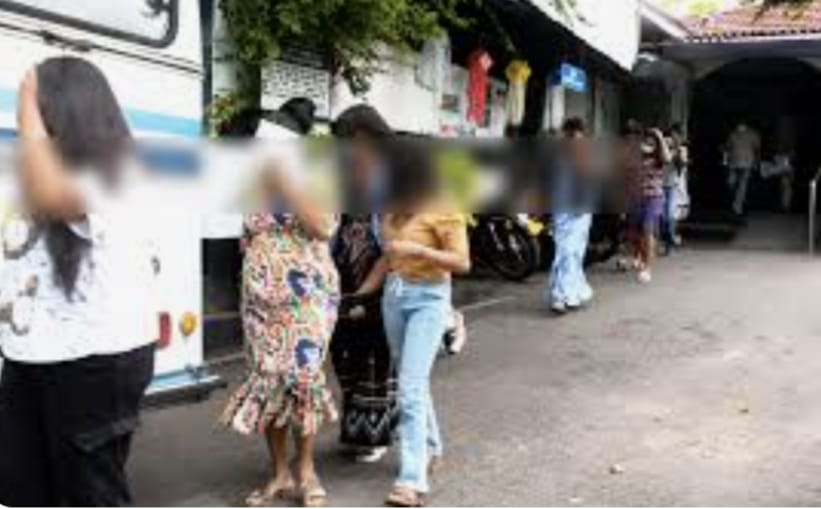
Yet, instead of reforming this 185-year-old legislation, the Government has still failed to stop the disgraceful police practice of raiding so-called "spa" establishments, arresting vulnerable women working there, publicly branding them as "prostitutes," and parading them before the media.
This continues despite Inspector General of Police Priyantha Weerasooriya having issued institutional circulars prohibiting the exposure of suspects to the media. Subjecting these women to sensational media exposure remains a serious concern. It appears as though Rohan Olugala, Director of the Walana Central Anti-Corruption Strike Force, considers himself above even the Inspector General of Police.
Neither Minister of Public Security Ananda Wijepala nor Deputy Minister Sunil Watagala has uttered a word on these matters. Prime Minister Harini Amarasuriya, who is widely regarded as a feminist, has also remained silent.
Likewise, the group of National People's Power women parliamentarians—including Minister Savithri Paulraj and Attorney-at-Law Lakmali Hemachandra, are determined to secure the release of Pallegama Hemerathana, have remained silent regarding the women arrested during the raid on a spa establishment in Talawathugoda. To them, the lives of those women appear to have little value. They should, in truth, be ashamed of such disgraceful conduct.
By engaging in such disgraceful conduct, they are undermining the independence of institutions such as the National Child Protection Authority (NCPA). The principal objective of the meeting convened on 5 June by the Women Parliamentarians' Caucus— "Caucus of Liars"—to "review the progress of the investigation" into the allegations that Pallegama Hemerathana seriously abused a minor girl was, to destroy the NCPA's independent intervention in the case.
At that meeting, the Police and the women Members of Parliament from the Malima Government strongly criticised the conduct of the NCPA in relation to the Pallegama Hemerathana case. Their attack was directed specifically at the NCPA's Director of Law Enforcement, Attorney-at-Law Sajeevani Abeykoon. The campaign was led by National People's Power MP and Attorney-at-Law Lakmali Hemachandra, who accused the Director of Law Enforcement of conspiring to embarrass both the Government and the Police.
The objective of MP Lakmali Hemachandra and her group was to prevent the Director of Law Enforcement of the National Child Protection Authority from participating in the court proceedings, while ensuring that the Attorney General's Department became involved in the case and that the Police investigation would be presented as having been conducted properly.
The alleged conspiracy by Lakmali Hemachandra and her associates to secure the acquittal and release of Pallegama Hemerathana appeared to be progressing successfully when the case was recalled before Anuradhapura Chief Magistrate Siyapath Sasindu Wickramaratne on Friday, 26 June.
On that occasion, the Attorney General's Department participated in the proceedings for the first time. Appearing on behalf of the Attorney General, Senior State Counsel Keshani Wijesinghe informed the open court that the Attorney General's Department was continuously monitoring and supervising the Police investigation into the allegations that former Anuradhapura Atamasthanadhipathi Pallegama Hemerathana had seriously sexually abused a minor girl.
Former High Court Judge Inoka Ranasinghe, the Chairperson of the National Child Protection Authority (NCPA), appeared before court on behalf of the Authority. Notably, Attorney-at-Law Sajeevani Abeykoon, the NCPA's Director of Law Enforcement, who had previously played a decisive role in these proceedings, had been removed from the case.
Many suspect that this was the result of intense pressure exerted by a group that included Minister Savithri Paulraj and National People's Power MP and Attorney-at-Law Lakmali Hemachandra.
Earlier, when the case was called on 22 May, Attorney Sajeevani Abeykoon, acting on the instructions of the NCPA Chairperson, retired High Court Judge Inoka Ranasinghe, informed the court that the NCPA had effectively been forced to "chase the Police with a stick" in order to get the suspect arrested.
She further stated that, despite the victim's statement containing more than sufficient credible evidence alleging that Pallegama Hemerathana had sexually abused her, the Police had merely gone to the temple where the suspect was residing, recorded his statement, and then allowed him to leave without arresting him.
It is widely known that National People's Power MP and Attorney-at-Law Lakmali Hemachandra angrily berated Attorney Abeykoon over those remarks.
When the case was recalled last Friday (26 June), Chief Inspector P. M. Anura Gunawardena of the Nittambuwa Police, appearing for the complainant, informed the court that investigations into the incident were still ongoing.
However, on 22 May, the same officer had told the court that the preliminary investigation had already been completed. At that time, he raised no objection to granting bail to Pallegama Hemerathana.
It is evident that the Chief Inspector staged a performance to facilitate the suspect's release on bail. Since the Police investigation remains ongoing, the court postponed the case until August. This delay creates a risk that witnesses may be influenced or their testimony altered.
This was not a performance staged solely on the personal initiative of Chief Inspector P. M. Anura Gunawardena. Rather, he was likely acting on instructions from higher authorities. Likewise, the attacks launched by National People's Power MP and Attorney-at-Law Lakmali Hemachandra and her group against the National Child Protection Authority were not motivated by personal interests, but were carried out in accordance with political directives from above.
Finally, the Pallegama Hemerathana case is not merely another child sexual abuse prosecution.
It is a litmus test of the Malima Government's stated commitment that the law will be applied equally to everyone. It is a trivial matter that can simply be brushed aside.
---------------------------
by (2026-06-29 07:22:00)


 Read 7878 Times
Leave a Reply
 0 discussion on this news