By Anubhavananda
(Lanka-e-News -21.Aug.2026, 2.30 PM) After concluding discussions with President Anura Kumara Dissanayake, President of the Bar Association of Sri Lanka, Rajeev Amarasuriya came out, and a female journalist asked him a question.
“Mr. President, with this constitutional amendment, certain parties are issuing certain insulting statements personally targeting the Chief Justice. Why does the Bar Association follow a policy of silence regarding this?” she asked.
“No, there is no such policy of silence. First of all, you are asking this question with difficulty here. But no, there is no such policy of silence. We always say that it is wrong to personally criticize anyone. I want you to ask me another question. For the past one or two weeks, I too have been receiving criticism like that. Continuous mud attacks. Nothing else has been said about me either. Actually, whoever the judges may be, it is wrong to say such things. But what has happened here is a constitutional amendment concerning the extension of the retirement age of judges. In relation to that, there has been discussion regarding the judges. The issue is there. I too am now receiving criticism from fake accounts and bots, aren’t I? That is wrong,” was the response of Bar Association President Rajeev Amarasuriya.
What was Rajeev Amarasuriya trying to say, hesitantly and by implication, on this occasion? That he is on the same level as Chief Justice Preethi Padman Soorasena. That because there is a discussion regarding judges, mud attacks against the Chief Justice are unavoidable. That because he himself is being criticized as President of the Bar Association of Sri Lanka, mud-slinging against the Chief Justice is justified.
That since no statements have been issued condemning the criticism directed at him, there is no need to issue statements regarding the Chief Justice. First, we would like to give Rajeev Amarasuriya, the learned lawyer who is the President of the Bar Association of Sri Lanka, a basic lesson in political science.
The Executive, the Legislature and the Judiciary are the three spheres of power based on the principle of the separation of powers in the modern state. In other words, they are the three pillars of power. In our country, the Executive is the state machinery that exercises executive power, headed by the President and including the Cabinet of Ministers. The President is the Head of State, the Head of the Executive and the Head of Government. Governing the country, implementing laws and directing public administration are the principal responsibilities of the Executive.
The Legislature is the Parliament of Sri Lanka, and its principal responsibility is to make laws. The Speaker is the head of Parliament. The Prime Minister is the principal political leader of the Government and leads the Government party in Parliament.
The Judiciary interprets the law, resolves disputes and administers justice. The Chief Justice is the head of the Supreme Court.
This concept of the separation of powers is associated with the political thought of Montesquieu. His view was that the concentration of state power in the hands of one individual or institution could be prevented from being abused by distributing power among three pillars.
According to the Order of Precedence, the senior state positions in Sri Lanka can generally be arranged as follows: the President, who is the Head of State and Head of the Executive; the Prime Minister, who is the principal political leader of the Government; the Speaker, who is the head of Parliament; and the Chief Justice, who is the head of the Supreme Court. The Chief Justice is the head of the pillar of power called the Judiciary.
There is a difference between Rajeev Amarasuriya, one among approximately thirty-five thousand lawyers, and the Chief Justice that is like the distance between heaven and earth. The fact that the presidency of the Bar Association of Sri Lanka is added to his position does not make any difference. That position has no greater value than the chairmanship of a trade union.
Therefore, it is abundantly clear that, regardless of which individual holds the office of Chief Justice, that person and the President of the Bar Association of Sri Lanka cannot be considered to be on the same level.
If such a mentality is displayed by the President of the Bar Association of Sri Lanka, what it reveals is that he or she has become intoxicated with power.
The President of the Bar Association of Sri Lanka, Rajeev Amarasuriya, seems to think that his association is the fourth pillar of power in the country. He can be seen issuing statements interpreting parliamentary traditions, and the comments made therein, as threats directed at him.
Accordingly, the advice we can give Rajeev Amarasuriya is: do not swell beyond the size of your finger.
Justifying mud attacks against the Chief Justice because there is a discussion concerning judges is like turning a monitor lizard into a goanna when one wants to eat it.
The opposition of the Rajeev Amarasuriya camp, the President of the Bar Association of Sri Lanka, is directed at an individual. Their opposition is focused on Chief Justice Preethi Padman Soorasena. This is very clear.
This is why they are demanding that the Twenty-Second Constitutional Amendment be implemented after December. Since Chief Justice Soorasena is due to retire in December, the Bar Association of Sri Lanka agrees to give Supreme Court judges a two-year extension of service after that.
The Bar Association of Sri Lanka’s Rajeev Amarasuriya camp, which delivers sermons with immense concern about judicial independence, autonomy and dignity, and organizations such as “Three-Wheel Lawyers,” have not expressed even a word of opposition to the mud attacks, baseless allegations and personal insults directed at Chief Justice Preethi Padman Soorasena, the present head of the Judiciary.
They do not regard the mud attacks, baseless allegations and personal insults against the incumbent Chief Justice as threats to the dignity and independence of the Judiciary.
Recently, SJB MP Rohini Kaviratne launched an extremely degrading mud attack in Parliament targeting Chief Justice Preethi Padman Soorasena.
The huge lie she made based on the Chief Justice’s birth certificate rested solely on parliamentary privileges.
Chamara Sampath Dasanayake (SLFP), a mud-slinger at Kaviratne’s level, stated in Parliament that Chief Justice Preethi Padman Soorasena should be made the Minister of Justice of the present NPP Government.
These statements were attacks not only on the entire judicial system but also on the community of judges.
Previously, even when certain criticisms were made about judges of the lower courts under the cover of parliamentary privileges, the Bar Association of Sri Lanka issued statements strongly condemning those remarks.
But this time, regarding the mud, insults, and allegations levelled by the Opposition in Parliament against the head of the Judiciary, the Bar Association of Sri Lanka is in a deep sleep.
The reason is that the Bar Association of Sri Lanka and the “Ape-pita–Sakapita” Opposition are standing together in the same camp.
The statement made by the President of the Bar Association of Sri Lanka, Rajeev Amarasuriya, that he has not issued statements condemning criticism directed at him is also a big lie.
NPP Member of Parliament Asitha Niroshana stated in Parliament that the Leader of the Opposition had agreed to give Rajeev Amarasuriya, President of the Bar Association of Sri Lanka, the nomination as Chief Ministerial candidate of the Western Provincial Council.
Within a few hours of this statement, the Bar Association issued a statement dated July 24, stating that the statement made by NPP MP Asitha Niroshana was false and condemning it as a statement made under the cover of parliamentary privileges.
The “Three-Wheel Lawyers” and “Dirana Dakuna” organizations also immediately issued statements criticizing that remark.
Yet all of these people remain silent when Chief Justice Preethi Padman Soorasena is subjected to mud-slinging under the cover of parliamentary privileges.
However, when Members of Parliament question the role of the Bar Association of Sri Lanka during a parliamentary debate, he issues statements and letters interpreting it as a threat directed at him.
Outside Parliament as well, the Bar Association, “Three-Wheel Lawyers” and organizations such as “Dirana Dakuna” remain silent in the face of disgraceful attacks against the Chief Justice, even dragging his religion into the attacks.
The reason is that the “Ape-pita–Sakapita” Opposition mud-slingers and these organizations are partners in the same camp.
Why do the “Ape-pita–Sakapita” Opposition, the Bar Association of Sri Lanka, “Three-Wheel Lawyers,” “Dirana Dakuna” and other notorious organizations show deadly opposition to Chief Justice Preethi Padman Soorasena?
A principal policy of Chief Justice Soorasena has been to immediately eliminate corruption in the Judiciary, reduce delays in cases and expedite long-pending cases.
He has taken steps to expedite high-profile cases through special judicial benches that hear cases daily and through the Trial-at-Bar system.
Meanwhile, cases relating to corruption and crimes committed under previous governments have been expedited.
In particular, accelerating cases relating to incidents during the Aragalaya period and corruption allegations is part of his activism.
Therefore, this approach of Chief Justice Soorasena is a decisive question concerning the political survival of the “Ape-pita–Sakapita” Opposition and groups such as the Bar Association of Sri Lanka, “Three-Wheel Lawyers” and “Dirana Dakuna” that have facilitated them as enablers.
If Chief Justice Preethi Padman Soorasena receives another two-year extension through the Twenty-Second Constitutional Amendment, it is clear that the majority of the “Ape-pita–Sakapita” Opposition will have to start counting the bars of prison cells.
After Attorney General Parinda Ranasinghe (Junior), a political henchman of Ranil Wickremesinghe, retires next April, the “Ape-pita–Sakapita” Opposition will have to face a very dangerous situation.
Their objective is to defeat the Twenty-Second Constitutional Amendment before that, send Chief Justice Preethi Padman Soorasena home, and escape from the cases.
A protest is emerging from within the legal community itself regarding the mud attacks directed at Chief Justice Preethi Padman Soorasena with the patronage and support of the Bar Association of Sri Lanka.
One manifestation of this is the written request made by Senior Attorney-at-Law Jagath Abeynaike to the Bar Association of Sri Lanka, asking it to condemn the low-level allegations made personally against the Chief Justice by members of the Bar Association and to issue a statement explaining the importance of protecting judicial independence.
Senior Attorney-at-Law Jagath Abeynaike states in his letter to the Bar Association that, at a time when the Government has taken a policy decision through the Twenty-Second Constitutional Amendment to generally increase the retirement age of judges, various parties are using this as a pretext to make extremely low-level criticisms against the incumbent Chief Justice.
He further states that it is surprising that the Bar Association tolerates such statements against a Chief Justice holding office.
Senior Attorney-at-Law Jagath Abeynaike further states in his letter that if something like this had happened on another occasion, it would be difficult to imagine that the Bar Association would remain silent in this manner.
He questions whether the Bar Association is tolerating the malicious statements made by certain MPs against the Chief Justice under the cover of parliamentary privileges because the Association itself holds the same position regarding the Chief Justice.
Yet instead of condemning the mud, allegations and threats directed against the Chief Justice, President of the Bar Association Rajeev Amarasuriya is justifying them.
Because attempts are sometimes made to enforce the law to the letter against elite political leaders, billionaire businessmen, drug traffickers, underworld leaders and multinational corporations, judges are sometimes forced to face threats, mud-slinging and allegations.
In some instances, judges have even had to pay with their lives.
The assassination of Colombo High Court Judge Sarath Ambepitiya by shooting on November 19, 2004, is one example.
The threats, sanctions, and allegations directed at judges and the judicial system in Brazil because of the case against former Brazilian President Jair Bolsonaro are another more recent example.
Brazil’s former President Jair Bolsonaro, who called himself the “Hitler of South America,” was sentenced by the country’s Supreme Court on September 11, 2025, to twenty-seven years and three months in prison for attempting to seize power through an illegal military coup following the 2022 presidential election.
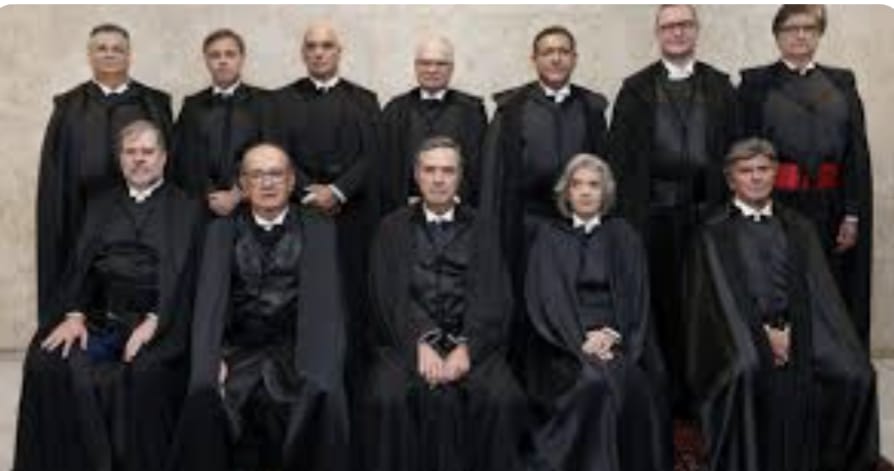
Four of the five-member judicial panel found Bolsonaro guilty.
To prevent Bolsonaro from being punished for organizing a military coup, U.S. President Donald Trump launched massive political intervention and threats against the Brazilian Government and its judicial system.
In order to prevent legal action against his fellow dictator Bolsonaro, Trump imposed a fifty-percent tariff on Brazil and banned eight of the eleven judges of the Brazilian Supreme Court from entering the United States.
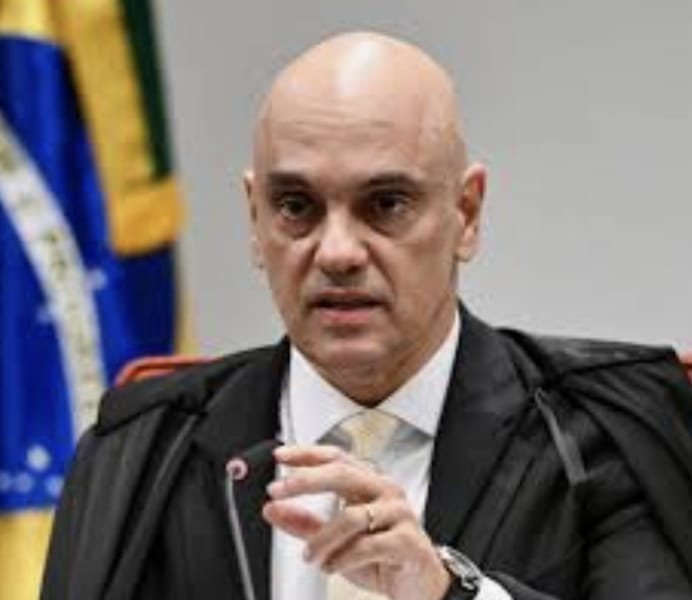
He imposed sanctions against Brazilian Supreme Court Justice Alexandre de Moraes, who heard the case against Bolsonaro, and against members of his family.
His assets were frozen. Yet, demonstrating that they were unafraid of U.S. President Donald Trump’s threats, the Brazilian Supreme Court announced the verdict.
This was a courageous and historic intervention by the Brazilian Supreme Court to protect democracy in Brazil. Despite the insults, allegations, mud attacks, and death threats directed against them and their family members by U.S. President Trump and Bolsonaro’s supporters, the judges of the Brazilian Supreme Court stood for judicial independence.
Following Brazil’s brutal military rule from 1964 to 1985, the Democratic Republic of Brazil, established under a new constitution, was protected by them at the risk of their lives. This is a tremendous victory for Brazilian democracy. Today, we too are facing a Brazilian moment.
The elite political class has launched a suicide attack targeting Chief Justice Preethi Padman Soorasena, the head of the Judiciary.
The Bar Association of Sri Lanka, “Three-Wheel Lawyers,” “Dirana Dakuna” and other organizations are helping to carry the burden of this campaign.
But the ordinary people of the country stand behind Chief Justice Preethi Padman Soorasena’s approach of making the judicial process more efficient. They desire to see the cases involving the elite political class concluded quickly. It is the hope and prayer of the people that, like the judges of the Brazilian Supreme Court, Chief Justice Preethi Padman Soorasena will courageously face the threats, allegations, and mudslinging from our elite political leaders and their henchmen and win this battle.
Anubhavananda
---------------------------
by (2026-08-21 09:33:23)


 Read 54390 Times
Leave a Reply
 0 discussion on this news