
By Nandana Weerarathna.
(Lanka-e-News -27.Aug.2026,5.00 AM) Sri Lanka remains unique globally in offering free education and healthcare, providing a platform for underprivileged children to excel. Notably, the current President and over 90% of Parliament members representing the NPP are themselves products of this public system. Perhaps the Ministers of Education and Justice are the only ones among them who did not receive their education at the country's universities. Consequently, the educational crisis facing the nation must be resolved urgently for the sake of the future; one must not risk a politically disastrous outcome by waiting until power is secured once again to address this.
The unregulated private tuition industry imposes a severe financial burden on families. Current market rates charge up to LKR 5,000 per student per subject at the Advanced Level, while an Ordinary Level student is required to pay LKR 3,000. Fees charged by international schools are no less exorbitant. It is the middle-class and lower-middle-class populations who bear the brunt of this; they spend as much as 50% of their income on their children's education. Those living in poverty, unable to afford these costs, remain excluded from higher education. Therefore, the government should immediately impose a regulatory price cap on tuition fees, setting a maximum limit of LKR 1,000 per subject to ensure affordability and curb exploitative pricing.
National universities are currently at a breaking point due to a severe shortage of academic staff. Given increased life expectancy and healthier aging, the retirement age for university academics should be extended to 70. Those who wish to retire early should retain the option to do so from age 65, allowing the system to retain experienced talent while mitigating the staffing crisis.
Recently, China removed 12,000 outdated courses from its universities. In their place, the country introduced courses strategically aligned with the modern world and the global job market. There is a continuously rising demand in the global job market for healthcare professionals, educators, and skilled professionals in vocational and technical fields. The shortage of these professionals in the European Union and North America is increasing by millions annually. Yet, we continue to focus on sending unskilled labor to the Middle East. Instead, our universities must immediately introduce courses designed to produce modern day demands.
There is a high demand for nursing and healthcare professionals in Europe, North America, and Australia; those holding nursing degrees have access to well-paid employment opportunities. Instead of establishing new universities (which would obviously be positioned at the bottom of global university rankings), the most viable option is to affiliate the 18 government Nurses Training Schools (NTS) with existing national universities as faculties or campuses. For instance, the Kandy Nursing College could be affiliated with the University of Peradeniya as a campus or faculty of nursing, and the three Southern Province nursing schools could be affiliated with the University of Ruhuna, enabling the award of globally recognized 4-year nursing degrees.
This methodology can also be used to train teachers and educators. For instance, the United Kingdom recruits 20,000 primary school teachers annually. It also recruits another 20,000 secondary school teachers in the fields of Science, Technology, Engineering, and Mathematics (STEM). To capture similar markets, 19 National Colleges of Education (NCOEs) should be affiliated with national universities as campuses or faculties of education. For instance, the Jaffna National College of Education could be transformed into a faculty of the University of Jaffna, offering a four-year degree program in the English medium that meets international standards.
As revealed during the COPE committee proceedings, the Sri Lanka Institute of Advanced Technological Education (SLIATE) is a "white elephant." The institute incurs high maintenance costs yet demonstrates very low productivity. It was disclosed that the institute is currently operating at only 30% of its capacity and is failing to fulfil its objectives. A primary reason for the lack of student interest in SLIATE is that it is an institution offering diplomas. This is because the landscape of higher education has changed significantly since the institute was established in 1995; at that time, universities admitted 7,000 undergraduates, whereas today that figure has increased sixfold, exceeding 42,000. In addition, there are now private universities that award degrees, with over 50,000 students enrolled in them. Furthermore, opportunities exist to pursue external degrees in science and related fields at an affordable cost through state universities.
SLIATE was established in 1995 for students who had passed their Advanced Level (A/L) examinations but missed university admission by a very narrow margin. Today, students are no longer aiming merely for diplomas; they aspire to obtain degrees. This is why SLIATE is operating at 30% below capacity, and the situation regarding HNDE (Higher National Diploma in Engineering) courses is even worse. The best alternative is to affiliate SLIATE with the University of Vocational Technology (UoVT) as campuses, thereby transforming these institutes into degree-awarding institutions (under the NVQ framework) . Ultimately, upgrading all HND courses to full degree level will be beneficial to the country. The process of admitting Advanced Level students to these new universities should be conducted through the University Grants Commission (UGC) based on Z-scores.
Colombo Law College remains a sphere untouched by the free education system; it continues to function largely as a means of hereditarily passing down the legal profession. Consequently, it is essential to establish proper standards for legal education in Sri Lanka. To ensure transparency and a merit-based admission process, Sri Lanka Law College should be brought under the supervision of the University Grants Commission (UGC). Student admissions should be conducted based on Advanced Level Z-scores, in alignment with the national university admission framework.
It is acknowledged that bachelor's degrees from Sri Lankan national universities maintain world-class standards, enabling graduates to work anywhere globally. To maximize the return on this taxpayer-funded investment, a mandatory "bonding" system should be introduced, allowing state-funded graduates to work overseas for a maximum of five years. Upon completion, they must return to contribute to the local economy. Non-compliance should result in maximum penalties, including the potential seizure of assets.
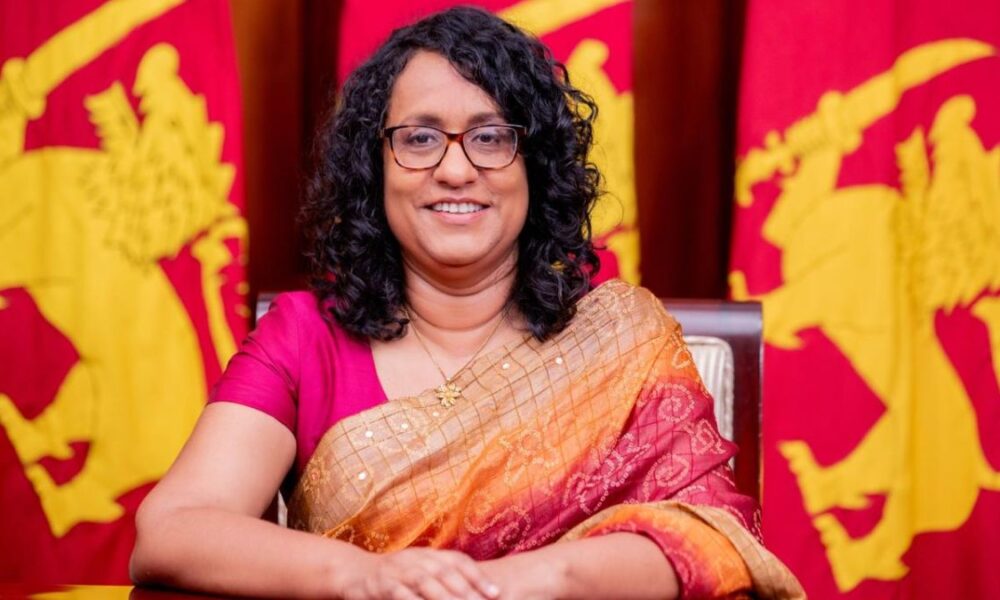
Implementing this reform agenda requires significant institutional capacity and a strategic vision. Political will and administrative acumen are also essential to carry out this critical transformation. Politicians who have become living legends in our country and passed into history are rare. Yet, C.W.W. Kannangara has attained the status of a legend as the 'Father of Free Education.' President Anura Kumara Dissanayake, as well as Education Minister Harini Amarasuriya, may also harbor a desire to leave behind a 'legacy.' More important than anything else is whether we are prepared for this. Otherwise, the free education system, which periodically becomes a target of envy for adversaries, will slide into systemic decline.
---------------------------
by (2026-08-27 00:19:09)


 Read 1596 Times
Leave a Reply
 0 discussion on this news