
By Anubhavananda
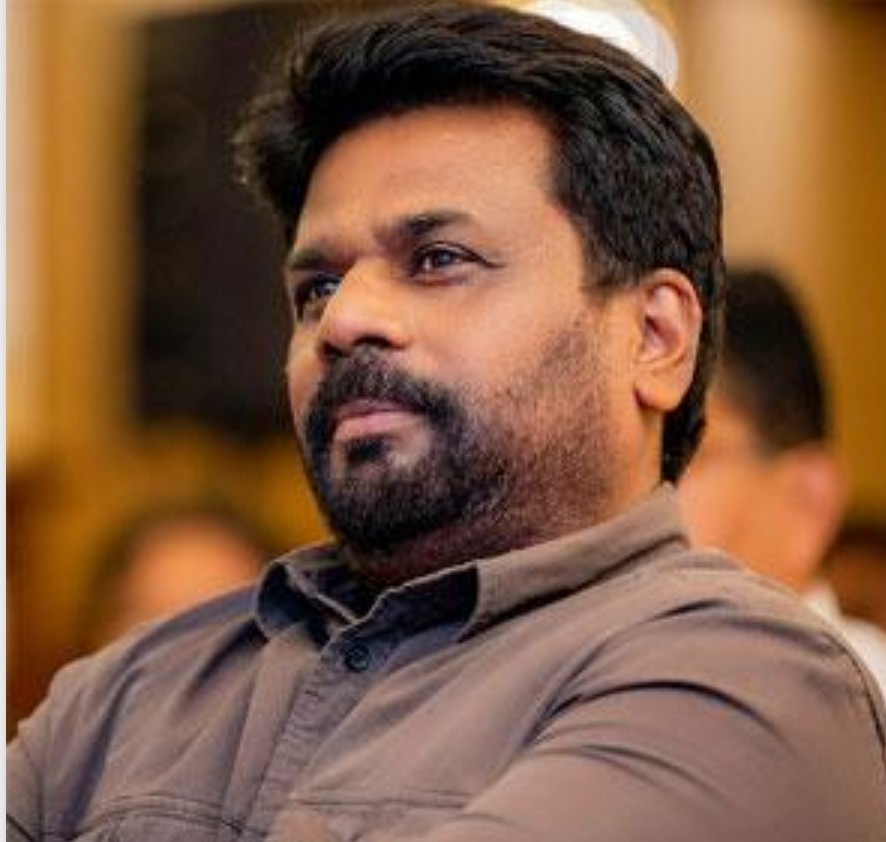
(Lanka E-News – 21 September 2026,6.00 PM) President Anura Kumara Dissanayake recently launched the “Our Government” and “Two Years – A Better Country” series of public meetings, beginning in Beruwala and Bulathsinhala. At the gatherings, the President outlined what he described as the NPP government's key achievements over its first two years, delivering his familiar and persuasive account of the administration’s performance.
The President said that, in 2025, government revenue rose to 16.7% of Gross Domestic Product (GDP), the highest level recorded in the past three decades. He also revealed that Sri Lanka recorded its lowest budget deficit since 1957 in 2025. The President went on to explain how the funds collected by the Treasury had been allocated and spent.
Increasing the kidney disease allowance from Rs. 7,500 to Rs. 10,000;
Increasing the “Aswesuma” welfare payments for low-income households under three categories: raising the allowance for those in extreme poverty from Rs. 15,000 to Rs. 17,500; the allowance for poor households from Rs. 8,500 to Rs. 10,000; and the allowance for the transitional category from Rs. 2,500 to Rs. 5,000;
Increasing the Mahapola scholarship from Rs. 5,000 to Rs. 10,000;
Increasing the fertiliser subsidy for farmers from Rs. 15,000 to Rs. 30,000;
Increasing the allowance for persons with disabilities from Rs. 5,000 to Rs. 10,000;
Increasing allowances for senior citizens;
Providing children living in residential care institutions with a monthly allowance of Rs. 5,000;
Providing Rs. 2 million in housing assistance to such children when they leave the institutions at the age of 18;
Providing Rs. 6,000 each to 1.7 million schoolchildren to purchase educational equipment;
Providing compensation to victims of Cyclone Ditwah, described as one of the most economically damaging disasters in Sri Lanka’s history, including Rs. 5 million per household for rebuilding homes, Rs. 50,000 for each cattle death, and Rs. 30,000 for each pig or goat lost;
Allocating Rs. 100 billion in subsidies to cushion the public from increases in fuel and electricity prices resulting from the conflict in the Middle East; and
Absorbing the impact of electricity tariff increases for 95% of ordinary consumers whose monthly consumption is below 180 units.
In addition to these measures, President Dissanayake expressed confidence that the NPP government would invest substantial sums over the coming years in the development of infrastructure, including health, education, transportation and highways. He said these investments would lead to significant growth in the rural economy.
However, the increases in social welfare payments announced by the President have faced strong criticism on social media over the past period. That criticism has resurfaced with the launch of the “Our Government” and “Two Years – A Better Country” series of meetings.
Critics argue that the NPP government is collecting Advance Personal Income Tax (APIT) from the middle class and distributing that money among what they describe as “idle” and “able-bodied” people who are unwilling to work.
According to the President, however, government revenue has increased significantly under his administration. To understand this claim properly, it is necessary to examine how governments generate revenue and where that revenue comes from.
There are several principal sources of government revenue. The main sources include taxes collected from individuals and businesses, non-tax revenue, and other forms of income.
Tax revenue includes income taxes imposed on the earnings of individuals and companies; Value Added Tax (VAT) levied on the purchase of goods and services; import duties on goods brought into the country; excise duties on liquor and certain other products; customs duties; and taxes imposed on products such as fuel and cigarettes.
Non-tax revenue includes fees charged for government services, licence fees, fines and penalties, income earned from leasing government property, profits or dividends generated by state-owned enterprises and institutions, income derived from government property and resources, as well as foreign aid and grants.
Nevertheless, tax revenue remains the primary and most important source of government revenue.
In 2025, total government revenue and grants amounted to Rs. 5,485.55 billion, of which tax revenue accounted for Rs. 5,049.19 billion. According to reports of the Central Bank of Sri Lanka, non-tax revenue amounted to Rs. 400.21 billion, while grants amounted to Rs. 36.15 billion.
The government's tax revenue of Rs. 5,049.19 billion in 2025 consisted primarily of income taxes collected from individuals and companies, VAT on goods and services, Excise Duty on products such as liquor, cigarettes, fuel, and vehicles, import and foreign-trade taxes, and other taxes on goods and services.
According to International Monetary Fund reports, total government revenue in 2025 amounted to 16.7% of Gross Domestic Product (GDP), while tax revenue accounted for 15.4% of GDP.
Approximately 92% of total government revenue in 2025 came from taxation, while non-tax revenue and grants accounted for only about 8%.
Put simply, for every Rs. 100 received by the government in 2025, approximately Rs. 92 came from taxes.
Government revenue in Sri Lanka depends primarily on taxes paid by individuals and businesses. Total tax revenue consists of two broad categories: direct taxes and indirect taxes.
According to the Central Bank of Sri Lanka's 2025 report, direct taxes accounted for approximately 23.77% of total tax revenue, equivalent to around Rs. 1,200 billion. Indirect taxes accounted for 76.23%, or approximately Rs. 3,849 billion.
Therefore, for every Rs. 100 in tax revenue collected by the government in 2025, approximately Rs. 24 came from direct taxes, while around Rs. 76 came from indirect taxes.
Direct taxes are taxes imposed directly on the individual or company responsible for paying them, with income tax being the principal example.
Indirect taxes, on the other hand, include VAT, Excise Duty, import duties, SSCL and SCL. These taxes are incorporated into the prices of goods and services and are ultimately borne by consumers.
In 2025, VAT revenue amounted to Rs. 1,746.8 billion. This represented 45.38% of total indirect tax revenue and approximately 35% of total tax revenue.
Indirect taxes are imposed on many of the consumer goods we purchase in our daily lives, including rice, dhal, sugar and flour, as well as on products such as liquor and cigarettes.
The overwhelming majority of Sri Lanka's population belongs to the lower-income and lower-middle-income segments of society.
Consequently, these segments of society make a significant contribution to government revenue through indirect taxation.
But how many people in Sri Lanka actually pay personal income tax and therefore contribute to direct tax revenue?
According to reports from the Inland Revenue Department, 392,643 employees paid tax under the Advance Personal Income Tax (APIT) system in 2024. When employees from whom tax was deducted are also included, the total number of employees who paid income tax was 513,257.
According to the Department of Census and Statistics, Sri Lanka's total employed population in 2024 was 7,949,751.
Accordingly, approximately 6.46% of the employed population paid income tax through APIT. This means that 93.54% of the country's employed population did not pay income tax.
In simple terms, out of every 100 employed persons in Sri Lanka, approximately 94 do not pay income tax.
It should also be noted that businesses paying income tax make a significant contribution to direct tax revenue, which accounts for approximately 23.77% of total tax revenue.
Therefore, the claim that the NPP government is filling the state Treasury primarily by imposing income taxes on the middle class has little basis when considered against the overall structure of government taxation.
Sri Lanka's tax revenue is fundamentally dependent on indirect taxation. The country's entire consumer population contributes to government revenue through indirect taxes.
In 2025, the government collected Rs. 5,049 billion in tax revenue. According to Ministry of Finance reports, Rs. 141 billion was allocated to the “Aswesuma” welfare programme that year. Accordingly, only 2.8% of total tax revenue in 2025 was spent on “Aswesuma”.
Government expenditure on other social welfare programmes amounted to Rs. 238 billion in 2025. When “Aswesuma” and other social welfare expenditures are combined, the government spent Rs. 379 billion on these programmes during the year.
This means that 7.5% of total tax revenue in 2025 was spent on “Aswesuma” and other social welfare programmes.
Put very simply, if the government collected Rs. 100 in taxes, only about Rs. 7.50 was allocated to “Aswesuma” and other social welfare programmes. The remaining Rs. 92.50 was used for public-sector salaries, debt servicing and interest payments, pensions, healthcare, education, national security, roads and other public services.
Therefore, there is little truth to claims that the government spends a disproportionately large share of its tax revenue on “Aswesuma” and other social welfare programmes.
Nor was “Aswesuma” a programme introduced by the NPP government.
“Aswesuma” was introduced by the Gotabaya Rajapaksa government on July 1, 2023, replacing the existing “Samurdhi” programme as a targeted welfare scheme for low-income households.
In 2024, the Ranil-Rajapaksa government decided to increase the number of “Aswesuma” beneficiary families to 2.4 million. During its first two years in office, the NPP government has not further expanded the number of “Aswesuma” beneficiaries.
One of the principal allegations levelled against the NPP government by Opposition Leader Sajith Premadasa, both inside and outside Parliament, is that the government is reducing the number of families receiving “Aswesuma” benefits.
How, then, did the popular but unfounded allegation arise that the NPP government is imposing income taxes on the middle class and distributing that money to “idle” people?
The main reason is that, following the economic collapse of the country under the Rajapaksa regime, a section of the middle class was required, for the first time in their lives, to pay income tax as a result of the conditions associated with the International Monetary Fund programme. At the same time, the tax rates applicable to some middle-class taxpayers who had previously been subject to relatively low rates of income tax were increased.
Both sides appear to believe that the Sri Lankan state is sustained solely by the income taxes collected from them. As a result, they insult and condemn fellow citizens who receive social welfare benefits, including “Aswesuma”, by describing them as “idle” or “able-bodied” people who do not work.
Paying income tax is a civic responsibility. It is the fundamental responsibility of a government to ensure that those tax revenues are not squandered or misused, but instead invested for the benefit and advancement of the entire population.
At the same time, while supporting low-income families, the benefits generated by tax revenue should also reach sections of the middle class. A government must strive to maintain a balance between these two groups.
Rather than providing long-term welfare assistance to poor people indefinitely, the government should create productive opportunities through which they can strengthen their economic capacity. Sustainable improvements in the incomes of low-income households can be achieved only through such an approach.
This is the challenge confronting the NPP government today.
For citizens who are paying income tax from their monthly salaries for the first time in their lives, the experience represents a difficult challenge. Among those particularly affected are certain government officials in the executive grades.
They have been required to pay income tax because the Rajapaksa regime left the country economically bankrupt. After the NPP government came to power, it increased the monthly salary threshold for income-tax liability—from the Rs. 100,000 threshold imposed by the Ranil-Rajapaksa government to Rs. 150,000.
It is the responsibility of the NPP government not only to respect and recognise the contribution of taxpayers, but also to ensure that taxpayers can see and experience the benefits generated by the taxes they pay.
While the President speaks proudly of the Treasury being replenished with increased revenue, in our view, he should also remember to thank those citizens who are now paying income tax, as well as those who are paying more than they did previously.
Unfortunately, however, neither of these responsibilities appears to be being adequately fulfilled.
Consider, for example, the recent spread of dengue. The number of dengue cases has now exceeded 100,000, with 68 deaths recorded by the second week of August.
Dengue is an epidemic that spreads predominantly in urban and semi-urban areas. It is therefore a problem that affects the middle class to a significant extent.
Local authorities should take the lead in dengue prevention and control. The NPP controls a majority of the country's local government institutions. One of the fundamental responsibilities of these institutions is the collection and disposal of garbage and waste.
Unfortunately, however, many local authorities are failing to discharge this responsibility properly. Under such circumstances, it should come as no surprise that conditions conducive to the breeding of dengue mosquitoes are developing.
In such a situation, taxpayers are not receiving the protection and public services to which they are entitled. This is only one example.
According to the latest reports, headline inflation stood at 7.3% in July. This figure is calculated using the Colombo Consumer Price Index (CCPI) by comparing prices with the corresponding month of the previous year.
Inflation stood at 6.8% in June.
The Central Bank of Sri Lanka's target is to maintain inflation below 5%. However, that target has not been achieved.
The rise in inflation is a red flag for the NPP government. People are increasingly complaining about the rising cost of living.
Reducing the cost of living cannot be achieved simply by increasing the salaries of government employees. The majority of Sri Lanka's population are not government employees.
If the government genuinely wants to provide relief to the public and bring inflation down, it must reduce indirect tax rates—including VAT and import taxes—that directly affect the prices of goods and services.
As we pointed out earlier, the government derives the largest share of its tax revenue from indirect taxation. Every citizen contributes to indirect taxes, and these taxes affect the prices of virtually all goods and services.
There is considerable appreciation for the NPP government's campaign against bribery and corruption, including its efforts to take action against and punish those accused of corruption.
However, public complaints about economic difficulties, including rising prices, are becoming increasingly pronounced.
We would emphasise that the NPP government would be well advised, in terms of its political sustainability, to recognise that there is a limit to the public's tolerance of these economic hardships.
---------------------------
by (2026-09-21 12:21:44)


 Read 3198 Times
Leave a Reply
 0 discussion on this news