
By Ruwan Weerakoon, FBI Cyber Analysis
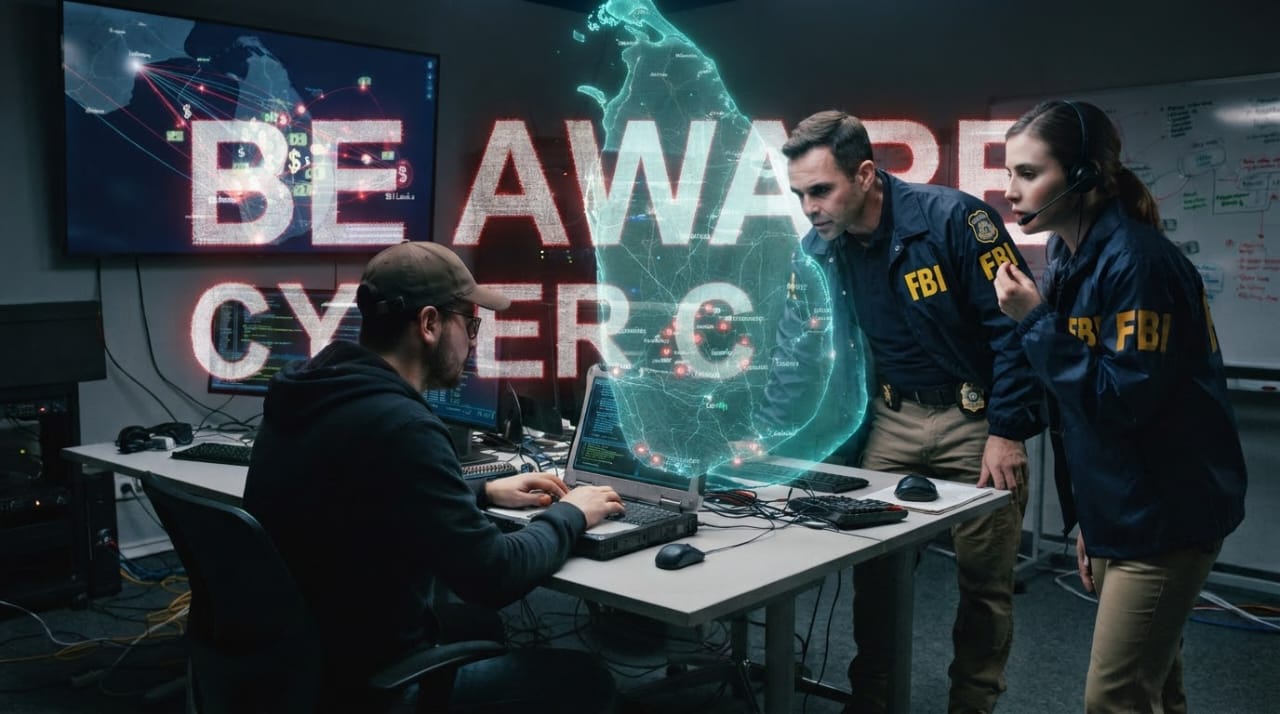
(Lanka-e-News -17 Nov 2026, 3.30 P.M.) Charlotte Field Office team on the ground from Nov 16–22 as Colombo seeks help to dismantle international fraud syndicates
Disclosures about cyber fraud centres run by Chinese nationals living in Sri Lanka have multiplied in recent times. As international criminals increasingly use Sri Lankan soil for illegal operations, a special team from the United States Federal Bureau of Investigation (FBI) is due on the island this week to launch joint investigations with local law enforcement.
According to the U.S. Embassy in Colombo, an FBI team from the Charlotte Field Office will be in the country from November 16 to 22, following an official request from Sri Lankan authorities. The visit is meant to deepen cooperation between the two countries in combating cyber-based financial fraud and dismantling international criminal networks.
The FBI Cyber Division, together with task forces such as the National Cyber Investigative Joint Task Force and the 24/7 command centre CyWatch, is a premier federal law enforcement and intelligence entity. It integrates intelligence-driven operations across all 56 field offices, deploys Cyber Action Teams globally for major incidents, and draws on legal attaché offices abroad. Its personnel include computer scientists, malware analysts, intelligence analysts, and cryptocurrency recovery experts.
Efficiency, however, comes from selectivity. Rather than handling every minor incident, the FBI prioritises high-level intrusions: state-sponsored threat actors, major international ransomware syndicates and threats to critical infrastructure.
The FBI does not clean, patch, or restore compromised commercial or private networks. It works alongside internal IT or private incident response teams to collect forensic evidence, examine malware samples, and trace how the intruder got in.
The Bureau aims to stop attacks before they succeed, issuing proactive notifications when intelligence shows an organisation has been compromised. Through initiatives like InfraGard and joint advisories with agencies such as CISA, it shares indicators of compromise and tactics, techniques, and procedures to help organisations harden their networks. Firewalls, endpoint protection and daily security remain the responsibility of system owners and private contractors.
The FBI analyses digital footprints, command-and-control servers, cryptocurrency wallet flows, and malware code to identify attackers. It can seize domains or servers, issue international indictments, and freeze extorted funds through the Internet Crime Complaint Center (IC3) Recovery Asset Team. It offers strategic guidance on handling threats but not commercial IT remediation or legal and regulatory advice.
The FBI does not conduct corporate forensic audits for compliance, internal investigations, or civil disputes. Where a crime has occurred, its examiners analyse system logs, RAM dumps, disk images and network traffic strictly to build a criminal case and prosecute offenders. Businesses needing recovery or internal forensic accounting must hire private cybersecurity and forensic firms.
The FBI maps a hacker's tools, techniques, and procedures, a kind of digital signature. Even with advanced concealment, code structures, staging servers, and execution patterns often match known syndicates. Agents also trace blockchain transactions, working with private chain-analysis firms to unmask criminals when they try to cash out. Beyond digital tracing, the Bureau relies on confidential human sources, wiretaps, surveillance, informants, and cooperation with Interpol and foreign law enforcement.
The scale is daunting. The IC3 receives over a million complaints annually, so the FBI cannot pursue every case and focuses on state-sponsored groups from hostile nations such as Russia, China, North Korea, and Iran, major ransomware cartels, and critical infrastructure attacks. Jurisdiction is another hurdle: many hackers operate from countries with no extradition treaty with the United States, or that refuse to cooperate. The FBI can identify and indict them and issue "Most Wanted" notices, but they remain safe while they stay at home.
For Sri Lanka, the visit is a significant step, but its results will depend on how far local agencies can turn shared intelligence into arrests and convictions.
---------------------------
by (2026-11-17 10:48:06)


 Read 13314 Times
Leave a Reply
 0 discussion on this news