
-An Investigation by Ruwan Weerakoon
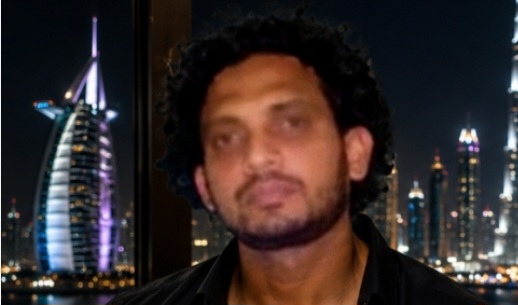
(Lanka-e-News -16.Aug.2026, 8.00 PM) Lanka e News first revealed on June 2nd that Shiran Basik, a major drug trafficker, had been arrested in Dubai and that other drug traffickers were trying hard to prevent his extradition to Sri Lanka. It was through the article titled "Drug Godfather Attempts to rescue Drug baron ''Shiran Basic'' in Dubai ..!!! How Mohamed Siddique Flew Into Dubai to Save His Drug Empire and Why Sri Lanka Is Watching in Silence..?". Now he has been extradited to Sri Lanka. This is the story of Shiran Basik being revealed.
In the early 1990s, a short, thin young man wearing torn T-shirts and slippers picked up garbage for the Dehiwala-Mount Lavinia Municipal Council. Today, that former labourer, born on October 24, 1978, in Dehiwala, is known as Shiran Basick — a middle-aged drug baron who accumulated vast wealth and funded major political campaigns to secure power for his family.
His early path to crime began when he partnered with Kaippu Ananda to sell illicit liquor in Dehiwala. During this time, he also aligned with local politician Danasiri Amarathunga. Basick soon shifted from illicit alcohol to trafficking drugs, purchasing inventory from Pottu Nawfer. After surviving a shooting near Dehiwala Hospital during a turf dispute, Basick fled to Dubai for four years before returning to expand his network.
Upon his return, an associate named Najeem introduced Basick to fellow drug figure Mohamad Siddick, who agreed to act as a primary supplier. Basick leveraged former Municipal Council contacts to build a local distribution framework.
Smuggling Routes: Drug shipments arrived by sea through coordinated networks across southern coastal fishing communities and Chilaw.
Corrupt Links: Basick cultivated key contacts within customs and local authorities to protect shipments.
Overseas Base: Following a fatal threat from a rival known as "Dehibala," Basick fled Sri Lanka and permanently re-established his operational base in Dubai alongside Mohamad Siddick, expanding into heroin and synthetic drugs (ICE) via Afghan supply lines.
Full Name ; Shiran Basick (born Bacam Mohamad Gavus Ayesha)
Father's Name ; Basick Abdul Razick Mohamad
Date of Birth ; October 24, 1978
National Identity Card (NIC) ; 782980637V (Issued 2022)
Passport No. 1 ; M1688573 (Issued Sept 17, 1998)
Passport No. 2 ; N2577630 (Issued April 06, 2010)
Passport No. 3 ; N8726356 (Issued Feb 10, 2020)
Basick sought to elect his 32-year-old son, Nadeem Basick, as Mayor of Colombo or Dehiwala-Mount Lavinia. To build public goodwill and politically align low-income communities, Basick instructed his son to establish an NGO named Diviyata Sahayak, involving figureheads such as Gangaramaya monks.
Targeting Informal Settlements: Drug money was funnelled into welfare programs across low-income urban housing areas (e.g., 68 Wattha, 34 Wattha).
Distribution and Mobilization: These neighbourhoods served dual roles as localized drug distribution points and voter banks for aligned political candidates.
Mutual Favours: Frontline political figures received campaign financing and mass-event mobilization in exchange for political immunity when in power.
Basick enforced a strict system to neutralize threats from law enforcement, media, or politicians:
Bribes and Entrapment: Targeted individuals were offered financial incentives or compromised through honeytraps.
Elimination: Those who resisted bribe attempts faced targeted violence or assassination.
Properties and Real Estate Footprint;
Basick controls extensive unrecorded assets, including over 15 restaurants along Wellawatte, Dehiwala, and Mount Lavinia beaches registered under proxies, alongside luxury apartments in Dehiwala and Kollupitiya.
Known Primary Addresses:
No. 58/A, Wanarathna Road, Dehiwala
37/A, Wanarathna Road, Dehiwala
11/17, Malwatthe Road, Dehiwala
23/18, Abviliwathha Road, Boralesgamuwa
Two luxury residences with private elevators along Abeyrathna Mawatha, Boralesgamuwa (held by partners)
Following coordination led by Senior DIG Asanga Karavita, Head of Sri Lanka Interpol, UAE authorities detained Shiran Basick in Dubai. Despite interference from rival-turned-ally Mohamad Siddick to prevent his release, UAE authorities deported Basick back to Sri Lanka after a two-and-a-half-month legal process.
Legal Counter-Strategy: Siddick has funded high-profile legal defence teams, reportedly committing Rs. 50 million toward senior counsel, and has attempted to establish contacts with local law enforcement figures to secure Basick's release.
Son's Whereabouts: Nadeem Basick and key close associates have fled abroad or gone into hiding outside Colombo.
The case of notorious drug kingpin Shiran Basick raises deeply uncomfortable questions regarding political patronage, law enforcement blind spots, and systemic corruption in Sri Lanka.
Under Sri Lanka's biometrics-mandated passport issuance regulations, any applicant must appear in person to submit biometric data, including facial imaging and fingerprints. For a figure wanted by law enforcement and the subject of an Interpol Red Notice, walking into a state-managed Department of Immigration and Emigration facility should have automatically triggered security flags and immediate apprehension. Basick's most recent passport (N8726356) was issued on February 10, 2020 — apparently without incident.
Biometric Screening Failure: Standard protocol requires applicant fingerprints and identity details to be cross-referenced against law enforcement databases. An individual on an active watch list or under an Interpol Red Notice should have been flagged instantly upon submitting biometrics.
The delay in fully integrating the Criminal Records Division/Colombo Crimes Division (CCD) fingerprint database with the Department of Immigration and Emigration's passport system is rooted in technical, administrative, and legal challenges rather than a single decision by corrupt officials.
Civil vs. Criminal System Architecture: The Department of Immigration's Automated Fingerprint Identification System (AFIS) is built strictly for civil identity verification, to prevent one person holding multiple passports. Law enforcement databases run on separate forensic criminal networks designed to process latent crime-scene prints. Connecting these legacy systems requires specialized middleware, standardized algorithms, and substantial digital infrastructure investment.
Institutional Silos and Bureaucracy: Different government departments operate under separate ministries, budgets, and administrative frameworks. Cross-departmental data sharing routinely stalls on bureaucratic red tape, conflicting priorities, and prolonged procurement processes.
Legal and Data Privacy Limitations: Automatically cross-referencing every citizen's passport biometric data against criminal databases requires a clear statutory framework. Without legislation governing data sharing between civil registries and law enforcement, automated cross-checks risk legal challenges over privacy and mass surveillance.
Database Format Incompatibilities: Older criminal fingerprint records — often paper-based or stored in legacy formats — do not automatically match the modern digital biometric standards used for international travel documents. Digitizing historical police records takes time and resources.
Institutional Accountability Concerns: While system fragmentation is primarily a technical and structural issue, systemic corruption and political interference can undermine efforts to modernize and connect government databases. Delaying real-time police-tracking tools gives criminals room to operate — but attributing the delay solely to high-ranking police corruption oversimplifies what is largely an infrastructure and policy bottleneck across government institutions.
Immigration Watchlists (Stop Notices): Police issue formal court-ordered travel bans, "Stop Notices," or warrants directly to the Department of Immigration. These alerts rely on National Identity Card (NIC) numbers, names, and passport details.
Police Clearance System: For official background checks, individuals must apply for a Police Clearance Certificate, against which police run direct checks on criminal records before approval.
Unrestricted Domestic Movement: Basick managed to operate in plain sight within Sri Lanka prior to fleeing abroad to Dubai, fuelling widespread public suspicion over whether high-level political protection shielded his movements.
Political Connections and Patronage: Media reports have noted that high-profile political figures previously attended events linked to Basick's business interests in Dehiwala, pointing toward deep-rooted political connections that may have afforded him a degree of immunity.
Key Fugitives Remaining: Key figures including Mohamad Siddick and "Paravi Suda" continue to operate from Dubai.
Given the severe security risks and potential for retaliation against whistleblowers, active joint oversight by the Police Narcotics Bureau (PNB), the Criminal Investigation Department (CID), and the State Intelligence Service (SIS) is critical to dismantling the full extent of this network.
Capital Punishment, Prison Corruption, and the Realities of Sri Lanka’s Drug Crisis
Public outrage over Sri Lanka’s expanding drug crisis is both understandable and widely felt. The public regularly reads accounts of convicted drug kingpins managing multi-million rupee narcotics networks directly from their prison cells—often using smuggled mobile phones and aided by compromised correctional staff. For many citizens, the solution appears straightforward: when a High Court hands down a death sentence for large-scale drug trafficking, the President should sign the execution warrant, set a date, and send the convict to the gallows.
However, behind the call for immediate executions lies a complex landscape of constitutional law, international relations, and law enforcement realities that dictate how drug cartels are truly dismantled.
Sri Lankan police are currently questioning Shiran Basick, and public attention is now turning to the politicians allegedly linked to him. The central question raised by this investigation is not only how one man built a narcotics empire from a municipal garbage cart to a transnational trafficking operation, but how that empire was allowed to intersect so freely with the machinery of the state — its passport offices, its welfare programs, and its politics. Transparency and accountability in this case will be a test of whether Sri Lanka's institutions can act independently of the patronage networks the investigation describes.
---------------------------
by (2026-08-16 14:35:05)


 Read 31788 Times
Leave a Reply
 0 discussion on this news